



Brighton & Hove consults on waste strategy
The consultation on the 10-year strategy – which began on June 22 and it set to run until August 7 – aims to give residents the chance to offer their views on the future of waste and recycling in the south-coast city. Brighton & Hove's recycling rate has doubled over the last five years, rising from 14% in 2003/4 to 28% in 2008/09, but the strategy is an attempt to combat declining landfill capacity and the increased cost of waste disposal. The consultation documents are available for download on the council website and are also available at a number of locations throughout Brighton.
In addition, the council is also preparing a ‘waste and minerals development framework' which aims to set out the planning policies for waste and recycling facilities and will be available for comments in autumn 2009.
REY appoints wood and social enterprise project managers

In her new role as wood project manager, Ingunn Vallumroed will aim to provide help and advice to companies and organisations looking to boost profits through resource efficiency measures, such as waste minimisation, raw material savings, biomass energy generation, and reuse of wooden furniture, packaging and pallets. Meanwhile, Paul Forrest, in his new capacity as social enterprise project manager, aims to support community waste organisations, in partnership with other regional and national agencies, to build the capacity of the waste sector in Yorkshire and Humber.
Commenting on her appointment, Ms Vallumroed said: “I will be working with organisations in the public, private and third sectors in Yorkshire and Humber to divert wood from landfill and to help develop the region's wood recycling capacity.”
Lincolnshire firm handed £20,000 packaging fine
Boston Magistrates' Court has handed a Lincolnshire firm which prepares vegetables and salads for major supermarkets a £19,800 fine for failing to comply with packaging regulations.
Boston-based Freshtime UK pleaded guilty to not being registered with the Environment Agency for the past six years despite being required to under the Producer Responsibility Obligations (Packaging Waste) Regulations. The court heard how Freshtime had avoided paying £17,853 during the years they were not registered and had failed to pay for 1,132 tonnes of paper, plastic and aluminium to be recovered and recycled. Upon sentencing, the company was also ordered to pay full Environment Agency costs of £2,388.
After the hearing, Helen Kirchen, Environment Agency officer, said: “By not complying with these regulations Freshtime UK Ltd have not made their contribution towards recycling. Today's result shows that the Environment Agency will actively seek to find and prosecute companies who do not comply with these important regulations.”
Yorwaste receives compost accreditation
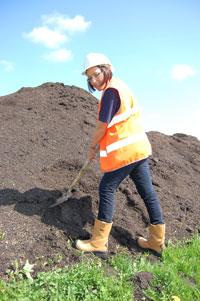
The firm has achieved the PAS 100 Quality Protocol for the compost it creates from the 12,000 tonnes of green waste collected annually from the kerbside in Richmondshire and Hambleton. The compost created by Yorwaste at its Tancred site is now being sold to the general public, farmers and horticultural workers in 50-litre bags and can be used as a soil conditioner in gardening.
Lindsey Skelton, Yorwaste's site manager at Tancred, said: “People are very conscious about the need to reuse and recycle and the fact that this is green waste that was originally collected from their own doorstep provides them with an added incentive to buy the product we have produced.”
WRG applies for leachate lagoons at landfill site
Northamptonshire-based Waste Recycling Group (WRG) is looking to develop an on-site lagoon system to treat leachate at its Allerton Park landfill in Yorkshire to allow it to be used in a biomass power generation process.
WRG have submitted a planning application to North Yorkshire county council for permission to develop two leachate treatment lagoons at the site near Wetherby, with the treated water then set to be used to irrigate plantations of willow grown on site, which will then be harvested and used as a fuel in biomass power stations to generate renewable energy. WRG has said that it plans to roll out the system across more of its UK landfill sites over the next year.
Dave Molland, development project manager at WRG, said: “The really exciting environmental benefit from this process comes from our being able to use the treated leachate as an important water and nutrient source for plantations of fast-growing willow plants which are harvested – or “coppiced” – on a two to five year cycle.”

Register for free to comment