



Yorwaste proposes 35,000tpa capacity MRF for York

The facilities have been proposed for Yorwastes existing site at Harewood Whin near Rufforth. The MRF will handle up to 35,000 tonnes of mixed recyclables every year, rising to 60,000 tonnes by 2018. The facility will process dry recyclables including paper, plastics, metals and glass which will collected as part of the kerbside household and commercial services in the city.
Meanwhile the waste transfer station will handle up to 70,000 tonnes of waste a year, with the material being sent to a proposed new residual waste treatment facility at Allerton Park. Subject to planning permission, the facilities are hoped to be operational in 2014.
Steve Grieve, managing director of Yorwaste, said: The MRF and waste transfer station will allow local authorities such as City of York Council, as well as commercial organisations, to meet their environmental responsibilities through landfill diversion and increased recycling and recovery of waste.
Tenth barrier lining cell finished at Westmill site
Hydraulic asphalt engineering firm WALO UK has completed the tenth cell of barrier lining at the Westmill Landfill site in Hertfordshire, operated by Biffa Waste Services Ltd.

Since 2003, Stafford-based WALO UK has constructed a total of ten cells at the site with an overall capacity of around 2.5 million cubic metres using Dense Asphaltic Concrete (DAC). This concrete is impermeable to leachate and methane and found in most solid waste landfill deposits, according to the firm.
The 38 hectare Westmill site is located in a working sand and gravel pit near Ware in Hertfordshire and every year receives up to 350,000 tonnes of municipal waste from the south east region of the UK.
David Wilson, managing director of WALO UK Ltd, said: Our particular speciality is in providing impermeable barrier systems for a large range of applications, and landfill is a key area of our expertise. On projects such as Westmill, where environmental sensitivity is of paramount importance, our DAC is the ideal engineering solution, while also remaining cost effective for our clients.
He added: Many potential sites, such as old quarries, are dismissed as unsuitable for waste treatment as they have very steep walls. However, we have found that our DAC is very stable on slopes, even those as steep as 1:1.6, which means even sites with very steep sides can be used for landfill. This means more space can be created for contained landfill while still providing great protection for the environment.
Weighing equipment factory opens in Chesterfield
Labour MP for Chesterfield Toby Perkins has officially opened a new factory run by weighing systems specialist Vehicle Weighing Solutions (VWS).
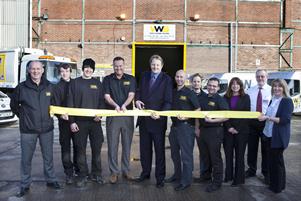
The factorys facilities include an incline tester, an Envirowiegh dynamic bin-weigher accurate to 0.5% or better, an eight load-cell on-board weighing system and a 15-metre ramp for testing the repeatability of accurate weighing on vehicles.
Mr Perkins MP said: I was really impressed by the cutting-edge innovation which has brought the company solid growth and an expanding international order book over the last few years, allowing them to expand and create jobs in Chesterfield. VWS is a world-leader in weighing technology and the high-tech manufacturing sector is key to getting the growth and jobs our economy so badly needs.
Julian Glasspole, VWS managing director, said: We are grateful to Mr Perkins and all our guests for coming along to mark the official opening of our factory here in Chesterfield. We will continue to invest resources into developing these facilities and to further growing our business in the future.
Restaurant reduces waste disposal costs by 45%
A Yorkshire fish and chip restaurant has seen a 45% reduction in its waste disposal costs with help from a bin press supplied by Shropshire-based environmental packaging supplier Agritel Ltd.

Whitbys restaurant in Rotherham, which is open seven days a week and employs 65 full and part-time staff, purchased a BP 11 bin press from Agritel in August 2012.
Waste from Whitbys is now crushed into 1,100-litre bins to hold the waste material, enabling the company to decrease the number of collections to three bins for general rubbish and two bins for recycled paper materials twice a week.
Whitby restaurant manager Darren Richards said it is now planning to purchase a bin press for another Whitbys restaurant opening up in Doncaster this month.
John Duffus, Agritel managing director, said: We are selling a number of them (bin presses) to traditional restaurants, fast food outlets and caravan parks but they are suitable at any business location where 1100 litre bins are regularly filled with disposable rubbish and recyclable paper waste.
Waste education centres welcome 15,000th visitor
Recycle for Greater Manchester has welcomed 15,000 visitors to its Waste Experience education centres since it first opened in 2009.

Recycle for Greater Manchester has four Waste Experience education centres, which are located in Bury, Bolton, Manchester and Stockport and each showcase a different technology. Visitors can see first-hand how waste is recycled, turned into compost and recovered into green energy.
The organisation, a partnership between Viridor Laing Greater Manchester Limited (VLGM) and the Greater Manchester Waste Disposal Authority (GMWDA), encourages visitors to its education centres from schools, universities and community groups across Greater Manchester.
The 15,000th visitor was from Hursthead Junior School, Stockport Year 3 class, who were visiting to see how their recycling is sorted and separated.
Alison Heaton, VLGM education officer said: The purpose of the education centres is to encourage people to see how valuable waste is and how important it is for them to do their part at home and recycle right.
Greater Manchester produces 1.1 million tonnes of waste each year. The organisations aim is to achieve at least 50% recycling and 75% diversion from landfill by 2015.
New WEEE targets to benefit Leeds recycling firm
Leeds IT equipment-recycling firm U Can Recycling is forecasting a profitable 2013 as UK companies respond to strict new government targets for the recovery of Waste Electrical and Electronic Equipment (WEEE).
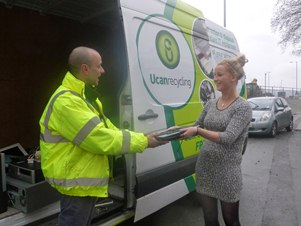
Established to focus upon WEEE, U Can specialises particularly in the recycling of redundant IT equipment, and has recently expanded its services to include the secure destruction of data.
Latest estimates show that by 2019, the UK will need to be recovering and recycling some 65% of WEEE from both businesses and households preventing potential harmful materials from ending up in landfill.
The firm is licensed by the Environment Agency for the collection and disposal of WEEE, and has launched a free IT waste collection service for businesses across the UK to make the meeting of WEEE obligations as easy as possible.
U Can managing director Rob Seal said: Businesses, colleges, banks, hospitals and local authorities need to carefully manage sensitive data, not only while it is in their possession but when it comes to equipment disposal too.
He added: Thats why we are expanding our WEEE recycling capabilities to meet what I anticipate will be a growing demand as we move through 2013. We have invested 65,000 in new confidential data destruction equipment that allows us to process IT waste to MoD level security. Thats how confident businesses and organisations across the country can be in our services.
The U Can site at Harehills enables the public to drop off scrap household computers and IT equipment. The firm currently employs 10 people and is expecting to quadruple its 2012-2013 turnover of 1.5 million.
Graphics firm calls for improved refuse truck signage
Truck graphic specialist Spedian is encouraging local authorities to make better use of signage on refuse trucks in order to improve the marketing of local waste services.

The UK firm provides invisible frame vinyl signage for vehicles, which uses a specially developed bonding agent and offers truck graphics which do not require bolts, rivets, screws or welds.
Lawrence Craig, Spedian chief executive, said: Refuse vehicles are, by their very nature, considered by the public to be dirty, unlikeable vehicles but we see them as the perfect canvas for messages. More and more councils are aware of this and using the sides of refuse trucks to communicate messages, offers and information to the public with strong visual impact and appeal.
He added: Not only does it provide councils with bright, clear messaging opportunities driving round the streets, it allows them to change these as often as they want to update their marketing at a low cost, and without taking vehicles out of service for more than an hour.
The firm provides signage for vehicles in the UK and its US customers include Coca Cola and McDonalds.

Register for free to comment