

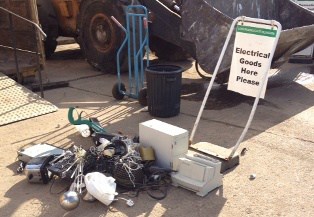
Fresh Environment Agency guidance on the classification of small mixed waste electrical and electronic equipment (WEEE) flies in the face of the governments efforts to reduce the administrative burden on businesses, it has been claimed.
The guidance, which was contained in technical notes on the interpretation of the definition and classification of hazardous waste published last month, states that any small WEEE collected from civic amenity sites should now be classed as both hazardous and non-hazardous waste.
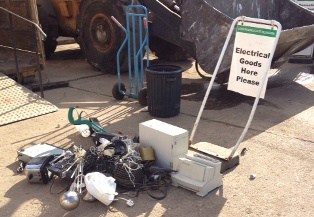
Previously, consignments of small mixed WEEE which includes items such as mobile phones and other handheld devices – would only have been classified as non-hazardous waste. But, as some small WEEE can contain elements of hazardous material, usually in small quantities, the Environment Agency has opted to apply a dual code to reflect the two types of waste.
According to the Agency, small mixed WEEE can only be classified as non hazardous if potentially hazardous elements have been identified and removed.
Administration
This has lead to concerns from some WEEE reprocessors and compliance schemes that this will create an increase in the administrative burden placed on those handling the waste stream, as it will increase the accompanying paperwork required for small mixed WEEE consignments.
‘The new EA guidance flies in the face of the governments Red Tape Challenge. It does nothing but increase bureaucracy and complicates a system, which had to this point been working perfectly well.’
Peter Hunt, Wastecare
The guidance comes at a time when the Department for Business, Innovation and Skills (BIS) is preparing its formal response to the consultation on changes to the WEEE system, which aims to reduce the cost of compliance with WEEE regulations on businesses.
Peter Hunt, managing director of waste management firm Wastecare, questioned whether the new guidance was necessary given that the material poses little risk to the environment if treated properly, and that the new requirements would only serve to complicate current arrangements.
He said: The new EA guidance flies in the face of the governments Red Tape Challenge. It does nothing but increase bureaucracy and complicates a system, which had to this point been working perfectly well.
If we alter guidance then we need to be sure that we do so to address a real and significant risk to health or the environment. If a system operates within the spirit of the law and achieves its objectives then why intervene?
Related Links
Meanwhile, there are also concerns that some treatment facilities will no longer be able to handle small mixed WEEE, as they will not have sufficient permits for handling hazardous waste.
Speaking to letsrecycle.com a compliance scheme representative said: This will have big consequences for all the shipments of small mixed WEEE being routed around the UK. They will have to be accompanied be accompanied by paperwork for hazardous waste and some treatment sites may not have the right permits.

Subscribe for free