
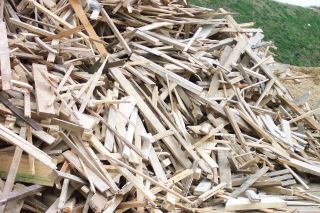
The move is hoped to provide clarity to wood recyclers regarding the quality of their material and to encourage the government to bring its wood waste regulations more in line with the risks posed by the material.
In particular, it could help re-establish the position of wood in relation to the Waste Incineration Directive- which currently requires all waste wood to be burnt in boilers with tight emissions controls.
Speaking to letsrecycle.com, WRA Secretary Rick Wilcox said: “We are trying to come up with a protocol to establish the scientifically based levels of contamination in wood and what is acceptable.
He added: “For example, if something is painted, it is sometimes so minimal that it is not a risk. We want to find when contamination becomes a problem.”
Meeting
Progress on the protocol project was unveiled earlier this month (March 5) at the WRA's quarterly meeting in Birmingham, which attracted 58 attendees.
Included in the protocol paper will be issues relating to levels of contamination, comparisons with virgin wood, diluting contaminated material, use of technology, a rejection protocol and boiler operational considerations.
The standard will also cover the need for regulatory changes on the spreading of material to land. The Renewable Energy Association and the Wood Panel Industries Federation will be asked to participate.
The WRA is to discuss funding possibilities with WRAP – although it is unclear whether this will be secured following a 30% budget cut at the organisation.
Mr Wilcox said: “This is not going to be easy and will need funding, but we feel the WRA needs to take a lead on this work.”
Packaging
At the Birmingham meeting, the WRA said that it had also completed a protocol and trainer handbook to give regulators more confidence in figures representing how much wood packaging which was being recycled.
The documents set out guidelines for wood recyclers to accurately assess how much wood packaging comes into their yards.
The protocol is due to be launched at the June WRA meeting in Glasgow, and all WRA members have already signed up.
Mr Wilcox said: “There was a feeling within government that the claims being made for the packaging element of some materials was inaccurate – this will give the government and regulators much more confidence about wood packaging.”
Statistics
Another area in which the WRA is trying to fill in information gaps is with regards to reliable statistics.
The WRA said that hardly any had been produced since WRAP work in 2003/04, and that it was currently compiling figures from members to help produce figures which it will then publish, on an annual basis.
Mr Wilcox said: “There is now an urgent need for statistics to enable us to provide a useful source of information for members, to plot trends and to use to support our negotiations with Government and regulators, or with suppliers and customers where necessary.”

Register for free to comment