


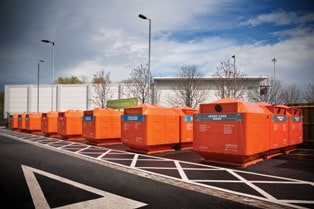
Sainsburys is taking control of bring banks at its stores under a new contract with Palm Recycling.
The retailer is replacing existing recycling facilities at stores, which are provided by local authorities and charities, with a standardised bring bank service. This will include banks for mixed cans, glass, plastics and paper and card, to be provided and serviced by Palm. In addition,banks for textiles, books and CDs and small waste electrical and electronic equipment(WEEE) willbeprovided by charity Oxfam and WEEE producer compliance scheme Valpak respectively.

The containers carry the familiar Recycle Now logo and colour coding to help customers select the correct container.
The system has already been trialled at 30 stores in London and will be gradually rolled out to up to 350 of the companys stores.
Costs
While local authorities will lose any revenue gained from existing banks, Sainsburys said the new service would reduce local authority costs involved with servicing and collecting material from the bring banks, help to boost recycling rates and offer a more aesthetically-pleasing recycling facility.
In addition Sainsburys will be releasing recycling data from the banks to local authorities free of charge.
This is hoped to make the service more acceptable to local authorities than the system introduced last year by Tesco and contractor DS Smith Recycling, which caused a stir when it was suggested that local authorities might have to pay for recycling tonnage data (see letsrecycle.com story).
The move comes after Sainsburys was last year criticised by Cornwall council for refusing to fund the cost of bring banks in the county after the council withdrew its own funding (see letsrecycle.com story).
Paul Crewe, Sainsburys head of engineering, sustainability, energy & environment, said: By making this service as convenient as possible for customers were hoping that itll become part of their weekly shop, and the feedback weve received from the trial indicates that customers are in favour of a more comprehensive service. This is particularly the case if their current kerbside service doesnt collect materials which these new facilities accommodate such as clothing, mixed plastics and small electrical items.
Risa Wilkinson from the project and communications office at the London Borough of Richmond-upon-Thames, where the banks have already been rolled out, praised the approach taken by Sainsburys.
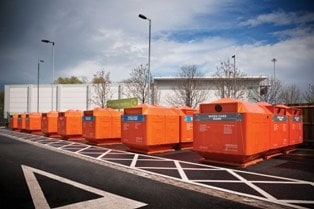
She said: The transition to management of the recycling site by Sainsburys has been smooth and trouble free. The new containers are clean and clearly labelled and Sainsburys understand the need to provide tonnage information to our WasteDataFlow submission and are cooperative in providing the data.
Palm
The contract represents a big win for Palm, which already operates 6,000 bring banks on behalf of 100 local authorities and other organisations across the UK.
Mandy Kelly, business development director at Palm Recycling, said: We are delighted to be partnering Sainsburys in this way and the initiative shows Sainsburys commitment to its positive waste usage goal. The enhanced recycling facilities will offer a greater sense of convenience to Sainsburys customers and also deliver potential cost efficiencies for local authorities.
Ross Johnstone, business development manager at Palm Recycling, told letsrecycle.com that the company is already speaking to local authorities to try to prepare them for the change and give them time to remove their own banks from sites.
He said: The feedback we have had from councils so far has been really positive. Initially we sent letters to all chief executives three or four weeks ago followed by letters to councils in London and the South East to explain that this is happening, as well as phone conversations to check they are on board.
Materials
Paper collected from the banks will go to Palms paper mill in Norfolk, while plastics, cans and glass will go to other reprocessors. The banks will be serviced using a hi-ab mounted vehicle to ensure a safe discharging mechanism with additional noise reduction technology. A crane loading system will be used and operated by one person from the ground.
Meanwhile the items collected by Oxfam will be either collected local by Oxfam shop teams or by Wastesaver, its textile recycling arm. And, Valpak is providing each participating store with a Sainsburys branded reinforced galvanised steel container with clear information on what waste electrical and electronic (WEEE) equipment can be deposited in the ban.
The containers are serviced through a front door opening and collections are made by the same vehicles that service Valpaks 20,000 battery collection points. The WEEE will then be sent to Authorised Treatment Facilities for reuse or recycling.

Subscribe for free