

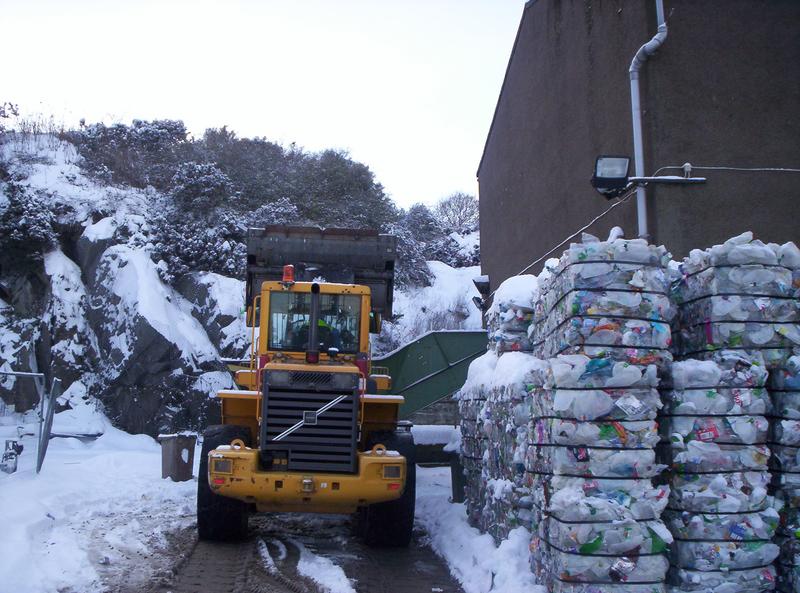
The waste and recycling industry has said that the south west of England and south Wales, Northern Ireland and Scotland are being particularly badly hit today – after southern England saw snowfalls at the weekend. Gloucester city council was typical of many in cancelling services.
A statement from Gloucester said: “Refuse and recycling collections have been suspended in the city due to adverse weather conditions. Residents who were due for a collection today are asked to leave their bins out. Those bins that are missed due to the weather conditions will be collected whensafe to do so. Garden Waste collection will be suspended until further notice.”
On the operations front SITA UK is adapting its collection services to meet the conditions while Aylesford Newsprint is keeping an eye on supplies of waste newspaper, as is much of the paper sector in terms of raw materials.
SITA UK
Speaking to letsrecycle.com about the impacts of the severe weather, Dave Foster, chief operating officer for waste management firm SITA UK's logistics division, said that there were a lot of difficult conditions being seen across the UK, especially in Northern Ireland. “On the municipal side we are meeting with local authorities early in the day and taking join decisions about what to do. We will decide if its safe to carry out collections or if the decision is taken to suspend services this is usually announced on the council website and our communications team will help inform communities.”
Services can sometimes be provided to properties on main roads, Mr Foster said. “For example, in Halifax for Calderdale council we are managing to service properties on main roads which represents about 25% of normal rounds.”
He explained that contractors and councils have to be cautious that while they employ experienced drivers who can cope with the conditions on gritted roads, pavements can be far more difficult. “Walking on the pavement can be hazardous and handling bins and containers poses additional challenges.”
Snow shoes
SITA UK is now looking to its northern European divisions, including Sweden for advice. This could include using studded winter tyres for vehicles. And, snow shoes are also being trialled by operatives working in Calderdale and Doncaster. These shoes are an overshoe with spikes to help make it easier to walk safely.
On the commercial and industrial side, Mr Foster said: “It is easier to acce ss C & I waste on main roads and most industrial estates are passable. But, smaller units can be more difficult to reach. Again, this isn't an exact science and it comes down to what we can safely do.”
Mr Foster added praise for SITA UK's staff and said he though this would apply across the industry and in councils: “I'd like to commend their efforts and determination in such hard circumstances.”
Aylesford
Andrew Perkins, head of recycling at Kent-based Aylesford Newsprint, said that in the first snowfalls a few weeks ago deliveries of used newspapers and magazines to the Kent mill had reduced. “It is now a little too early to say how we will fare in the coming weeks but like all the mills we will be concerned to ensure supplies and also that used newspapers are not lost in residual waste.”
Mr Perkins added: “It is not so much deliveries to the mill but the collection of materials at the household level which could have the main impact on the sector, as once the material is collected there is a lot in the pipeline for the mills.”
On the production side, Mr Perkins said that running the paper machines in very cold weather meant extra attention had to be paid to issues such as condensation through ensuring adequate ventilation and more heating of the mill.

Register for free to comment