

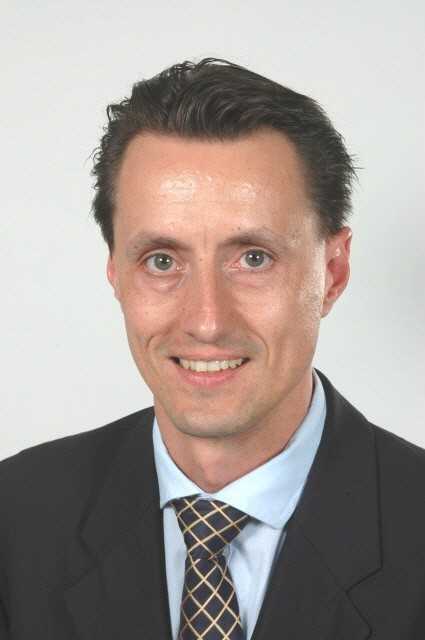

MBT in Germany is still alive and in the best of health
Michael Balhar, ASA
Michael Balhar, manager of the Association for Material Specific Waste Treatment (ASA), told letsrecycle.com that MBT – which comprises a sorting facility and some kind of biological treatment – was “still alive and in the best of health”, and that there were some isolated problems with it.
His comments come after German incineration company MVV Umwelt claimed in late 2008 that MBT had not always worked when it was used in Germany and that energy-from-waste was increasingly a more attractive option for councils and waste management companies (see letsrecycle.com).
Mr Balhar pointed towards the 48 plants currently “successfully” operating in Germany using variations on MBT technology to pre-treat up around 25% of the country's municipal solid waste as proof of its success.
And, he outlined a number of advantages that the technology offered, including “lower investment costs in relation to waste incineration plants”, and that, in Germany at least, MBT plants had a “smaller projection period” than incinerators.
Mr Balhar explained that MBT was particularly effective in allowing different materials within residual waste to be treated in different ways according to their properties.
He cited the examples of using anaerobic digestion to produce biogas from organic material, while dry materials such as paper and plastics could be prepared as a solid recovered fuel which could result in reduced use of fossil fuels.
Innovative
Mr Balhar acknowledged that, as a “young and innovative” technology, MBT had faced some difficulties in Germany, but said that a German Federal Environment Agency study in 2007 had shown that “existing problems could be solved to [a] large extent and reduced clearly”.
Explaining that many of the problems had centred on the use of anaerobic digestion, he said however that the “MBT plant operators mastered the challenges placed against them well”, and said that questioning the technology was “not justified”.
He said that MBT had potential to be rolled out across Europe, explaining it was of “great interest to our European neighbours.”
“If one doesn't consider the very ambitious German requirements and limit values as standard, relatively small investments are necessary to realise the EU provisions and guidelines all over Europe quite rapidly,” he said.
While take-up of MBT technology has been relatively limited in the UK to date, Defra said last month that it had begun to investigate the market for solid recovered fuel to make it a “genuine” waste treatment option for councils (see letsrecycle.com story).
And, the £700 million public private partnership waste treatment contract between Cumbria county council and Shanks that is expected to be signed later this month is built around the development of two 70,000 tonne-a-year capacity MBT plants (see letsrecycle.com story).

Register for free to comment