


The company, established in 1965, considers that it is one of the UKs largest independent technical plastics recycling businessesand told letsrecycle.com that the new line will deliver a further 8,000 tonnes of compound a year using 100% recycled materials, satisfying the increasing municipal waste markets both at home and abroad.
Peter Atterby, managing director of Luxus said: Having worked with local authorities for many years now, we have developed a recycling closed loop service known as the Bin2Bin scheme which generates revenue through payment in weight for used bins.
The scheme works by using products at the end of their natural life as a resource to remanufacture the same product. We simply purchase the end of life bins, which are then washed, shredded, granulated, formulated to bring the material back to the required specification, compounded and coloured for re-use into new bins.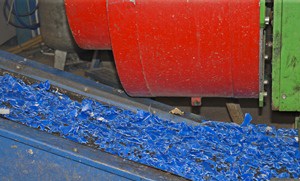
Payment
Mr Atterby said that a payment is made by weight for the used bins dependent on their condition and that recycling data is supplied back to the council concerned and that councils either arrange delivery to the plant at Louth or Luxus collects. He added: Some local authorities are accelerating the collection of varying waste streams to meet the European target, while others are only just introducing their first ever wheel bins.
At present Luxus provides a service for local authorities across Great Britain including to St Edmundsbury district, Rushcliffe borough; Vale Royal borough; North Lincolnshire district and Wakefield metropolitan district. The most recent contract secured was for the East Riding of Yorkshire council. 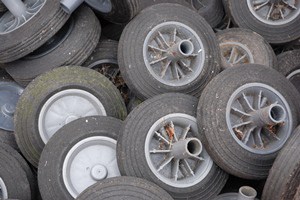
To help in the manufacture of specific colour bins, explained Mr Atterby, Luxus can return colour matched compound to bin manufacturers for production of quality new bins to EN840 to meet RAL standards for specific local authorities.
Granulator
Once the bins are at the plant they are categorised for processing by the most appropriate means. They are then fed into the granulator and washed either post or prior depending on the condition of the bins. The material is then blended to create a homogeneous mix that then undergoes stringent testing. This then becomes an ingredient into the mix for wheel bin compound to meet required EU specifications. To meet these requirements UV stabilisers, impact modifiers and process lubricants are added and then finally colour matching is required to the new bin colour.
Related links
Wheels are also collected for reprocessing or potentially reuse and the company also takes in end of first life transit packaging supplied by logistics companies as a closed loop recycling process.


Register for free to comment