



The third phase of the voluntary waste reduction agreement for the grocery sector, the Courtauld Commitment, is set to be launched this Spring and will include targets for 2013-15, letsrecycle.com has learned.
The new agreement will be based on the targets set out in Courtauld Commitment 2 covering packaging, food and supply chain waste – and will focus on areas of significant environmental impact.Food waste isunderstood to feature prominently in the new agreement and targets are expected to move entirely away from weight-based goals to those which measure carbon.

However, it is not expected as to go so far as to look at the environmental life cycle of individual products over their lift time, as had been originally intended, due to the complexity of doing so and the number of products involved.
The Courtauld Commitment is managed by the government-funded resource efficiency body, the Waste & Resources Action Programme (WRAP), which has been working with Courtauld 2 signatories and the UK governments, to develop initial targets for the Courtauld 3 Commitment.
A spokeswoman for WRAP confirmed that Courtauld 3 would be launched in the Spring, but said the exact date was yet to be determined.
She said Courtauld 3 will tackle areas with significant environmental impact. It will focus on dealing with the pressing environmental issues industry is facing now, while positioning for the future.
The targets will be announced in Spring 2013 when the new commitment is launched.
Story continued below
| Objective | Courtauld Commitment 2 targets (2009-12) |
|---|---|
| Packaging – to reduce the weight, increase recycling rates and increase the recycled content of all grocery packaging, as appropriate | 10% |
| Household food and drink waste – to reduce UK household food and drink waste | 4% |
| Supply chain product and packaging waste – to reduce traditional grocery product and packaging waste in the grocery supply chain | 5% |
Responsibility deal
The original Courtauld Commitment was launched in 2005 as a responsibility deal aimed at reducing packaging and helping householders reduce food waste.
Phase 2, launched in March 2010, ran from 2010 to 2012 and required signatories to reduce food and drink waste by 4%; reduce grocery product and packaging supply chain waste by 5% and reduce the carbon impact of grocery packaging by 10%.
Forty-two retailers, brands and suppliers, including the likes of Tesco, Mars and Unilever, last year reported strong results against the targets set for the first two years (see letsrecycle.com story). Final results are due to be announced in Autumn 2013.
However, since January 2013 there have been no targets for the grocery sector to work towards and there is understood that one reason for the delay has been disagreement among stakeholders.
Packaging
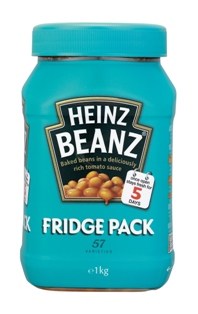
One area of contention is packaging waste, where it is feared that reducing waste further could create the perverse effect of increasing product waste.
There are also concerns that, under the current approach, it is becoming increasingly hard to make progress and that the biggest gains could be had by looking at the whole life cycle of products. This is something being currently addressed by WRAPs Product Sustainability Forum but which is still in its early stages (see letsrecycle.com story).
Dick Searle, chief executive of the Packaging Federation, the trade association for the UK packaging manufacturing industry, confirmed that taking a product-based approach in Courtauld 3 had been difficult.
He added that he hoped the emphasis in Courtauld 3 should be on food waste as opposed to packaging as this was by far the biggest environmental issue.
He said: My hopes for Courtauld 3 are that the emphasis on food waste will be increased. With food waste it is not just about the environmental impact but also food security. As the world develops that is going to be increasing competition for food supply. A very good was to increase supply and reduce waste is actually to use more packaging.
What consistently worries me is that there has been so much nonsense talked in the past with regards to the environmental impact of packaging when in fact it is the answer.
BRC
Alice Ellison, environmental policy advisor at the British Retail Consortium, which represents UK retailers, told letsrecycle.com that the BRC was very pleased with progress made under Courtauld to date but that further reductions were becoming more challenging as targets were met, meaning that a product-based approach would be necessary.
Related Links
She said: I think the agreement has been really successful in achieving large reductions in packaging and food waste. There will come a time when that will no longer work and that is why it would then be appropriate to move to a product-based approach. That makes it easier to go across sectors and dig a little deeper. There are already voluntary agreements on home improvement and foodservice and hospitality. The Product Sustainability Forum is already looking at other things.

Register for free to comment