

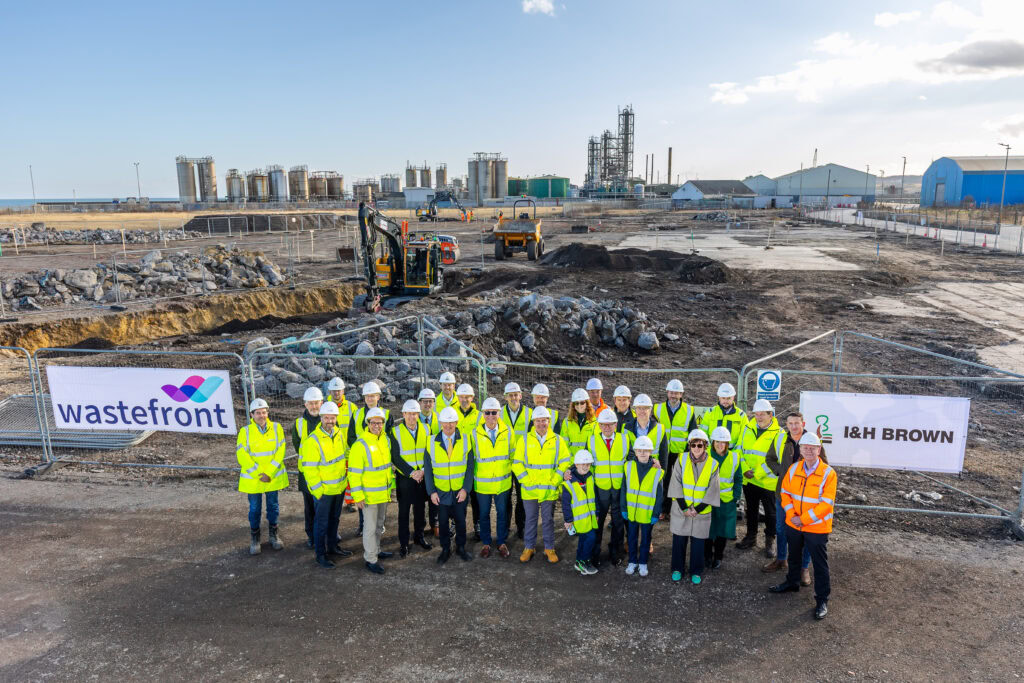
The facility’s first commercial phase will be starting up at the end of 2026, with the second launching a year later. Once fully operational, the plant will aim to process 10 million end-of-life tyres annually, converting them into tyre-derived oil for refining into SAF and other sustainable fuels. This is done via a heating process without oxygen called pyrolysis technology.
By 2030, Wastefront aims to operate four large-scale plants, collectively producing 128,000 tonnes of oil annually – said to be enough to yield approximately 90,000 tonnes of SAF. Wastefront has been backed by IAG.
The UK’s SAF mandate – introduced on 1 January 2025 – requires at least 10% of all jet fuel used in UK flights to come from sustainable feedstocks by 2030, rising to 22% by 2040. However, domestic SAF production remains significantly short of the target of 1.2 million tonnes needed by 2030.According to the Energy and Climate Intelligence Unit (ECIU), the UK’s net zero sector grew by 9% in 2023, compared to just 0.1% for the broader economy.

‘Just the beginning’
Vianney Valès, CEO of Wastefront, stated: “Wastefront is delivering an innovative project to focus on two key issues: tyre waste and aviation emissions. Our circular process not only prevents millions of tyres from being discarded in landfills but also provides a scalable, cost-effective pathway for SAF production. This process will also reduce lifecycle emissions by more than 80% compared to fossil fuels. The Sunderland facility is just the beginning – we aim to expand rapidly to meet the growing demand for sustainable fuels.”
Jonathon Counsell, IAG’s group sustainability officer, said: “Last year IAG powered 1.9% of our operations using SAF and we are pleased to support Wastefront’s pioneering work to turn waste tyres into much-needed, domestically produced renewable fuel. To enable aviation to meet the UK’s new mandate and growing SAF demand, there needs to be even greater policy support so manufacturers and innovators like Wastefront can scale new technologies.”
Leader of Sunderland city council and chair of the Port of Sunderland board, Michael Mordey, said: “Port of Sunderland is growing a deserved reputation as the UK’s advanced materials handling hub. It’s a port with a clear vision to support the circular economy, in a city advancing with one of the most ambitious regeneration programmes in the country, and we’re proud that this has captured the attention of Wastefront.”

Register for free to comment