



The waste wood market has traditionally been driven by seasonal demand, with arisings from summertime construction work helping to boost stocks of material, and winter demand for heat and energy seeing larger amounts used for biomass burning by colder countries in northern Europe, such as Sweden.
Usually this results in recyclers raising their summer spot market gate fees when they struggle to offload material, before reducing them in the winter in response to greater movement on the market.
However, milder winters in recent years on the continent alongside increasing domestic capacity for waste wood biomass means that many expect a less volatile UK market going forward and one that is less reliant on export.
Indeed, the number of waste wood biomass plants set to come online in the UK before the end of 2017 alone runs well into double figures. This suggests investor confidence in the domestic biomass energy sector has risen since 2013, when concerns were raised over attracting investment for biomass plants (see letsrecycle.com story).
However, many of the new biomass plants are not yet operating, and the mild winter in 2015/16 coupled with global financial pressures and a drop in fossil fuel prices has not made things any easier for UK waste wood exporters and indeed for biomass operators on the continent.
Steadier market
There was only a brief cold snap in Sweden in early January lasting less than two weeks, and as consultant Neil Bailey of Contract Energy Services explained, it is difficult for European biomass plants to respond to such short-term changes in temperature, with waste wood material needing to be shipped all the way over from the UK.
“There’s still large volumes going to Sweden, but I’d say there is a better balance in the market.”
Wood recycler

Speaking to letsrecycle.com, he said: “In order to see a significant boost to waste wood exports from the UK, you really need a sustained period of cold winter weather of at least three to four weeks.”
Meanwhile he suggested that with oil prices so low, during shorter periods of cold weather it may be considered more cost effective to look to fossil fuel electricity generation rather than renewables: “The oil price is so cheap there is no need for energy plants to flex.”
Yet, despite the mild winter weather and arguably lower demand from Sweden for material, waste wood operators have reported a much steadier market for lower grade wood over the past six months or more.
This may be in part due to UK biomass facilities such as MVV’s Ridham Docks facility coming online in the past year, while national firm Stobart continues to expand its waste wood biomass operations ahead of a number of plant openings over the next year or more (see letsrecycle.com story).
As one wood recycler told letsrecycle.com: “There is less reliance on Sweden, with more demand in the UK compared to a year ago. People aren’t quite as worried about the market and making margins, but it is still hard. There’s still large volumes going to Sweden, but I’d say there is a better balance in the market.”
Chairman of the Wood Recyclers Association (WRA) and market development director at Suez, Andy Hill, agreed: “I would describe the current export levels as a steady flow. There aren’t the same kind of volumes going abroad that there were a couple of years ago, but it isn’t horrendous.”
Panel board
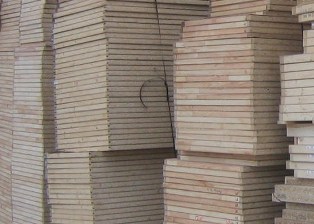
There are long-held concerns in the wood panel industry that a greater volume of high grade waste wood material will find its way into the biomass energy sector as more domestic plants come online – material which has traditionally been recycled into panel board.
Indeed, one wood recycler in the Midlands told letsrecycle.com he had recently given up dealing with lower grade wood as he struggled to offload the material, instead switching to processing grade A wood for biomass.
Now, he said, he was able to command gate fees of up to £50, compared to the £15 fees he was receiving for lower grade material a year ago.
In addition, a local Birmingham newspaper reported recently that the city council is sending more waste wood collected at its household waste recycling centres (HWRCs) to biomass energy outlets instead of recycling it due to the higher costs involved – despite the council’s declining recycling rate.
Strong start
Nevertheless, on the panel board front, recyclers still reported a strong start to 2016 before a flatter February and March, and there are signs that demand has picked up again since Easter.
Mark Hayton, director at Egger’s wood recycling arm Timberpak, said that gate fees have remained relatively steady since the turn of the year, but that there have been some wood recyclers in the market place “trying to gain extra volume by offering better prices”.
He said: “Personally I think this isn’t necessary the market will pick up, and the prices need to stay firm with the extra expenditure everyone is going to need to help with more robust fire plans and the installation of more equipment to try to comply with the current unworkable FPP.”
Storage
Still, much of the attention for wood recyclers will be firmly on the sector’s current waste wood fire tests and the Environment Agency’s FPP guidance, with some in the sector deeply concerned that stack size restrictions could see operators going out of business due to the cost of gaining further land to store material.
Detailed findings of recent burn tests designed to glean scientific evidence for the fire risk of waste wood are expected in May, and many wood recyclers will be hoping that the Agency takes note of recent early indications from the tests – in particular on stack sizes and separation distances (see letsrecycle.com story).

Subscribe for free