


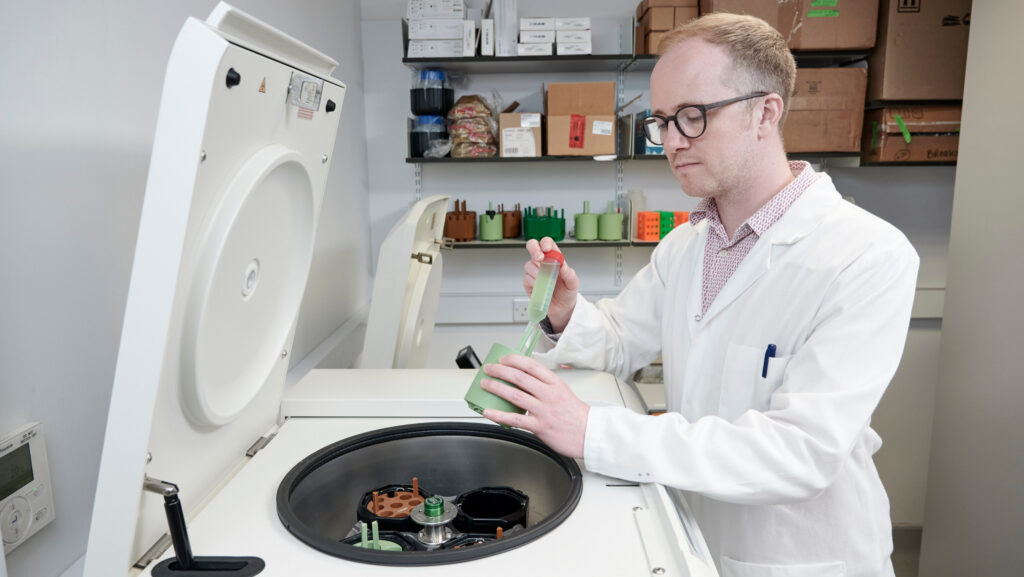
The group has engineered bacteria to transform polyethylene terephthalate (PET), commonly used in food and drink packaging, into L-DOPA, a widely prescribed treatment for the neurological condition.
The researchers said that it is the first time a biological process has been designed to convert plastic waste into a therapeutic drug.
The team has demonstrated the production and isolation of L-DOPA at preparative scale and will now look to improve the efficiency of the system and assess its potential for industrial use.
Bacteria used to break down waste plastic
The approach involves breaking down PET into terephthalic acid, one of its core chemical components.
Around 50 million tonnes of PET are produced globally each year, with recycling systems struggling to fully capture and process the material.
Engineered strains of E. coli are then used to convert this compound into L-DOPA through a sequence of biological reactions.
According to the research team, the method could offer an alternative to conventional pharmaceutical manufacturing, which typically relies on fossil fuel-based feedstocks.
Professor Stephen Wallace, of the University of Edinburgh’s School of Biological Sciences, who led the study, said: “Plastic waste is often seen as an environmental problem, but it also represents a vast, untapped source of carbon.
“By engineering biology to transform plastic into an essential medicine, we show how waste materials can be reimagined as valuable resources that support human health.”
Potential for wider applications
Researchers said that the process could support the development of a bio-based upcycling sector, using waste plastics as a feedstock for higher-value products.
In addition to pharmaceuticals, the same approach could be applied to produce chemicals used in flavourings, fragrances, cosmetics and industrial applications.
The work was supported by the UK Research and Innovation and the Industrial Biotechnology Innovation Centre, with industry partner Impact Solutions.
It was carried out at the Carbon-Loop Sustainable Biomanufacturing Hub, funded by the Engineering and Physical Sciences Research Council.
Dr Liz Fletcher, Director of Impact and Deputy CEO at IBioIC, added: “This project highlights the potential of biology to reshape the way we think about waste.
“Turning plastic bottles into a Parkinson’s drug isn’t just a creative recycling idea, it’s a way of redesigning processes that work with nature to deliver real-world benefits.
“By demonstrating that a harmful material can be converted into something that improves human health, the team is proving that sustainable, high-value applications of biology are both practical and effective.”


Subscribe for free