


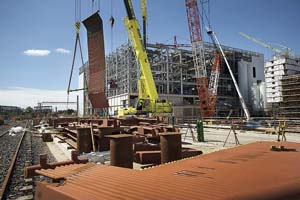
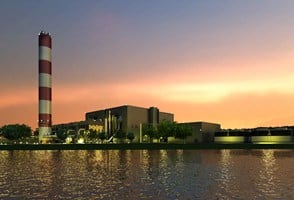
Viridor is due to begin treating waste at the 850,000 tonnes per year capacity energy from waste plant in Runcorn next month, despite fears a restriction on road access could risk future supply of RDF to the facility.
The plant which is scheduled to complete phase one commissioning in March – has been developed under consortium Viridor-Laings 25-year PFI contract with Greater Manchester Waste Disposal Authority (GMWDA), a 3.8 billion deal signed in April 2009 (see letsrecycle.com story).
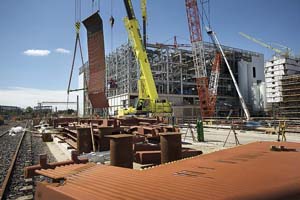
The plant will begin burning non-recyclable waste from the authority next month, while a second phase of commissioning, which will see refuse-derived fuel sourced from further commercial contracts, is on schedule to be completed at the end of the year.
Viridor-Laing has developed the plant in partnership with major chemical producer INEOS ChlorVinyls, which intends to use the estimated 51MW of heat and 70MW of electricity generated by the EfW to power its neighbouring chlorine and PVC manufacturing site.
In total, the project represents a 440 million investment, with engineering firm Keppel Seghers undertaking construction of the plant in 2010 for 223 million (see letsrecycle.com story).
Transport
However, Viridor has warned it might have to consider other options for transporting material to the plant, after Halton borough council rejected an application late in the day to transport an increased amount of RDF to the facility by road.
Under the councils decision, the amount of RDF that can be transported to the facility by road is restricted to just 85,000 tonnes despite the original planning application for the facility designating the plant would need to deliver up to 480,000 tonnes this way when it was submitted in 2007.
The restriction, which is currently being appealed by INEOS ChlorVinyls, will not affect the first phase of the Runcorn operation as all RDF received from GMWDA is scheduled to be transported via rail.
But, a spokeswoman for Viridor confirmed the decision would pose a problem when signing short-term contracts with commercial suppliers and other local authorities, where it would be economically unviable to construct rail links for transportation of RDF.
She said: We are seeing less and less of these long-term contracts coming up, and losing the contract with Cheshire is an example of that. And unfortunately, if you sign a short-term contract, there is often little capacity to budget in rail-links for these authorities.
On January 14 we held a four-day public inquiry, and we are expecting the results of that in early 2014. There are other options, for instance we have looked at links by water. But in terms of flexibility and cost, road is always going to be the most efficient option.
Wrexham
Meanwhile, Viridor and GMWDA has agreed to process between 20-25,000 tonnes of RDF from Wrexham county borough council, in a bid to sell the 325,000 tonnes of capacity the plant holds in reserve.
The short-term arrangement, which will see the material sent to Runcorn between June this year and May 2015, is an interim move while Wrexham council awaits full construction of their contracted outlet for RDF which can be produced at its new mechanical biological treatment plant (see letsrecycle.com story).
Councillor Neil Swannick, Chair of GMWDA said: Collaboration is seen as a useful approach to the delivery of local government functions and it makes environmental and economic sense for Wrexham to access our facility and avoid expensive landfill disposal. In this way GMWDAs contract is delivering value for money for Greater Manchester council tax payers and also ensuring that as much waste as possible is being diverted from landfill.

Subscribe for free