




Speaking out concerning recent criticism against excessive packaging (see letsrecycle.com story), the company told delegates at a national plastics conference yesterday that it would not feel “guilty” about the packaging it uses.
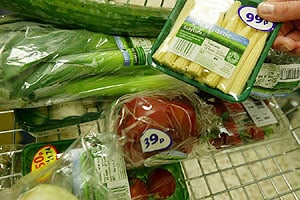 Tesco says packaging for items like fruit and vegetables costs money, and that therefore it does not use too much packaging just for the sake of it |
Tesco senior buyer Andrew Duckworth insisted that the complex supply chain getting products to the supermarket shelves of 1,500 stores made things like shrink-wrapped fruit and vegetables necessary.
He said: “It costs us more to put packaging on there because of the initial value, and also because of EU legislation – so if we can minimise it, it's a good thing. We are not perfect and if we thought we were brilliant, we would not want to reduce packaging.”
The nation's largest supermarket chain is part of the Courtauld Commitment agreed by retailers to cut packaging use by 25% before 2010. Tesco said it will look at its own packaging and that of suppliers, and will adhere to the waste hierarchy by aiming firstly to minimise waste.
Mr Duckworth, who was speaking at the Recoup conference in London, said his company was also rolling out more community recycling bins across England, including in Manchester, the Midlands, the Home Counties and the M4 corridor.
And, he noted the incentive system in place to encourage customers to recycle more. (see letsrecycle.com story)
Biodegradable plastic
Also speaking at the Recoup conference yesterday, Tony Breton, a waste expert at Italian research company Novamont, told delegates about his company's Mater-Bi technology for biodegradable plastics.
This is where starch from corn is broken down and made into a range of plastic products, from film to carrier bags and from hygiene products to dog bones, which will break down if taken to an industrial composting facility.
| Related links: |
The bags are used in Italy and Spain to store food waste – garden waste is collected separately in the Mediterranean – and collected weekly by the authorities.
Peter Skelton of the Waste and Resources Action Programme discussed consumer research suggesting that there are concerns that biodegradable plastics might not break down in a home compost bin, and that decomposition will release harmful gases into the atmosphere.

Subscribe for free