


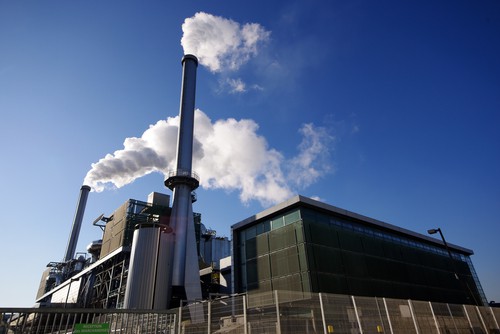
The study, titled ‘Waste incineration under the EU ETS – an assessment of climate benefits’, was carried out by CE Delft. Commissioned by Zero Waste Europe and Reloop, it highlighted a drop in carbon emissions and an increase in new jobs as some of the main benefits of including waste incineration in the EU ETS.
While the study focused on the EU ETS, the findings hold relevance for the UK market too as the UK government and the EU have recently announced plans to sync their respective emissions trading schemes (see letsrecycle.com story). The confirmation of the positive impact such move could have is also welcome in light of plans to include waste incineration in the UK ETS from 2028.
The study found that adding waste incineration to the EU ETS would help cut carbon emissions by 4 to 7 million tonnes in 2030, with this number rising to 18 to 32 million tonnes in 2040.
It then noted that these reductions stem from a combination of pre-collection and post-collection sorting and recycling of waste, waste prevention, carbon capture and storage (CCS) measures as well as emission reduction efforts in other sectors of the EU ETS.
Another advantage of including waste incineration in the ETS would be the increase in new jobs as recycling is more labour-intensive than burning waste, the study highlighted. It explained that transitioning from incineration to recycling would create 8,700 to 16,400 new jobs by 2030.
The study also recommended complementary policies such as mandatory recycled content in plastics, wider use of pay-as-you-throw (PAYT) tariffs and stronger extended producer responsibility (EPR) schemes to maximise impact.
