

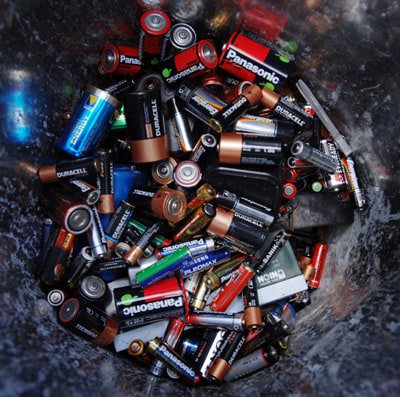
The schemes will allow battery manufacturers and distributors to meet their obligations under the UK regulations for battery recycling when they come into force at the start of 2010.
-
Budget Pack
-
BatteryBack
-
CCR Rebat
-
DHL Battery Compliance
-
ERP UK Ltd
-
REPIC eBatt
-
Valpak
The only unsuccessful application was from Econo-Batt. The Agency has not given its exact reasons for not approving the application, but one of the three groups involved in the Econo-Batt application, Hampshire-based battery collection and recycling firm Loddon Recycling, has revealed it withdrew from that particular application soon after it was submitted.
Of the approved schemes, Budget Pack, DHL, ERP, REPIC and Valpak already run WEEE and/or packaging compliance services, while BatteryBack is a partnership between compliance company WasteCare and waste management company Veolia.
The one scheme without a UK compliance background, German-owned CCR Rebat, claims to have collected more than 60,000 tonnes of waste batteries across 13 EU countries last year, and its parent company largely operates in logistics.
Commenting on today's announcement, Bob Mead, batteries implementation project manager at the Environment Agency, said: “Battery compliance schemes will collect, treat and recycle batteries on behalf of large producers and must have viable plans to collect enough batteries to meet members' obligations.
“After assessing potential schemes, one was refused as we were not satisfied that their plans would ensure this would happen.
“By 2012, one quarter of all end-of-life portable batteries in Britain, some 7,500 tonnes, must be recycled rather than discarded. To achieve this we need to act now,” he added.
Regulations
Under the regulations, which transpose the EU Batteries Directive into UK law, producers who place more than one tonne of portable batteries a year onto the market will be expected to join a compliance scheme to fund the collection, treatment and recycling of waste batteries from January 1 2010.

By 2012, one quarter of all end-of-life portable batteries in Britain, some 7,500 tonnes, must be recycled rather than discarded. To achieve this we need to act now
Bob Mead, Environment Agency
And, all retailers – or distributors – selling more than 32 kilograms of batteries a year will be expected to provide free in-store take-back of waste portable batteries from February 1 2010.
The regulations aim to help the UK reach the initial target set by the EU for it to recycle 25% of waste portable batteries by 2012. Currently the UK collects just 3% of the 30,000 tonnes of waste batteries it creates each year.
Valpak
Following today's decision, Steve Gough, chief executive of Valpak, one of the schemes to receive approval, said: “Now we are approved our reprocessors, local authority partners and existing pre compliance members will be able to confirm their arrangements with our scheme.
“They'll inform others they know or work with, who manufacture or sell batteries and products containing batteries, and the scheme will grow further. It is this network of partners that ensures everyone is aware of the regulations and that Valpak is the scheme that can best help them understand and comply with the law, he added.
Valpak today revealed that, in addition to the 50 producers and retailers who had already provisionally signed up to them for batteries compliance, battery manufacturer Varta is recommending its UK customers sign up to the scheme.
Alex Stapleton, Varta's distribution manager, commented: “Varta are not obligated in the UK themselves but wanted to recommend a battery producer compliance scheme who is both reliable and competitive.
“Valpak have an excellent reputation in the field of compliance and they have obviously done their background research and business planning on batteries recycling. We are happy that Valpak bring qualities to the relationship which match Varta values,” he added.
ERP
A spokeswoman for ERP, which last week revealed that the UK's largest battery producer Duracell had committed to sign up to its scheme if it was approved (see letsrecycle.com story), told letsrecycle.com that the scheme's approval was “great news”.
“We really look forward to the challenge of getting out national networks for collection up and running,” she added.
REPIC
Dr Philip Morton, chief executive of REPIC, commented: “We are obviously delighted with the news as the scheme, REPIC eBatt, complements our existing WEEE and packaging services. The move into battery recycling was the next natural progression to providing a one stop solution for all our members', local authorities' and distributors' collection needs, they all see this as a very positive step.
“We look forward to working with the other approved schemes to achieve a successful UK battery implementation,” he added.
Budget Pack

Its going to be very exciting, this next couple of months
Steve Clark, managing director, Budget Pack
Meanwhile, Steve Clark, managing director of another scheme approved today, Budget Pack, told letsrecycle.com that he was “very pleased” the scheme had been approved, after an “interesting journey to get everything set up in a fairly short timescale”.
Outlining the next steps for the scheme, he explained that “we need to have conversations with our members to sort out the paperwork”, as well as undertaking a similar process with the collection partners and networks they had been talking to, and encouraging other potential members to sign up.
And, he predicted that “its going to be very exciting, this next couple of months”.
Next steps
Following the announcement, the seven approved schemes now have just two weeks – until October 15 – to formally sign up producer members, and until October 31 to register those members with the Environment Agency.
With a relatively small number of obligated producers, in comparison to the WEEE and packaging producer responsibility systems, and the comparatively high costs of collecting and recycling waste batteries, some in the sector had speculated there would be fierce competition between schemes for members (see letsrecycle.com story).
But, with the identity of the eight prospective schemes having been announced in June 2009 (see letsrecycle.com story), it is believed that the majority of schemes already have informal agreements in place with the largest producers, distributors and collection networks, and, as a result, the next two weeks will largely involve formalising those relationships.

Register for free to comment