


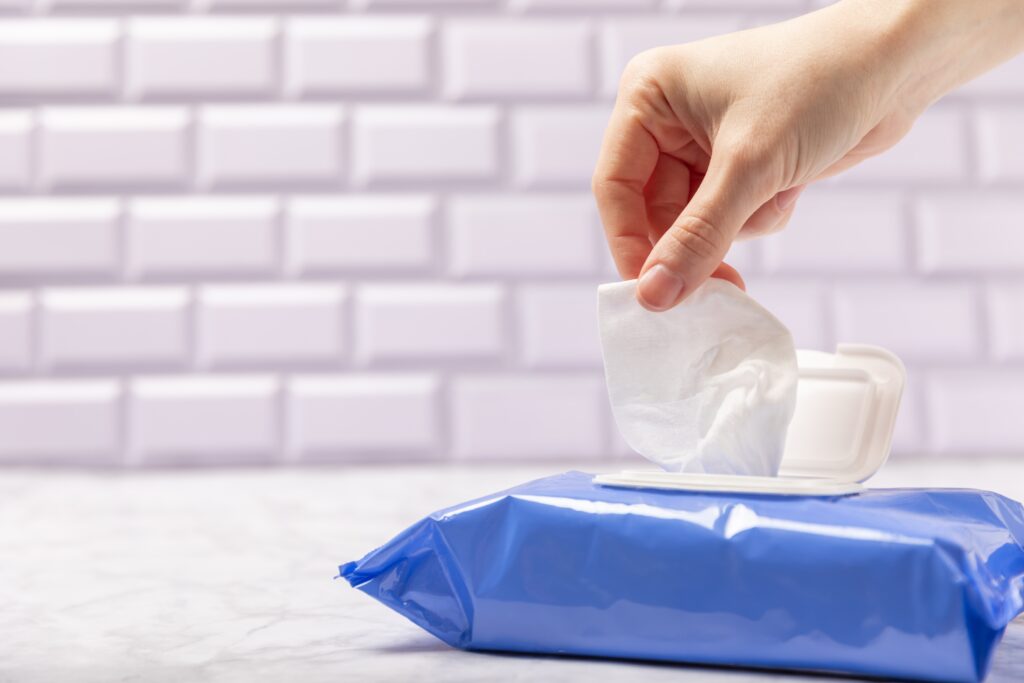
The measure forms part of a coordinated four-nation approach across the UK and is designed to cut marine litter, reduce sewer blockages and limit the release of microplastics into the environment.
A transition period will apply ahead of enforcement to allow businesses time to adapt.
Commenting on the decision, Climate Action Secretary Gillian Martin said: “Wet wipes containing plastic are an unnecessary single-use item, for which more environmentally friendly alternatives already exist.
“As with all single-use items, it is vital they are disposed of correctly, otherwise they become a problematic source of marine litter and a threat to the health of our environment and wildlife.”
Scotland ban to begin in August 2027
Regulations laid by the Scottish Government set 11 August 2027 as the enforcement date for the ban on wet wipes containing plastic.
The rules are made using powers under the Environmental Protection Act 1990 and formally prohibit the sale and supply of plastic-containing wet wipes in Scotland once in force.
Ministers said the delayed enforcement date is intended to provide a clear transition window for manufacturers, suppliers and retailers to reformulate products and adjust supply chains.
Wider UK bans to start from 2026
The Scottish regulations sit within a broader four-nation policy programme following a UK-wide consultation in 2023.
According to the government, more than 93% of respondents supported banning plastic in wet wipes.
All four UK nations are introducing bans with aligned scope, definitions and intent, but with different enforcement dates reflecting separate parliamentary timetables:
- Wales: ban from 18 December 2026
- Northern Ireland: ban from 18 May 2027
- England: ban from 19 May 2027
- Scotland: ban from 11 August 2027
The governments said they have worked to keep dates as closely aligned as possible while maintaining consistent rules and transition periods across the UK.
Exemptions to wet wipe ban
Under the regulations, wet wipes containing plastic will no longer be permitted for general sale or supply once the ban takes effect.
Exemptions are included within the legislation for certain specialist uses. These cover:
- Medical uses
- Industrial uses
- Business-to-business sales
- Supply via pharmacies where members of the public require plastic-containing wet wipes for medical or healthcare reasons
Martin added: “This ban delivers on an important commitment made in our Marine Litter Strategy and builds on previous actions to ban unnecessary single-use plastic items such as plastic-stemmed cotton buds, plastic straws, cutlery and single use vapes.
“These policies are all proof of the progress we are making towards protecting our environment and creating a more circular economy.”
‘One of the biggest challenges’
The ban was also welcomed by the publicly owned utility Scottish Water, which linked plastic wet wipes to sewer misuse and infrastructure costs.
Scottish Water Chief Executive, Alex Plant, said: “This ban will help us tackle one of the biggest challenges we face – responding to and clearing around 35,000 blockages every year in our sewers, at a cost of about £10 million, largely due to wet wipes wrongly flushed down toilets.
“We are also calling on the UK Government for mandatory responsible ‘do not flush’ labelling for all bathroom products that risk being wrongly disposed of to sewers, and an end to misleading environmental claims on packaging to reduce customer confusion and reinforce the correct disposal option.”

Subscribe for free