



That was the verdict of Sinead Murphy, business account manager at resources charity WRAP, who was speaking at the Waste Prevention Exchange conference held by the North London Waste Authority earlier today (28 February).
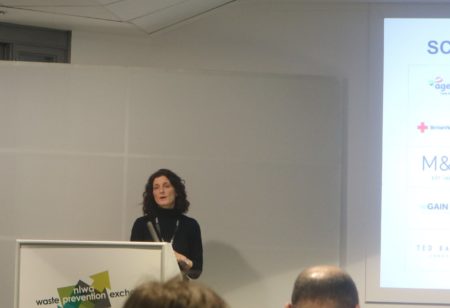
Ms Murphy was discussing the work of WRAP’s Sustainable Action Clothing Plan 2020, which was launched in 2012 and aimed to reduce the impact the textile industry has on the environment.
She explained that while targets have already been met for reducing water consumption and carbon reduction targets are on track, waste reduction has fallen short. The amount of textile waste being sent to landfill or incineration fell 4% since 2012, WRAP said, against a target of 15%.
And, with “market uncertainty” in the industry increasing, greater reuse of clothing is required to avoid more being sent to landfill.
“We’re in the midst of Brexit and we don’t know what trade terms are going to look like, we don’t know the implications for those importing or exporting textiles,” she explained.
“We know we export 60% of the textiles we collect, and we’re the second biggest exporter of second hand clothing in the world, but we have lost considerable market share and we have countries like China that will massively overtake us in a few years.
“So the markets are becoming more and more uncertain, and if we don’t have markets for these products we will end up with mountains of clothes- and at the moment we have no markets here in the UK and they’re going to end up in incineration or landfill.”
Technology
Prior to Ms Murphy, Claire Dawson, senior lecture in fashion management at Coventry University London, said consumer trends are changing for reuse, but more work is required.
Ms Dawson said that while more and more people are reusing clothes and some brands are taking a lead in selling second-hand items, it is difficult to scale this out as sorting technology isn’t widespread, and the quality of cheap clothes is poor.
“If we don’t have markets for these products we will end up with a mountain of clothes- and we have no markets here in the UK”
“Textile sorting, in particular for re-use, is a human concept. There aren’t machines or lasers which recognise what is a 90s denim outfit, for example. We need humans to make those judgments so it is hard,” she explained.
On quality, Ms Dawson added: “I think brands need to increase the quality of clothing, poor quality items can only be worn a set amount of times and it is harder to keep in the loop.”
Ms Dawson added that a very small percentage of textiles, less than 1%, is recycled ‘fibre to fibre’, and while advancements are being made the technology isn’t widely available on a large scale, so reuse is the only option now.
Europe
Offering a European perspective was Michal Len, director of RReuse, an international non-profit network representing social enterprises which run a number of projects.
He said the UK can learn from other initiatives we have seen rolled out across the continent. For example, in Austira many households have a ‘reuse box’ in their house which contains items such as clothes, so these can be collected by schemes and given to social causes.
Producer responsibility
The issue of ‘fast fashion’ and its impact on clothing quality for the recycling sector has been a growing one for recyclers, who have said this has meant it is harder to sell these items on.
China is also entering into emerging markets and selling cheap clothes in emerging markets at a cheaper rate than many UK merchants.
One hope though is that some form of producer responsibility for the sector, which the government promised to review before 2025 in in the Resources and Waste Strategy, would mean producers have to think more about quality. However it is unclear if it will be introduced and what form it might take.

Register for free to comment