


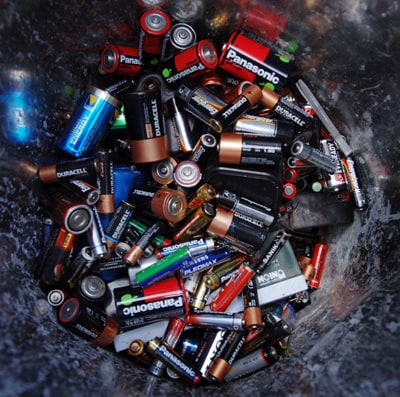
It claims this will involve the sector's revenues across Europe increasing from $10.8 million (£7.3 million) in 2009 to $74.1 million (£50 million) in 2016 – the year by which all EU member states will be expected to collect 45% of all waste portable batteries.
And, with UK portable battery collection rates last year estimated as being as low as 3%, the report states that: “Demand for battery waste management will steadily rise over the forecast period as legislative pressure for compliance in the UK, Southern Europe and the CEE region support demand for immediate and reliable solutions to manage their battery waste needs.”
In particular, the report claims that, while battery recycling facilities and companies are currently concentrated in Germany, France and Alpine and Scandinavian countries, the EU Batteries Directive will “pave [the] way” for developing plants in other countries, such as the UK.
Currently, while a large proportion of waste automotive and industrial batteries collected in the UK are treated domestically, the vast majority of waste portable batteries are sent overseas, with no dedicated recycling facility for the waste stream in this country (see letsrecycle.com story).
Infrastructure
With the UK one of the countries “lagging behind” in terms of waste battery technology and infrastructure, the report states that: “The UK market is expected to be a significant regional centre of activity in lieu of the new legislation that establishes the legislative framework for the collection, treatment and recycling of waste batteries and accumulators.”
While specifically identifying the UK batteries regulations which came into force at the start of this year, the report also points towards the “mounting concern” over hazardous chemical discharges associated with batteries waste.
And, it claims that growing public concern, as shown by work by the Waste and Resources Action Programme, “indicates that there is a clear drive towards battery waste
recycling.”
Opportunities
In terms of the actual opportunities available within the UK battery waste management sector, it identifies portable battery recycling as an “important growth opportunity”, and also claims that collection and sorting opportunities are in “high demand”.
It adds: “As accurate sorting is very important for proper recycling of batteries and this has gained relative importance in the UK market.”
Despite this, the report's authors noted that companies looking to seize opportunities to work in batteries waste management across would have to be aware of the different approaches taken to implementing the Batteries Directive from one European country to the next.
Variations
Frost & Sullivan programme director Suchitra Padmanabhan commented: “Waste management companies find it challenging to manage these variations arising from lack of clarity, unified registration and reporting requirements across member states in the EU. This has hampered development of an integrated unified waste management solution by these companies.”
And, Ms Padmanabhan called on companies to “establish their credentials” in relation to EU legislation to compete with more-established players in the market, adding that: “Recycling capabilities and adherence to local and EU legislation are essential to succeed in this market.”

Subscribe for free