


And, it has criticised the environmental performance of UK energy from waste plants, saying “UK material recovery infrastructure is less efficient than equivalent infrastructure in Europe”.
The view comes from the RDF Industry Group, run by consultancy Eunomia, which represents most of the exporters of RDF or Waste Derived Fuel (WDF) as it is also known.
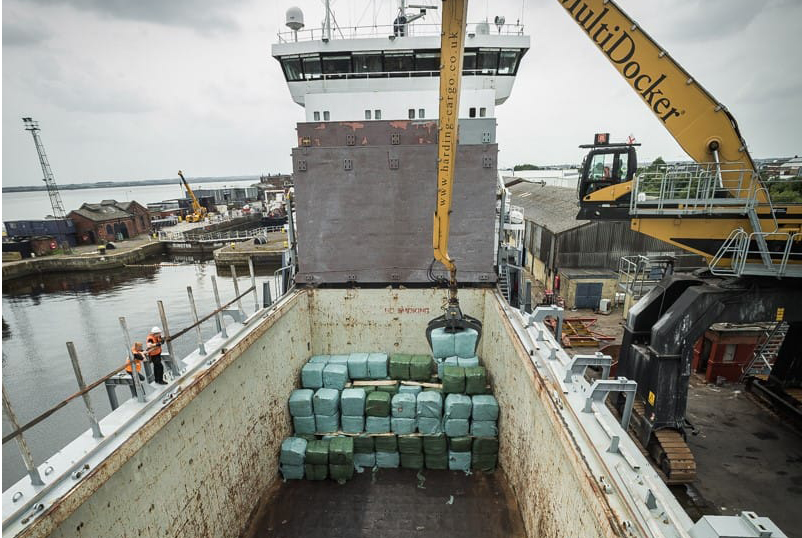
Today (22 May) the group said that its Code of Practice report for 2022 shows that environmental standards for waste derived fuel (WDF) exports “have never been higher, with no regulatory breaches reported in relation to export from the UK”. Its members and other exporters sent 1.7 million tonnes of waste to the European continent and elsewhere for energy recovery in 2022.
Financial bond
The group claims it has demonstrated stronger compliance with each year of reporting. And it highlighted a note from the Environment Agency which confirmed in December 2022 that the Agency had never needed to call upon the financial bond which underwrites RDF exports.
Despite these high standards, there have been calls for a ban on all UK waste exports, notably from the past chief executive of the Environment Agency, Sir James Bevan, the group said.
It pointed out that its code of practice document was actually developed in 2017 alongside the UK’s environmental regulators including the Environment Agency. The purpose of the code is “to increase both customer and regulatory confidence in the process and products” of the sector.
I am very proud of the confidence that compliance brings to our customers and regulators
Andy Jones, chair of the RDF Industry Group and from Totus Environmental said: “The Code of Practice by which all our members abide, sets the standard for the rest of the industry. Not only does it help to clarify the rules around WDF in each UK nation, it also outlines good practice recommendations which aim to combat risks such as waste crime and mismanagement of waste in an economically and environmentally unsound manner. I am very proud of the confidence that compliance brings to our customers and regulators, particularly given members have been highly compliant with the CoP since its introduction.”
Standards
On what it sees as differing standards between UK and overseas plants in terms of energy recovery and environmental benefits, the industry group explained: “Export of waste to high quality EfW CHP facilities has a lower overall carbon impact than domestic treatment. Material recovery in European EfW CHP facilities is more efficient than treatment in England (landfill and incineration without heat recovery); exported waste must be treated in R1 facilities (the highest efficiency standard), whereas domestic treatment does not mandate this.”

Subscribe for free