



Mr Pickles said yesterday (February 9) that too many streets were “still dominated by the ugly clutter of unsightly bins, which ruin the look of families’ homes and gardens” and urged the housing industry to “raise their game” when building new estates.
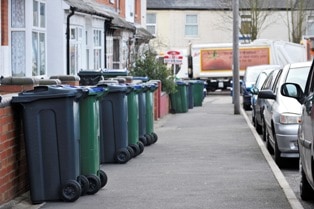
His comments came in response to a new housing industry survey claiming that nearly two thirds of local authorities in England – 212 of 325 – require householders to present four or more waste or recycling containers for collection.
Published yesterday, the report by the National House Building Council (NHBC) Foundation specifically contrasts Newcastle-under-Lyme borough council in Staffordshire – where residents can place as many as nine separate bags or containers out for collection should they wish to – with two other areas of the country that have just one waste container.
The report comes less than a week after Derby city council approved plans to remove recycling collection services from another 650 properties in favour of more frequent waste collections in a bid to tackle the “large number of bins on the streets” (see letsrecycle.com story).
According to NHBC, the increase in recycling in the UK has come alongside a growth in the number of bins and recycling containers, which are “often highly visible and scattered across neighbourhoods – creating an eyesore and posing a hazard to residents”.
As such, the report criticises the “ill-thought out waste storage” in housing design, but provides new guidance for designers in helping to alleviate ‘bin blight’, with a set of “golden rules for good storage design” and best practice examples for the UK house-building sector.
NHBC also considers “other radical solutions” to the issue, such as underground bin storage and shared waste facilities on street corners, but notes that particular types of housing, such as terraced homes, present a challenge to designers.
[testimonial id = “181” align=”right”]
In the report the NHBC Foundation calls on house-builders to consider the following eight points when designing waste collection facilities:
- Reducing visual impact
- Allowing adequate space for the number and size of bins and other containers
- Ensuring convenience for use including by residents with reduced mobility
- Ensuring that solutions are durable, low maintenance and cleanable
- Managing odour and noise issues
- Addressing other health and safety issues (including fire and vermin)
- Working out arrangements for collection days
- Minimising impact on use of pavements and streets by pedestrians and vehicles
Pickles
Commenting on the report, Eric Pickles, Secretary of State for Communities and Local Government, said: “This government is committed to tackling the scourge of ‘bin blight’. Far too many of our streets are still dominated by the ugly clutter of unsightly bins, which ruin the look of families’ homes and gardens.
“This common sense guide, backed up by revised planning rules and building regulations, will help ensure that the housing industry raises their game when building new homes. Families deserve a comprehensive waste and recycling service in return for the taxes they pay and as part of this they should not have to suffer bin blight in their local neighbourhood.”
The NHBC Foundation hopes the research will lead to designs for waste and recycling container storage which could be adopted more widely by the industry.
Neil Smith, head of research and innovation at NHBC Foundation, said: “Designers need to find practical ways to hide numerous wheelie bins and other containers. Alternatively, the time may have come for Britain’s house-building industry to consider more radical solutions to solve the bin blight problem – such as shared facilities on street corners or underground bin storage.
“Our research has identified examples of good practice where waste and recycling storage is inconspicuous and has been integrated into developments well. We hope the findings of this research will be beneficial to the UK house-building industry and the communities they serve.”
LARAC
The Local Authority Recycling Advisory Committee also welcomed the findings and recommendations in the NHBC Foundation report.
LARAC chair, Andew Bird, told letsrecycle.com: “Definitely, the design of buildings – particularly apartment blocks, which are very prevalent – the way design is managed is very important so it doesn’t affect the aesthetics of the neighbourhoods.”
Welcoming the NHBC guidelines for improved bin storage design in house-building, Mr Bird also said similar studies and projects were being undertaken by some local authorities in a bid to combat the issue of large numbers of bins on streets.
He said: “There is some good practice out there so it would be good to see some of that rolled out across the board.”

Subscribe for free