

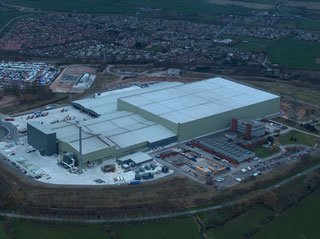
If the committee opts to grant planning permission for the facility, which manufactures 320,000 tonnes-a-year of glass and consumes recovered glass cullet, the application would then be referred to the Government Office for the North West for authorisation. The Secretary of State would then have the option to call-in the proposal, which would lead to a public inquiry.
This second approval is required because the office received a request in June 2008 from rival glass firm Ardagh Glass to call-in the project.
Steve Robinson, chief executive of Cheshire West and Chester, said: “Whilst the head of development management has put forward his recommendation, members of the strategic planning committee will consider every aspect of the report in detail before coming to their own decision on the recommendation before them.”
The meeting to decide on the future of the Quinn Glass facility comes after Cheshire West and Chester issued an enforcement notice calling for the cessation of production and removal of unauthorised buildings at the site in April.
This followed a decision by the High Court to hold up a complaint from rival glass manufacturer Ardagh Glass that the Elton facility had been constructed without adequate planning permission when it was constructed in 2005 (see letsrecycle.com story).
Ardagh unsuccessfully attempted to challenge the council's right to determine the application retrospectively, as it claimed an environmental impact assessment – a legal requirement under the planning process – could not be carried out as the facility had already been built.
However, the High Court ruled that the council had the right to consider the application and it is set to proceed as though the plant had not been built. Ardagh is seeking to overturn the decision in the Court of Appeal.
Application
The recommendation from officers to approve the retrospective planning application from Quinn is subject to a Section 106 agreement that would require it to increase rail freight from the Elton site, improve travel plans, build an acoustic barrier, stick to specify vehicle routes, employ a liaison committee to deal with the local community and also develop a photo bioreactor to generate power for the production facility.
Adrian Curry, director from Quinn Glass, said: “We are delighted that the council will be making a decision regarding our planning application at their meeting next week. This is a very significant step in bringing this saga to a conclusion. The recommendation to grant planning permission by the Cheshire West and Chester Council officers is greatly welcomed by Quinn Glass and in particular our 700 employees at Elton.
“Over the past 18 months our planning application has been subject to the most detailed scrutiny. We believe that the recommendation in the report endorses our commitment to create a sustainable, state of the art and environmentally friendly plant in Cheshire that the local community can be proud of. We look forward to hearing the outcome,” he added.

Subscribe for free