



The office has urged ministers to “move mountains” if legally binding targets due by 2030 are to be met.
In its latest annual assessment, published yesterday (13 January 2026), the watchdog says progress to improve the natural environment in England has been too slow, with current government action likely to determine whether key goals for biodiversity and the protection of land and sea are achieved.
The report is the OEP’s fourth annual progress assessment, reviewing performance against environmental targets set under the Environment Act 2021 and the Environmental Improvement Plan (EIP) published in 2023 by the previous administration.
It covers the reporting period up to the end of March 2025 and does not reflect updated targets included in the revised EIP published in December.
Overall, the regulator found that good progress has been made on just 12 of the government’s 43 environmental targets. Nineteen targets have seen mixed progress, while only limited progress has been made on the remaining 12.
Waste and the circular economy
On waste, the assessment delivers a particularly stark verdict, warning that existing efforts fall short of what is required to meet long-term commitments.
The reported stated: “The prospect of government achieving its targets and commitments is largely off track.”
While the OEP acknowledged that a comprehensive and coherent Circular Economy Strategy could keep materials in circulation and reduce waste, it says additional medium- and long-term measures are urgently needed.
The watchdog added that a zero-waste economy could contribute significantly to environmental and climate objectives while also supporting economic growth, but only if the strategy is delivered “at scale and pace”.
The report also highlighted the continued stagnation in recycling rates, warning that government has failed to apply the waste hierarchy in priority order.
Adding to industry uncertainty, the OEP noted that there remains a lack of clarity around waste policy beyond 2028.
Waste crime highlighted
The assessment also raised concerns about the government’s approach to waste crime, describing progress as “mixed”.
According to the OEP, regulatory action targeting illegal waste sites has shown signs of improvement.
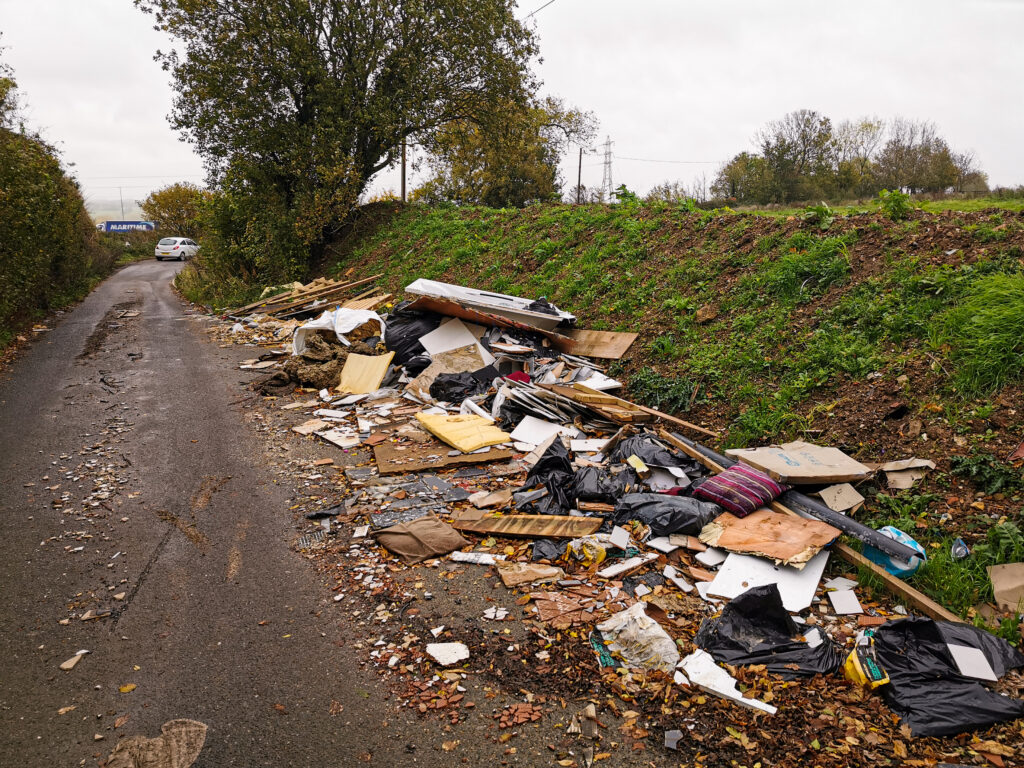
However, this progress is not being matched in efforts to tackle more widespread and diffuse forms of waste crime, including littering and fly-tipping.
To address this, the OEP issued a clear recommendation to Defra to accelerate action, calling for the development of coherent policies and strategies aimed at delivering the government’s commitment to seek to eliminate waste crime by 2042.
This comes after new attention on waste crime in the last few months, with the Environment and Climate Change Committee launching its inquiry into waste crime in October 2025.
The committee had said it was “deeply disappointed” by the “complacent” response from the government to its waste crime inquiry.

Subscribe for free