

This comes as Northern Ireland’s overall recycling rate remained broadly static in 2024/25, a trend that has continued since 2019.
The combined recycling rate for local authority collected municipal waste stood at 50.4%, virtually unchanged year-on-year, while the household recycling rate was 51.0%.
Composting continued to make up the largest single component of recycling at 27.2%, with dry recycling contributing 23.5% and reuse a marginal 0.3%.
Regional differences
The statistics, released by the Department of Agriculture, Environmental and Rural Affairs (Daera) yesterday (11 December 2025), also highlighted the differences across Northern Ireland’s local authorities.
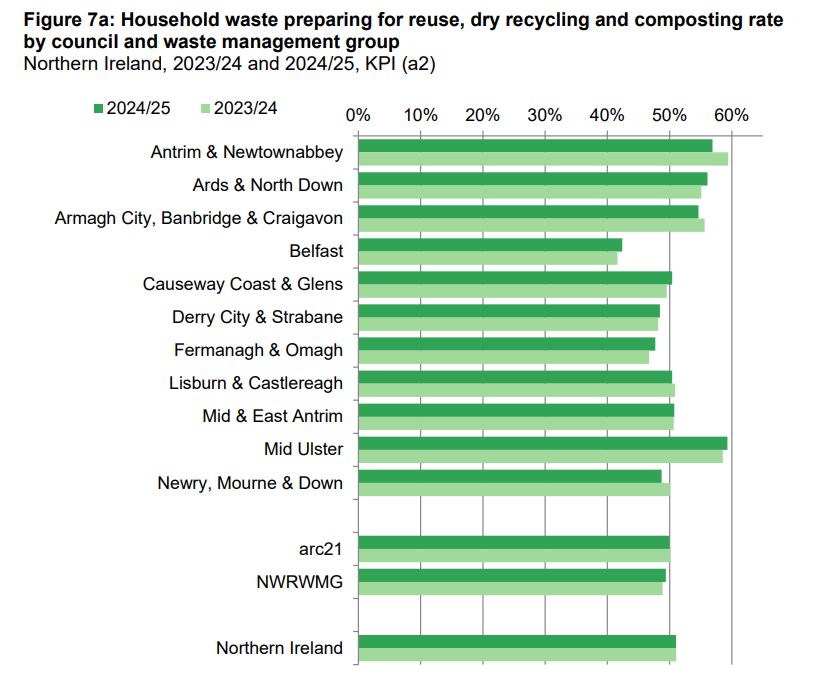
Mid Ulster had the highest reported household recycling rate at 59.3%, followed by Antrim and Newtownabbey at 56.9%.
At the other end of the scale Belfast’s household recycling rate stood at 42.4%.
The council did, however, see the highest energy recovery rates in 2024/25 at 59.5%.
Energy from Waste takes over from landfill
According to the statistics, EfW accounted for more than a third of all local authority collected waste processed in the year, underscoring the region’s ongoing transition away from landfill.
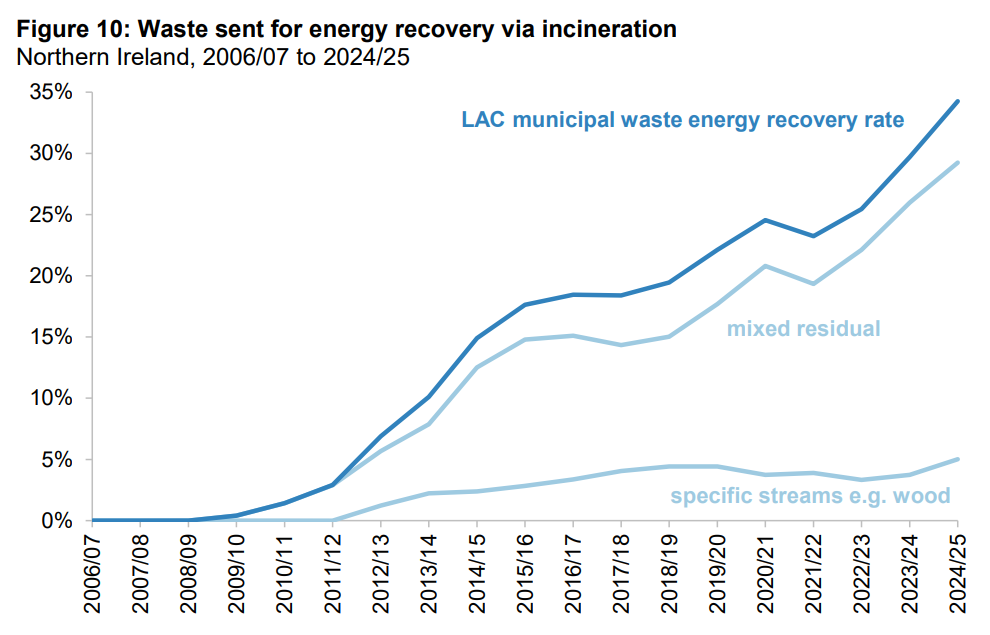
The latest figures show energy recovery increasing to 34.3% of all municipal waste in 2024/25, up from 29.7% in the previous year.
Over the long term, the growth has been dramatic, with just 0.4% of waste was treated through EfW facilities in 2009/10.
Meanwhile, landfill’s share has fallen to a record low of 14.0%, down from 18.4% in 2023/24 as waste authorities have diverted more material into alternative outlets.
Household landfill rates have also declined, landing at 13.8% for 2024/25.
This reflected both expanded capacity in EfW and refuse-derived fuel (RDF) outlets, as well as the influence of policy measures such as the Landfill Tax and statutory food waste separation requirements.
While the rise of energy-from-waste and the decline of landfill signal a clear structural shift in how Northern Ireland treats its waste, the recycling rate’s lack of growth points to a persistent challenge for councils and policymakers.
The country continues to fall short of the 60% recycling rate target for all local authority collected municipal waste that was set out in the Northern Ireland Waste Management Strategy.

Subscribe for free