

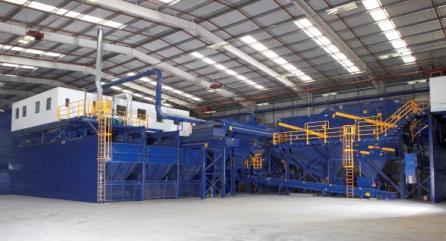
SCA Recycling has cut the volume of residual waste at its Southampton materials recycling facility by 2.5% following the introduction of plastics sorting technology.

Working with Oregon-based technology and equipment firm Bulk Handling Systems (BHS), SCA installed a BHS Rotary Air Separator and a film transport system at the Hounsdown Business Park material recycling facility (MRF) in August 2010. The equipment cost £70,000.
BHS provided a large amount of equipment to SCA for its £15 million facility, which was formally opened in October 2009 (see letsrecycle.com story). At the time of opening, the average reject rate for the plant was 6%, with a large amount of this being plastic films.
The waste management firm placed the BHS unit at the end of the process which works like a vacuum, with conveying air sucking plastic bags and film out of the material stream. The plastic material is then transported to a single point within the 1240,000 sq ft building where it is baled to be resold.
Following the first three months of operation, SCA saw the volume of residual waste at the plant decline by 2.5% from the post-sort area of the facility. And, the separated plastic material can also now be sold to plastics reprocessors.
Chris Hampson, branch manager of the MRF, said: “The system was introduced to overcome the high concentrations of plastic film that remained in the residue at the end of the process. This accounted for high volumes but was also causing high transportation costs due to film being very light and difficult to transport in high payloads.”
Mr Hampson added that the overall impact of the of the BHS equipment meant that the company had been able to reduce its waste generation, recoup value from plastic film and also save on transportation costs.

Subscribe for free