




That is the message from the Scottish Environment Protection Agency which today (July 18) published an annual ‘waste data’ digest document outlining facts and trends relating to waste between 2005 and 2009.

In the report, the regulator notes thatthe total quantity of materials recycled by Scottish local authorities in 20092010 was about 740,000 tonnes with paper and card and glass accounting for the largest fraction.
However, usingt data on the composition of municipal solid waste, the regulator said that only 44% of the available glass and 38% of the available paper was recycled during the year. And, recycling rates ranged amongst councils from between 22 to 67% for glass, and from 5 to 55% for paper and card – showing wide scope for improvement.
The report says: The quantity of materials recycled by local authorities between 2005/2006 and 2009/2010 varied considerably… There are opportunities for some local authorities to increase their recycling of certain waste types.
On a more positive note, SEPA said that recycling rates for white electrical goods and plastics had risen six fold and three fold respectively between 2005 and 2009.
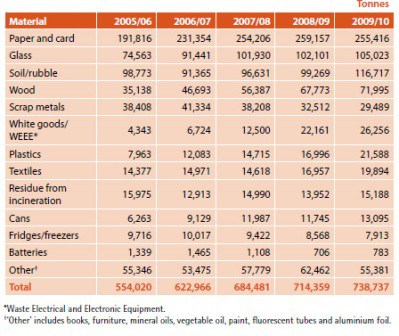
The most common municipal waste to be collected for recycling by local authorities was: paper; glass; soil and rubble; wood; and, scrap metals.
Findings
Other key findings in the data digest, which is published each year, include:
- The amount of waste from Scottish homes and businesses being landfilled has dropped by almost 36% in the past five years.
- Between 2005 and 2009, the total amount of waste generated fell by 22%.
- The total amount of controlled waste landfilled in Scotland dropped from 7.3 million tonnes in 2005 to 4.7 million tonnes in 2009.
- Between 2005 and 2009, the amount of biodegradable waste landfilled fell by 26%.
- Waste treated by waste management sites in Scotland rose by 30% over the past five years, as waste to landfill figures fell.
- The amount of household waste recycled and composted grew by 45% between 2005 and 2009.
‘Encouraging’
Martin Marsden, head of environmental quality at SEPA, said : The conclusions from these latest figures are very encouraging and show that, as a nation, we are producing less waste, recycling more and landfilling less – all of which is good news for protecting the environment.
SEPAs annual Waste Data Digest delivers accurate up-to-date data on waste to as wide an audience as possible. It is important that we continue to provide good quality data and to drive the implementation of the recently published Waste Data Strategy for Scotland.
However, Mr Marsden said that there was still many challenges to be addressed if Scotland was to realise its vision of Zero Waste.
Related Links
He said: There are still challenges ahead and we must all accept that new services, facilities and, most importantly, changes to our lifestyles will be needed if we are to further prevent, reuse and recycle our waste in Scotland. We will be working with the Scottish Government and Zero Waste Scotland, the waste management industry and Scottish local authorities to help make that happen.

Subscribe for free