



Commissioned by LWARB and the London Environment Directors’ Network (LEDNET), the guidance is aimed at planners constructing new build flats in the capital. It seeks to tackle the “potentially negative impact on recycling rates caused by the continuing growth in population and demand for housing”.
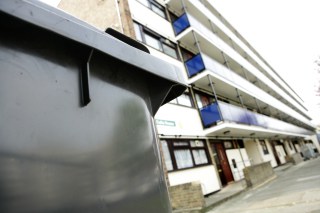
According to LWARB, around 50% of London’s residents currently live in flats, which is often seen as a barrier to recycling for local authorities seeking to meet targets, particularly as older properties are not designed with modern recycling services in mind.
London has a target to recycle or compost 50% of household waste by 2020 and is aiming for as high as 70% in future. However, the city’s population is also forecasted to grow, resulting in the need for an additional one million homes by 2036.
A large proportion of the new homes required will be medium to high density developments, which according to LWARB requires a “new approach” to planning waste and recycling systems in flats, including supporting separate food waste collections.
The guidance includes a template policy and waste management strategy for planners and developers, which encourages the design of recycling, food waste and refuse storage and collection systems in new build properties in order to boost recycling rates.
Available on the LWARB website, the template policy and waste management strategy was developed during 2014 by a group including representatives from Biffa, the Greater London Authority, Environmental Services Association, LWARB and LEDNET. It includes:
- A template waste management strategy for developers to complete at pre-application stage – so they can show that they have considered how waste and recycling will be managed from within the resident’s home to disposal
- A template waste management policy – to be adopted by all London boroughs
- A project report including a review of policy and planning guidance; and
- Case studies – UK and international examples of good waste management in high rise buildings.
Strong message
It is hoped that the guidance and policy templates will “send a strong message to the development community that designing recycling and waste management solutions can no longer be an afterthought”.
Chief operating officer at LWARB, Wayne Hubbard, commented: “We want the development and building community to consider waste and recycling as a utility. Boroughs are under increasing pressure to separate out waste for recycling which often cannot be managed in existing flats due to storage issues.
“Higher levels of recycling will not be achieved if collections from flats do not improve. This guidance is a great starting point for London’s planners and developers; it should help them design sustainable waste solutions that are easy for residents to use and helpful to those collecting their rubbish and recycling.”
[testimonial id = “212” align=”right”]
Funded as part of LWARB’s £100,000 Research Fund, work on the guidance and template policy was carried out on behalf of LWARB and LEDNET by a consultancy partnership of BPP Consulting LLP and SOENECS Ltd (SOENECS & BPP).
James Blake, LEDNET project lead and service head for public realm at the London borough of Tower Hamlets, said: “Having received a number of plans for high rise developments with unworkable waste management solutions, we recognised there was a serious problem. With pressure from the EU to increase recycling targets even further in future, local authorities run the risk of missing those targets because new build flats aren’t designed to take recycling and waste solutions into account.”
He adds: “Housing developments in London should be leading the way, helping the capital to become a sustainable city, not making it more difficult to do the right thing. A proper solution needs to be designed in at the front end.”
In January, Edinburgh council launched two separate trial schemes aimed at boosting recycling rates in flats and tenements (see letsrecycle.com story). And, in Oxford, the council has been running a campaign to promote food waste recycling, including the roll-out of 4,000 caddies and containers to council-owned flats (see letsrecycle.com story).
Related Links:
-LWARB and LEDNET’s Waste Management Planning Advise for New Build Flatted Properties

Register for free to comment