



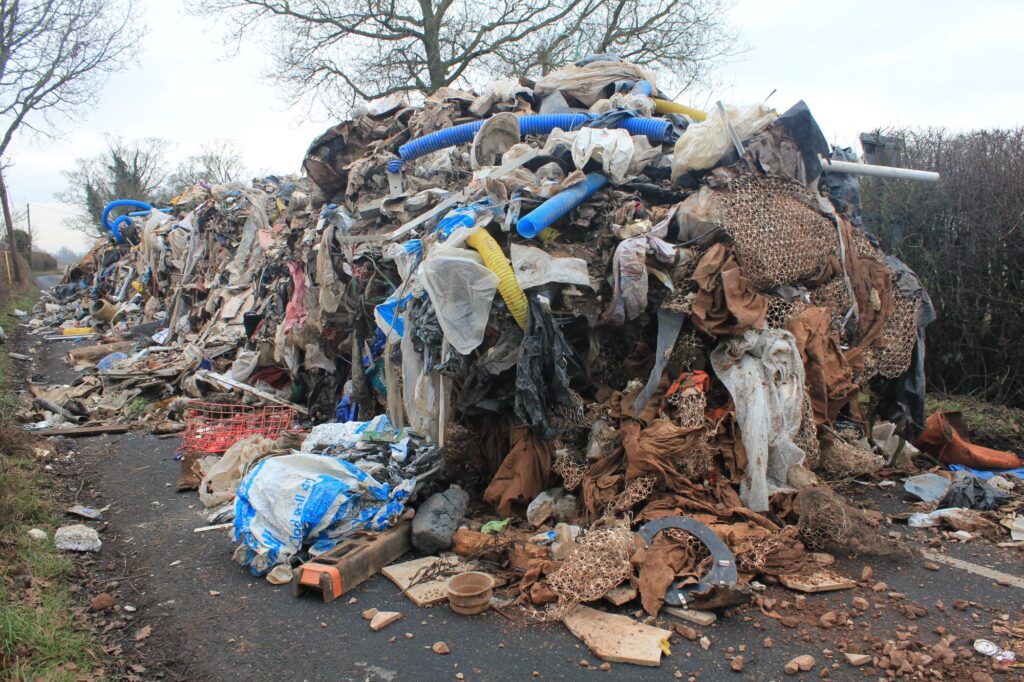
New research commissioned by environmental charity Keep Britain Tidy found that almost every council is struggling to cope with the scale of illegal dumping, prompting fresh calls for tougher national action on waste crime.
According to the findings, 98% of local authorities said fly-tipping was a problem in their area, with seven in 10 describing it as a major problem.
Almost all (96%) reported frustration with the growing severity of the issue, while just over half (56%) said incidents have increased in the past year.
Growing concerns from local authorities
Councils say they are being pushed to the limit by the escalating costs and volume of waste dumping.
A growing share of incidents have been linked to organised waste crime, with two in five fly-tipping cases attributed to rogue “white van” operators rather than individuals, underlining the rise of profit-driven illegal waste collection.
These unlicensed operators, often advertising cheap waste removals online, are said to be fuelling the problem by collecting waste from households or businesses and dumping it illegally to avoid disposal costs.
Local authorities warned that the rising tide of waste crime has drained already stretched resources.
‘Not a victimless crime’
Across England, 1.15 million fly-tipping incidents were recorded in 2023/24, costing landowners and taxpayers an estimated £100 to 150 million annually in clearance and investigation costs.
Anna Scott, Director of Services at Keep Britain Tidy, commented: “Fly-tipping is not a victimless crime nor is it petty offending, it is organised crime that undermines responsible businesses, damages our environment and erodes public trust.”
A recent House of Lords committee urged the government to commission an independent review of its current approach to waste crime.
In a letter to Emma Reynolds, Secretary of State for Environment, Food and Rural Affairs, the committee said it was “deeply concerned about the demonstrable inadequacy” of the current system, criticising the Environment Agency’s performance, the ineffectiveness of the Joint Unit for Waste Crime and what it described as a lack of police engagement.
Keep Britain Tidy has launched its Fight Fly-Tipping Fortnight campaign alongside a proposed Fly-tipping Action Plan, setting out recommendations for smarter prevention, stronger enforcement and better coordination between agencies.
The charity’s plan calls for:
- Smarter prevention, including stricter waste carrier permitting, better education for householders, easier recognition of legitimate waste operators and increased producer responsibility for commonly fly-tipped goods
- Tougher enforcement, ensuring councils are properly resourced to tackle offenders, introducing higher fines, penalty points on driving licences and the crushing of vehicles used in waste crime
Scott added: “To turn the tide, we need tougher penalties to deter offenders, a robust permitting system so rogue operators can’t hide in plain sight and measures that make it easier for people to dispose of waste legally and responsibly.”

Subscribe for free