


The Clinical Waste Survey 2016, conducted in the autumn, gathered information on how local authorities are dealing with the collection and disposal of clinical waste from residents.
LGA says that it has carried out the survey ahead of plans by the National Health Service (NHS) to re-tender its own clinical waste service, which may affect demand for clinical waste services offered by councils.
Under the terms of the Environmental Protection Act, waste produced in the home after treatment by NHS healthcare professionals is considered to be the responsibility of the service provider.
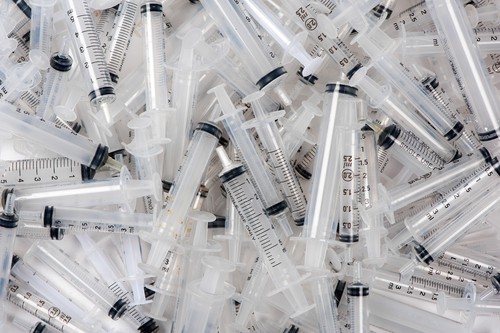
However, if patients treat themselves in their own home, any waste produced – which could include items such as syringes, pharmaceuticals or dressings – is considered to be their own. This can present challenges for local authorities as the material must be handled separately from other types of household waste.
England
As part of its survey, the LGA contacted 353 local authorities in England, receiving 114 responses covering 121 councils – a response rate of around 34%.
Of these councils, 76% responded that they offered clinical waste collections from residents’ homes, costing on average £42,000 per year.
A total of 48 of the councils responding to the survey were able to quantify the cost of disposing of clinical waste from residents’ homes in 2015/16. The total amounted to £900,000, an average of £19,000 per authority.
Around half of those authorities contacted said they contracted out the collection service, while just over a third directly commissioned it. Roughly 4% used a service operated by a neighbouring local authority, and 7% had another arrangement in place.
Surgeries
Looking in detail at the services provided, the survey suggested that most of the councils polled only collect clinical waste from residents’ homes.
However, 26 councils confirmed that they collected from nursing homes, nine from doctors’ surgeries, 10 from clinics, and 17 from ‘other’ places such as chemists and pharmacies.
While just 5% of councils that collected clinical waste from households charged for the service, nearly all authorities which collected from these other sources attached a charge – which they were not asked to disclose.
NHS
In April, the NHS launched a four-year framework agreement for the phased-in collection and disposal of clinical waste from GP surgeries as well as unwanted medicines from pharmacies. NHS England is responsible for funding and arranging these services.
For the first time, all suppliers chosen in the framework are expected to meet the same standards no matter where they are providing the service and have been assessed on how they will support ‘safer disposal’ of clinical waste.
The five suppliers contracted to provide the framework are: Cannon Hygiene UK; Healthcare Environmental Services; Sharpsmart UK; SRCL Limited, and; Personnel Hygiene Services Limited.

Subscribe for free