



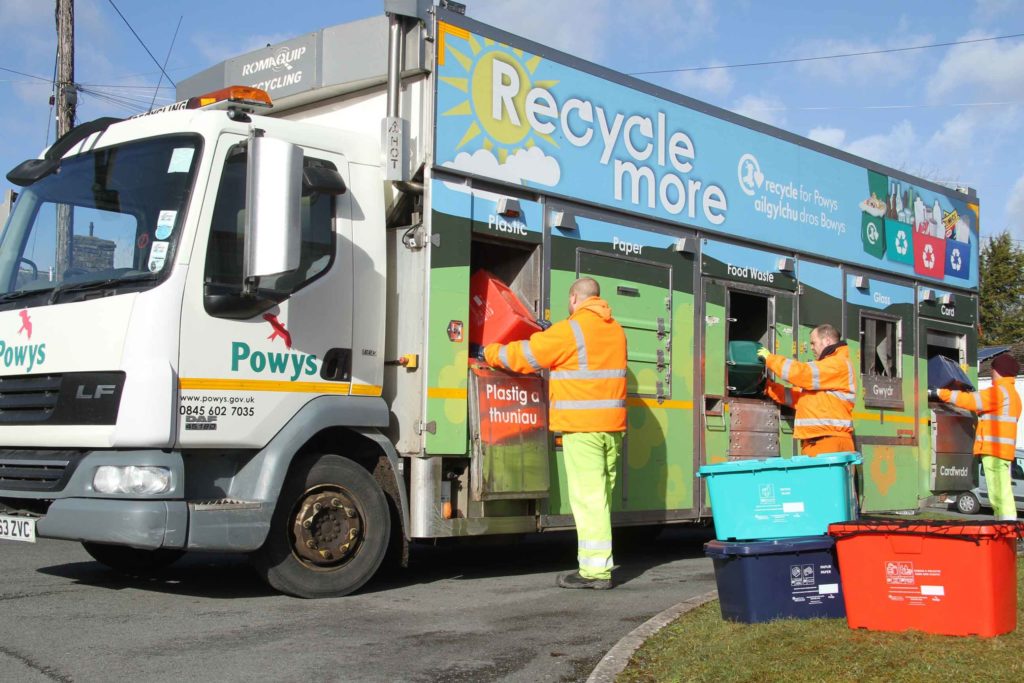
As part of the proposals, the council could also make cuts to vehicles and staff.
Powys county council would continue to collect recycling weekly under the plans, while sanitary items such as nappies and incontinence pads would be collected separately and on a more frequent basis.

As part of an impact assessment of the proposal, Powys’s senior manager for waste and recycling Ashley Collins said: “By reducing the quantity of waste for disposal and increasing the amount recycled from the kerbside, the change will make a modest contribution to savings, but should make a significant contribution to the council meeting strict Welsh Government recycling targets and thus avoiding fines.”
The proposals are included in a package of cuts and savings in a draft council budget, which will be discussed at a meeting of Powys’s cabinet on 26 January. If the cabinet endorses the move, it will then be subject to consultation.
Were the plans to go ahead, the council would continue its provision of 180L bins. A report which will go before the cabinet notes Conwy county borough council recently moved to four weekly collections, albeit with 240L bins (see letsrecycle.com story).
Savings
The proposal would see cuts to vehicles and staff. A consultation would need to take place with the staff affected by the proposal.
Any increase in fly-tipping as a result of the move would be countered by “effective communication, awareness and enforcement”.
Alongside the move to four-weekly collections, Powys has proposed switching to using three operational depots. It estimates this would save around £114,000.
Powys
Powys covers a quarter of Wales and is the most sparsely populated county in England and Wales. It had an estimated population of around 132,000 in 2016.
Three-weekly residual waste collections have been in place in Powys since 2015. Kerbside collections in Powys are undertaken by an in-house team.
In May 2020 Powys county council claimed it had reached the Welsh government’s 64% statutory recycling target for 2019/20, with its rate jumping by more than 3% to 64.4% (see letsrecycle.com story).
In December, it announced a “clerical reporting error” had gone unnoticed and sent across to Natural Resources Wales and Welsh Government for verification before being rectified. Its corrected recycling rate for 2019/20 is 63.05%

Subscribe for free