



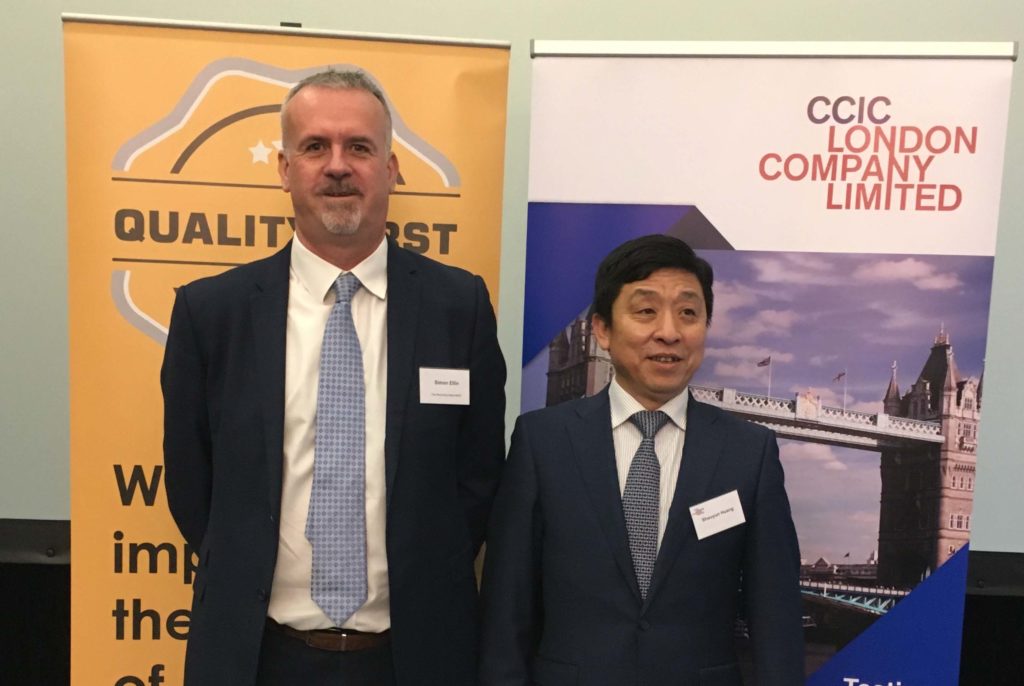
The London seminar – the first of five to be held across the UK – discussed the challenges of the current regulatory environment which has seen China ban mixed paper imports and only accept 0.5% contamination in imports of recovered cardboard, known as OCC.
CCIC London managing director, Shouyun Huang described this as an “unprecedented era of tightened control” which he said had prompted CCIC to jointly develop the new voluntary scheme, which implements an additional inspection regime at depot level (see letsrecycle.com story).
He said: “The scheme is designed on the basis of the principles of ISO 9000 quality management certification, which are widely adopted by most depots and trading companies. The essence of the scheme is that depots, as the origin of recyclable material, will be actively involved in quality controls for China bound material.”
Mr Huang added that the seminar provided a rare opportunity for face-to-face communications between CCIC London and the UK recycling industry and invited recyclers to join the scheme to achieve “superior quality” and “sustainable trade”.
Simon Ellin, chief executive of the Recycling Association, said the scheme was tailored for “minimum UK disruption” and would “help keep your businesses running”.
However, following a query from the ESA’s Jakob Rindergren over whether the scheme was likely to become mandatory, Mr Ellin stressed that it was “not compulsory” and that it merely added “another tier of inspections – the CCIC and third party inspections will continue”.
He said: “We believe this is the best scheme and the most appropriate one for the UK. Get it right in the beginning and you will get it right in the end. Let’s position ourselves as the global number one choice in the recyclate market.”
Regulations
During the event, delegates heard an update on the latest regulations from China from Lilly Liu, head of government affairs at CCIC London.
Ms Liu explained that, for the first time, the Chinese Government had introduced responsibilities for all stakeholders in the supply chain including exporters, inspection agencies and consignees, with corresponding punitive measures in place. These range from extra stringent inspections on loads sent by suppliers failing to meet quality standards to licences being revoked.
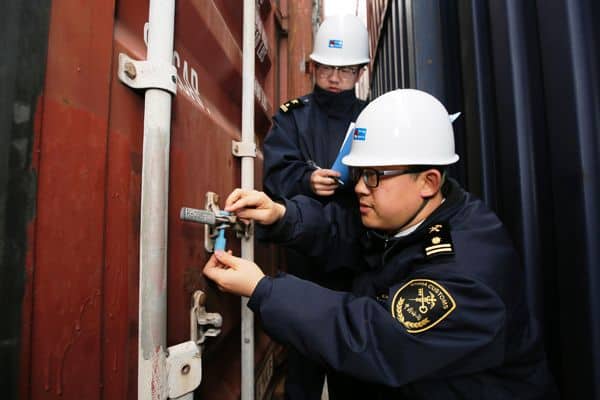
She said: “the message is that the Chinese government is serious when it says it has rigorous checks and will punish any breach they think is causing harm to the Chinese environment.”
Focusing on the most recent bans of scrap materials she said: “We are expecting another edition by the end of this year – there will be more scrap categories banned by the Chinese government. The good news is the 2018 ban has nothing to do with paper.”
Ms Liu explained there was zero tolerance for any radioactive material or ammunition for paper and card currently sent to China, 0.01% tolerance for material such as medical waste and 0.5% tolerance for other contamination such as wood and metals.
Ms Liu also gave an overview of the scheme including depot requirements and the inspection procedure, explaining that applications to join would begin to be processed at the start of 2019.
Scheme
Mark Yang, an inspector and consultant at CCIC, then provided a lively step-by-step guide to how the quality control scheme should work on the ground—including the need to buy and use a radiation detector.
He explained that the inspection process includes site identification; a radiation test; visual check; sampling and recording. It also requires photographs to be taken at every stage.
“The most important stage is sampling”, he said. “Paper bales are like Pandora’s box.. you never know what’s inside until you split it open so bale breaking is essential.”
Mr Yang warned of contamination such as food residue for which the tolerance is just 0.01% commenting “just a banana could do it.”
Europe
Separately from the seminar, CCIC in the Netherlands has explained to letsrecycle.com that the approach adopted in the UK by CCIC London is not being rolled out on the Continent. A spokesperson said: “In the mainland EU, this system is not adopted, we always do physical inspection in person.”


Subscribe for free