



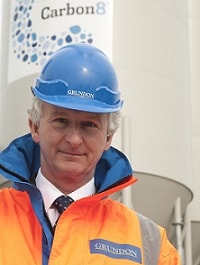
‘This is an extremely exciting time for our business.’
Stephen Roscoe, Carbon8 Aggregates
Traditionally, air pollution control residues (APCs) or flue gas treatment residues (FGTs) as they are also known have been landfilled and the Carbon8 process provides another option for treatment. The additional Grundon involvement in Carbon8 comes as the Environment Agency is reviewing whether alternative solutions should be required in light the development of new technologies.
Alongside the latest investment, a number of the Grundon management team have been appointed to positions within Carbon8 which is developing its operational activities in Brandon, Suffolk.
Grundon chief executive Richard Skehens now also has the post of Carbon8 chairman, while Steve Greig, previously Carbon8s finance and commercial director, steps up to the post of managing director. Stephen Roscoe, Grundon technical director, has been additionally appointed as technical director of Carbon8 Aggregates.
Development
A spokeswoman said that Grundons latest investment means the company can proceed with plans to build at least two new plants over the next two years, in addition to the recent construction of a 1.5 million second production line at its operation in Brandon, Suffolk. Future plants could be in Avonmouth and north west England.
Mr Roscoe said: This is an extremely exciting time for our business. We have already trebled production at Brandon to meet existing contracts and, with demand from EfW operators increasing all the time as they look for landfill alternatives, this allows us to respond positively to the market.
He continued: The Carbon8 process is the only viable recycling solution for FGT, its a safe and proven technology which is more than capable of meeting the growing demand for residue treatment driven by the boom in the EfW industry.
Potential
Mr Skehens, said: Grundon recognises Carbon8s huge potential for growth and is pleased to be able to invest in the business to help take it up to the next level.
Flue gas treatment residues from Grundons Lakeside EfW plant at Colnbrook, in Berkshire, a joint venture with Viridor, already goes for processing at the Brandon facility and Carbon8 said it is in talks with a number of other major EfW operators.
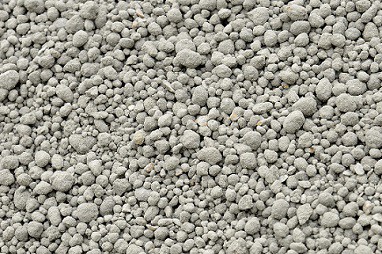
Explaining the Carbon8 process earlier this year, then technical director Dr Paula Carey said: On the back of research carried out at the University of Greenwichs School of Science, Carbon8 identified an end-use for thermal residues from waste to energy plants. By mixing the residue with water and carbon dioxide, we were able to transform the material into what the Environment Agency has agreed is a product suitable as a virgin aggregate replacement.
Carbon8 has built its carbonation plant at Brandon, Suffolk, adjacent to building block manufacturer Lignacites masonry plant. After carbonating the residue, it is mixed with binders and fillers before being pelletised and then used as a key ingredient in the Carbon Buster block produced by Lignacite.
Aggregates
Lignacite said that the Carbon Buster incorporates more than 50% recycled aggregates and combines this with Carbon8s carbonated aggregates derived from by-products from waste to energy plants. The result is a high performing masonry product, and the first ever building block, which has captured more carbon dioxide than is emitted during its manufacture; 14kg CO2 per tonne to be exact.
The company added that it uses sand and gravel from its quarry adjacent to the block plant. This, combined with the use of recycled waste material, such as wood shavings, glass and shells meant the companys masonry products always had a minimal carbon footprint.
Despite these efforts, however, the cement content previously used made it impossible to generate products that were carbon negative. Thanks to carbonated aggregates, however, the Carbon Buster now boasts a negative CO2 content.

Subscribe for free