

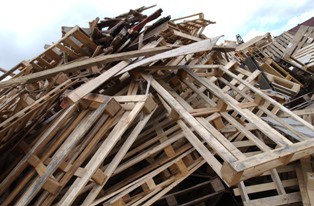
The PAS 111: 2012 standard was published this morning(April 2) by the Waste & Resources Action Programme (WRAP).
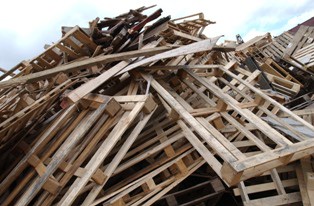
It sets out the quality requirements for wood recyclers selling products to markets using recovered wood and will assure customers that they are purchasing material of consistent and verifiable quality.
Commenting on the standard, Peter Butt, secretary of the Wood Recyclers’ Association (WRA), which represents UK wood recyclers, said: Our young industry has badly needed a standard to work to and now we have got one and I am absolutely thrilled. It is important as it sets a standard and benchmark for people to work to as the industry develops.
PAS111
Wood recyclers that adopt PAS 111 will be able to advertise that their products are PAS 111 compliant, thereby increasing customer confidence in the products. WRAP hopes that this will drive growth in existing markets.
There are already strong markets for higher grade recycled wood in applications including panel board, landscaping and animal bedding and PAS 111 will help to expand these. In turn, WRAP hopes that it will help to divert more wood from landfill into recycled products or energy recovery.
In 2010, the UK generated 4.1 million tonnes of waste wood, of which 2.44 million tonnes was recovered but the remainder was sent to landfill.
PAS 111 has been developed by WRAP in conjunction with the British Standards Institution (BSI), the WRA, Environment Agency and many other industry stakeholders. The following markets account for the majority of recovered wood in the UK and are covered by PAS 111:
Panelboard manufacture
Biomass energy generation
Animal bedding
Mulches
Equine surfaces
Pathways and coverings
Industrial and commercial applications
Marcus Gover, director of closed loop economy at WRAP, said: We are delighted to see this commitment to quality from the wood recycling industry. WRAP has worked with and supported the industry for many years and hopes that PAS 111 will help it continue to make the best use of this important resource which is good news for both the environment and the economy.
Mr Butt thanked WRAP for all its support in developing the PAS and said that while it was not a perfect document, the PAS: 111 could be tweaked where necessaryin future.
Quality Protocol
He added that the standard was important to aid the development of the Wood Quality Protocol (QP), which is being developed by the Environment Agency to define the point at which waste wood products can beclassed as a product rather than a waste and therefore be freed of waste regulations.
While thedevelopment of theQP has run alongside that of PAS 111,it has notrun as smoothly. Concernsover the impact on the environment of sending waste wood to biomass plants and more recently, of using it to produce animal bedding, have created problems. The WRA has conceded that it will be hard to include biomass fuel in the initial QP, but are pushing for animal bedding to be included.
Mr Butt explained that in 2011 the Food Standards Agency had suddenly expressed concerns about the use of grade A waste wood to produce animal bedding and that so the WRA was currently in the process of getting some animal bedding samples analysed to show there was no risk of harm.
He said: The Food Standards Agency (FSA) inexplicably and suddenly reversed their view on animal bedding made from grade A waste wood last year and we are now working with the Agency to resolve this and have provided a significant number of samples of animal bedding for laboratory analysis. We are optimistic that this will assure the FSA and any other agencies which have concerns.

Subscribe for free