



The approval will see ‘condition 66’ removed from the permission given to Indaver to build the facility. The removal of the condition will mean Indaver can focus solely on the 595,000 tonnes per year energy from waste plant on the site, and not the several other facilities it had originally planned.
The development project, which received initial government consent in 2010 and was later increased in capacity by the county council in 2015, includes several facilities:
- An EfW plant capable of processing up to 595,000 tonnes per year of refuse-derived fuel, including imported refuse-derived fuel (RDF) and solid recovered fuel.
- A biogas facility designed to handle 30,000 tonnes per year of food and green waste, producing biogas for on-site electricity generation and compost-like output for export.
- A materials recycling facility (MRF) with a capacity to process 300,000 tonnes per year.
- A merchant de-ink paper pulp plant, capable of processing 170,000 tonnes per year of waste paper imported to the site and suitable paper recovered by the MRF. This plant would also utilize heat, steam, and power generated by the EfW plant.
The decision on Friday came after the council had previously rejected a similar request by Indaver in February last year. Indaver is keeping its appeal against this decision live as a contingency plan, the company told letsrecycle.com.
Judicial Review
Before the council’s decision, the UK government issued a letter on 21st July stating that it would not require a new Environmental Statement for the project. This decision came after legal firm Leigh Day, representing NGO Parish Against Incineration (PAIN), called for such a statement. The removal of condition 66 now allows Indaver to concentrate solely on developing the Rivenhall EfW plant, eliminating the need to pursue other elements initially approved as part of the project.
The recent decisions by Essex county council and the UK government not to require a new ES for the project could face the possibility of a judicial review. Interested parties must submit such a review within the next six weeks.
Construction
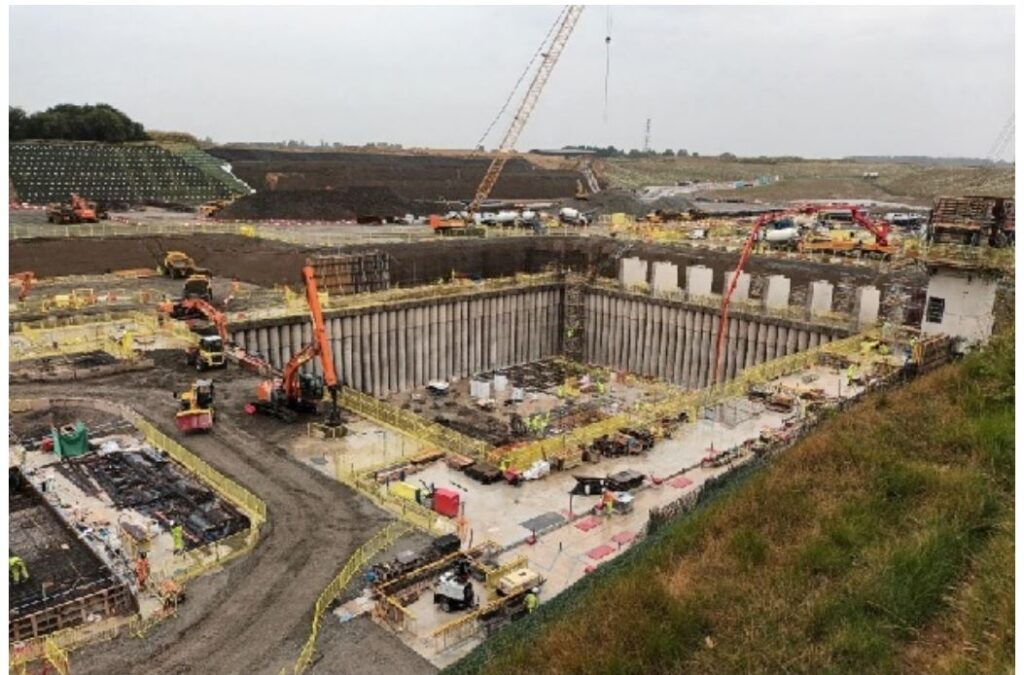
The Rivenhall EfW plant is currently under construction and is expected to be operational by 2026. However, obtaining permitting consents for the project was a lengthy process, mainly due to concerns about the stack height of the plant. Eventually, the matter was resolved when the site received its environmental permit in 2020.
In addition to the recent planning consent, Indaver is also preparing another planning application to the government. This application aims to secure a development consent order (DCO) to increase the plant’s consented electrical capacity to 65MWe. The DCO submission is expected to be made to the Planning Inspectorate in the fourth quarter of this year.
Facility
Construction on the facility began in November 2022 (see letsrecycle.com story).
Indaver has progressed its project amid a scramble to build waste treatment infrastructure in the region. Essex has seen the failure of the Tovi Eco Park in Basildon, which means many tonnes of the county’s household waste are currently sent to landfill. And, East London’s long-term waste disposal contract also comes to an end in the mid-2020s.
Other EfW facilities proposed in the East London/Essex region include Viridor’s plant in Tilbury and Cory’s second facility in Belvedere, south east London.
Indaver expects the EfW facility, the company’s first of its kind in the UK, to begin commissioning in 2025 and be fully operational by 2026.
