
Published as part of a three-month consultation which runs until March 2016, the updated guidance sets out a number of changes to the previous document published earlier this year requiring permitted waste site operators to submit an FPP as part of their environmental permit.
However, early indications from wood recyclers contacted by letsrecycle.com suggest a number are unhappy that the restrictions on stack size heights are even stricter than before, while there has been little change to other elements previously described by some as “unworkable” (see letsrecycle.com story).
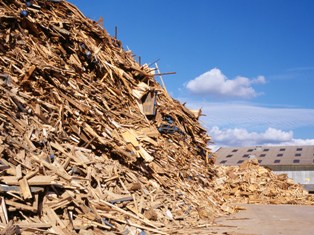
Specifically regarding processed and unprocessed wood, the latest consultation document reduces the maximum stack height from 10m to 5m “to allow for the use of standard machinery to safely move waste during an incident”, while the maximum volume of any pile is now 750 cubic metres.
According to the Agency, these changes bring restrictions on waste wood – a material described as “more susceptible to self-combustion” – in line with the likes of paper and cardboard, which it said presents a similar risk.
The updated guidance also adds stack size and separation distance standards for mixed unprocessed waste, compost and metal waste. In addition, the standards for waste stacks now only apply to material stored in the open.
WEEE
The Agency is proposing to reduce the separation distance for waste electrical and electronic equipment (WEEE) from 15m to 6m, and to remove the additional separation of 20m required for multiples of 16 piles of all waste types.
“We believe that a single standard separation distance can be applied to all of the waste streams covered by this guidance when waste is stored in the open.”
FPP guidance
Environment Agency

This brings WEEE in line with the standard separation distance between adjacent waste piles and buildings or compressed/flammable gas, which is also 6m.
“We believe that a single standard separation distance can be applied to all of the waste streams covered by this guidance when waste is stored in the open,” the Agency adds.
But, the updated FPP guidance also states that “appropriately designed and constructed fire walls” can be used as an alternative to physical separation where they can be “demonstrated to provide equivalent protection to the spread of fire to the 6m pile separation distance”.
The Agency said that of the 80 FPPs it has so far reviewed, only four have been approved, explaining that most of the FPPs assessed propose deviations which “do not offer an acceptable level of protection to people and the environment”.
Storage duration
However, several factors unchanged from the guidance issued in March are on storage duration, water supply, temperature monitoring and requirements for each site to have a quarantine area.
It also sets out that should a fire occur, measures should be in place which ensure it is restricted to burning for a maximum of 3-4 hours, while operators must also produce separate plans showing the site layout and the local ‘receptors’ such as such as schools, hospitals, roads and protected habitats.
On storage duration, the guidance states: “Normally we would not expect wastes that are capable of self-heating to be stored for longer than three months. The maximum storage duration for any combustible waste is six months. The only exception to this may be a well-managed compost operation which in some circumstances requires extended storage beyond this period. This should be justified and would require approval from us as part of the overall FPP.”

For waste stored longer than three months there are additional measures required to be followed.
Fire tests
The consultation document confirms that the EA is co-funding a series of waste fire burn tests alongside WISH throughout the winter in order to “give us a variety of useful data on the behaviour of waste when it burns which may influence the standards in future revisions of our FPP guidance”.
It adds: “We expect the conclusions of these tests to be available in late 2016. Following the publication of these conclusions we will review the guidance to see if any changes are necessary.”
The Wood Recyclers Association (WRA) has just completed the second round of its own wood fire tests in partnership with WISH and the EA, which took place in Pollington last month (see letsrecycle.com story).
According to the WRA, fire tests of tyres, plastics, refuse derived fuel (RDF), solid recovered fuel (SRF) are set to take place at waste firm Cory Environmental’s site in Barking, East London, in January 2016.
Consultation
The Agency said it had taken into account guidance issued separately by the Waste Industry Safety and Health (WISH) Forum, which includes representatives from the waste industry, Health and Safety Executive (HSE), Public Health England, Chief Fire Officers Association and the EA.
This came in response to what the Agency said were “a number of high profile fires at waste sites and a joint action plant between Defra and the Environment Agency to tackle waste crime”.
Launched last week (November 26), the consultation closes on March 4 2016 and responses are being sought from operators, trade associations and businesses as well as from other regulators, the public, community groups and “non-governmental organisations with an interest in human health and environmental issues”.
A consultation response document will then be published alongside new guidance in spring 2016.


Register for free to comment