


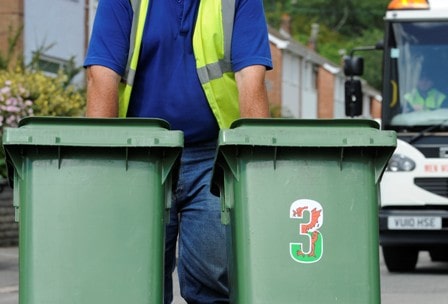
The project will see Denbighshire’s in-house service move to the “recommended Welsh Government Blueprint”, based on weekly kerbside-sorted recycling collections.
Denbighshire will collect household recycling including paper, glass, cans, plastic, and food waste weekly and clothes and small electrical items fortnightly.
The collection of non-recyclable waste will change from fortnightly to every four weeks, while the council will provide residents with larger 240 litre black bins instead of the current 140 litre containers “where needed”.
The roll-out of the service is scheduled for the autumn of 2023, after the completion of a centralised waste depot on the Colomendy Industrial Estate in Denbigh.
Representing an estimated population of more than 95,000, Denbighshire had a household waste recycling rate of 65% in the 2020/21 financial year.
Depot
Plans to reform Denbighshire’s waste collection service and develop a new waste transfer station were first approved in December 2019 (see letsrecycle.com story).
According to a report which went before yesterday’s meeting, the development of the central depot to support the service change has “taken longer than initially anticipated”, but the council says enabling works at the site are finished.
The council submitted a bid to the Welsh Government for extra funding of £1.6m for the project, “due to the significant increase in inflation affecting the cost of goods and materials in the last 12 months.” The Welsh Government approved this additional funding last month.
Denbighshire now expects the project to cost £19.3m, the report says.
Environmental ambitions
Graham Boase, chief executive of Denbighshire county council, said: “This project contributes to the council’s environmental ambitions as we will be reducing carbon emissions, recycling more waste, and producing higher quality recycling suitable for use in the UK manufacturing industry.
This project contributes to the council’s environmental ambitions
– Graham Boase, chief executive of Denbighshire county council
“Once up and running this new model will also cost significantly less per year than it would have done if we maintain the existing collection model.”
He added: “In this way the project has been a classic ‘invest to save’ project, resulting in considerable cost avoidance over the coming years.
“There have been significant increases in prices affecting goods and materials required to implement this new model and the extra funding will help ease these pressures.”
Baseline costs
According to Denbighshire’s updated business case, the waste service has seen a “significant increase” in baseline costs in recent years.
The council attributes the increase to a rise in the treatment costs for blue bin recycling of more than £100 a tonne since 2017 and a rise in treatment and haulage costs for residual waste.
It also blames an increase in the amount of waste and recycling it collect as a result of changes to behaviours since the Covid-19 pandemic, such as people being at home more, which the council says are “not likely to subside”.
The council estimates its waste service will cost £778,000 more per year by 2023/24 if it does not adopt the new collection model.
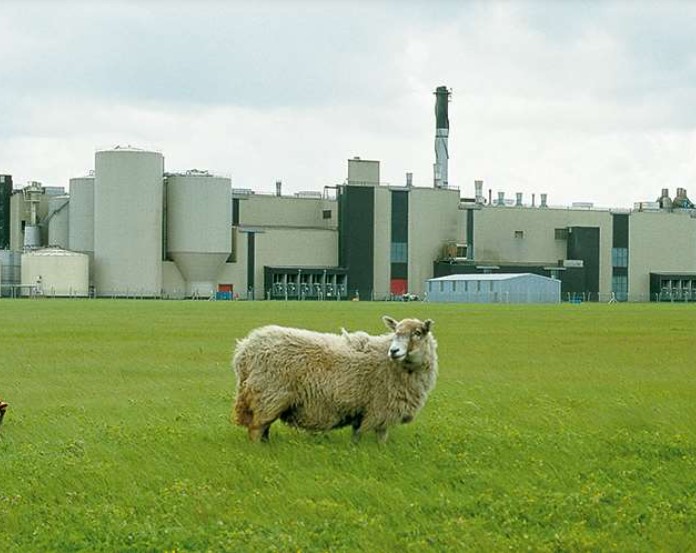
According to the business case, this is because Denbighshire’s current contractor, Deeside-based Shotton Mill Ltd, is reducing its sorting facility for comingled material in favour of receiving paper and card already sorted by local authorities.
The business case reads: “This will result in higher gate fee costs to the council because there is more ‘competition’ for the available capacity, or because we have to send our recycling further afield (e.g. to South England or Ireland) should our current contractor decline to re-tender for our material.”

Subscribe for free