


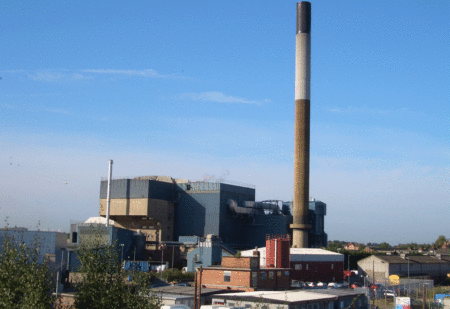
Waste management companies have been allowed to landfill Air Pollution Control (APC) residues – material left over after the removal of hazardous pollutants from the energy from waste process – under a derogation of hazardous waste rules.
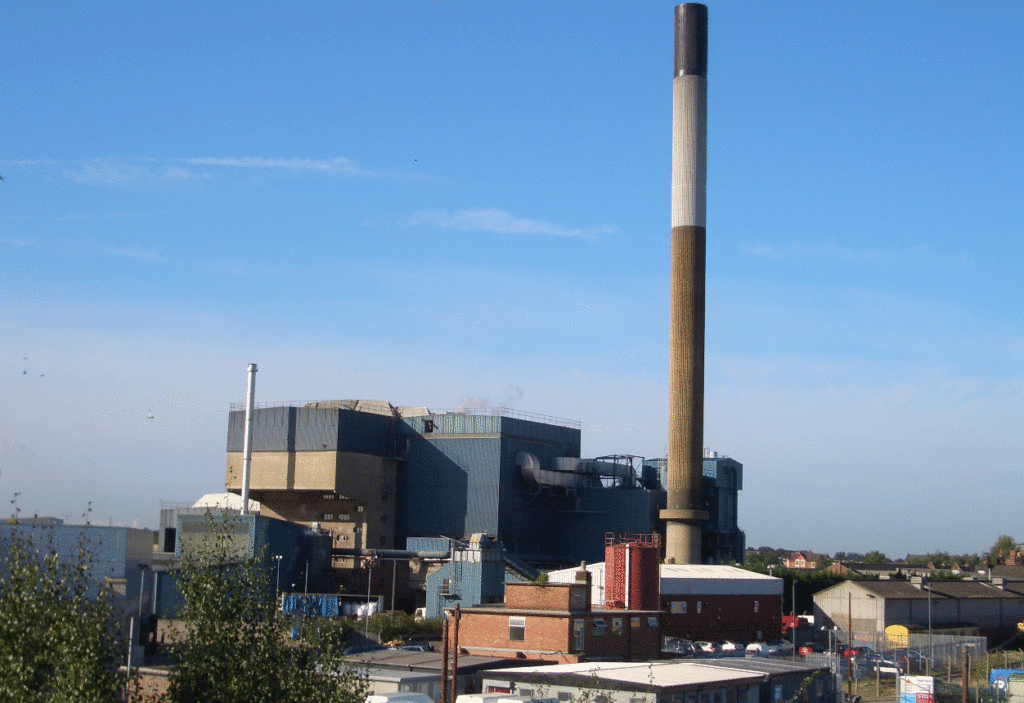
According to the government, the continued allowance of landfilling of the material has been due to a lack of sufficient treatment routes for it.
However, in recent years companies including waste management firm Castle Environmental and Carbon8, with involvement from Grundon, have developed ‘recycling’ processes for APC residues, which largely sees them used as a replacement for aggregates in concrete for construction processes.
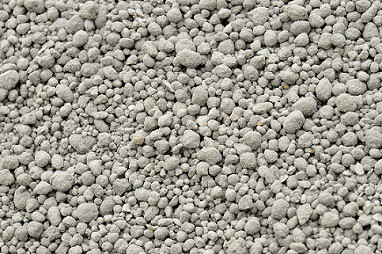
What is Air Pollution Control residue?APC residue is typically a mixture of ash, carbon and lime. It is a hazardous waste which is currently disposed of at a hazardous waste landfill or undergoes further processing such as washing or stabilisation to send to a non-hazardous landfill. (Source: WRAP) |
The derogation allowing the landfilling of the material has been under review for a number of years, with the government having originally promised to remove the arrangement in its 2010 Hazardous Waste Strategy.
Companies investing in alternative treatment process for the material have claimed that a lack of a timetable for a phasing out the derogation has acted as a barrier to further investment in new outlets for the material, and have continued to call for clarity from the government.
Castle
Roger Hewitt, director at Castle Environmental which treats APC residues at sites in Ilkeston and Cardiff, creating an aggregate feedstock that is then used in the company’s range of concrete products, said investment in alternative treatment could increase if a decision is made.
He said: “We have developed the ability to wash APC residues and remove the harmful constituents. We end up with a cake that we have developed various routes for.”
He added: “People often talk of recycling as being something that is difficult to establish because often the end market is not clear.”
Mr Hewitt pointed that his own company and Carbon8 have both invested in processes which seek to divert APC residues from landfill and into a product.
“Both operations highlight the fact that investment has gone into research and development and that puts an end to the argument that there is no established process for it,” Mr Hewitt added. “We have end markets that are hungry for material.
“If the derogation ends we will be looking at building many more plants.”
Pressure has also been exerted by the Environmental Services Association (ESA) which has continued to highlight the issue to government, most recently in its call for stronger implementation of the Hazardous Waste Strategy, issued in February.
ESA
Commenting on the issue, Roy Hathaway, policy advisor at ESA, said: “The ESA view is that without a date [for the end of the derogation] nobody would invest in alternative treatment. ESA has always said there should be a definite date so people will react and put in place the alternative methods for dealing with the material.”
“ESA has always said there should be a definite date so people will react and put in place the alternative methods for dealing with the material.”
Roy Hathaway
ESA

Some hope was offered after a consultation on a change in the ruling was held in 2014, but the government then pushed back a decision until autumn 2015 and then again to May 2016, citing “insufficient evidence and data gaps in a number of areas”.
Debate on the issue has come back to light again this week, having been brought to the attention of the resources minister Rory Stewart in Parliament.
Mr Stewart issued a statement outlining Defra’s progress on the derogation on Tuesday (12 April) in which he said that the government is continuing to assess the “availability of sufficient alternative treatment capacity and the costs of that treatment” for APCs.
He added: “The government is making an assessment of the quantity of air pollution control residues produced at energy from waste facilities to inform its decision on whether or not to remove the derogation to allow the landfilling of air pollution control residues that are three times above normal waste acceptance criteria.”
Volume
Estimates compiled by the government in July 2015 suggested that around 300,000 tonnes of APCr arise in the UK annually, although this is likely to rise significantly in future years as a greater proportion of the UK’s residual waste is treated via EfW facilities. This could rise to as much as 600,000 tonnes by 2020, it is thought.
A significant increase in the volume of material arising in the UK would increase the need for a major alternative to landfill, with the capacity at UK landfill sites continuing to decrease as sites are shut.
Contacted by letsrecycle.com this week, a spokesman for Defra said: “The decision will be made in due course.”

Subscribe for free