
For decades anaerobic digestion has been seen as a relatively simple, cost-effective solution for breaking down organic materials into biogas and nutrient-rich fertiliser.
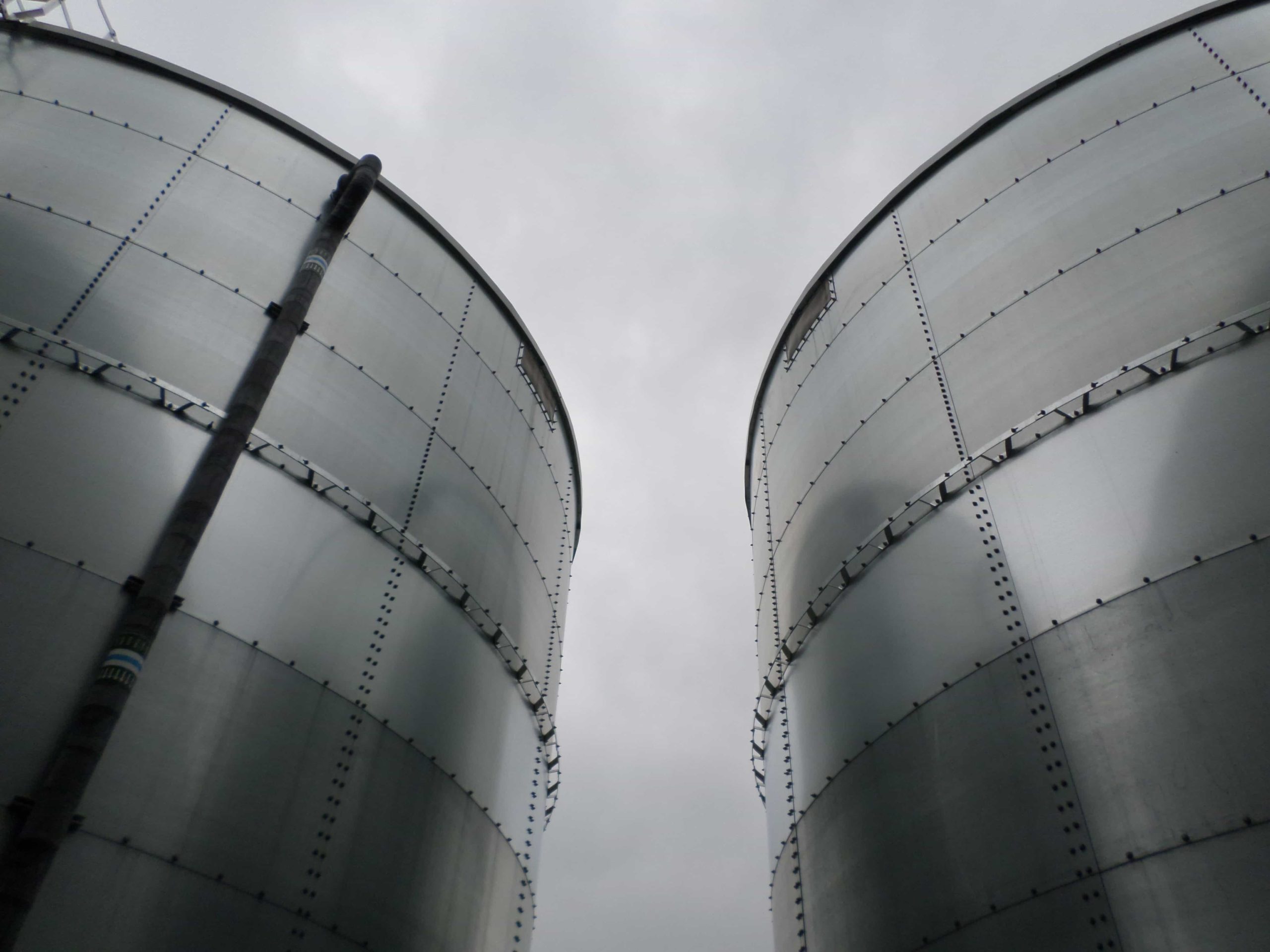
The renewable technology has enjoyed considerable success, but questions over whether it can fully utilise the organic waste stream remain. However, options in AD that until now have only been seen in Europe, are beginning to reach UK shores.
“Dry” or high solids anaerobic digestion has a number of claimed benefits over the more traditional tranche of AD plants that have come online in recent years. According to developers, the technology’s principle advantage is its flexibility – allowing operators to generate volumes of compost as opposed to large quantities of digestate, as well as producing a lower parasitic electricity demand and fewer emissions.
There are drawbacks, principally the costs involved in creating additional digester space, and in some cases lower methane yields compared to wet AD systems. But crucially, dry AD is able to process a greater proportion of the biowaste stream, making it suitable for green waste, food waste, and even the organic fraction separated from municipal ‘black bag’ waste.
Milton Keynes
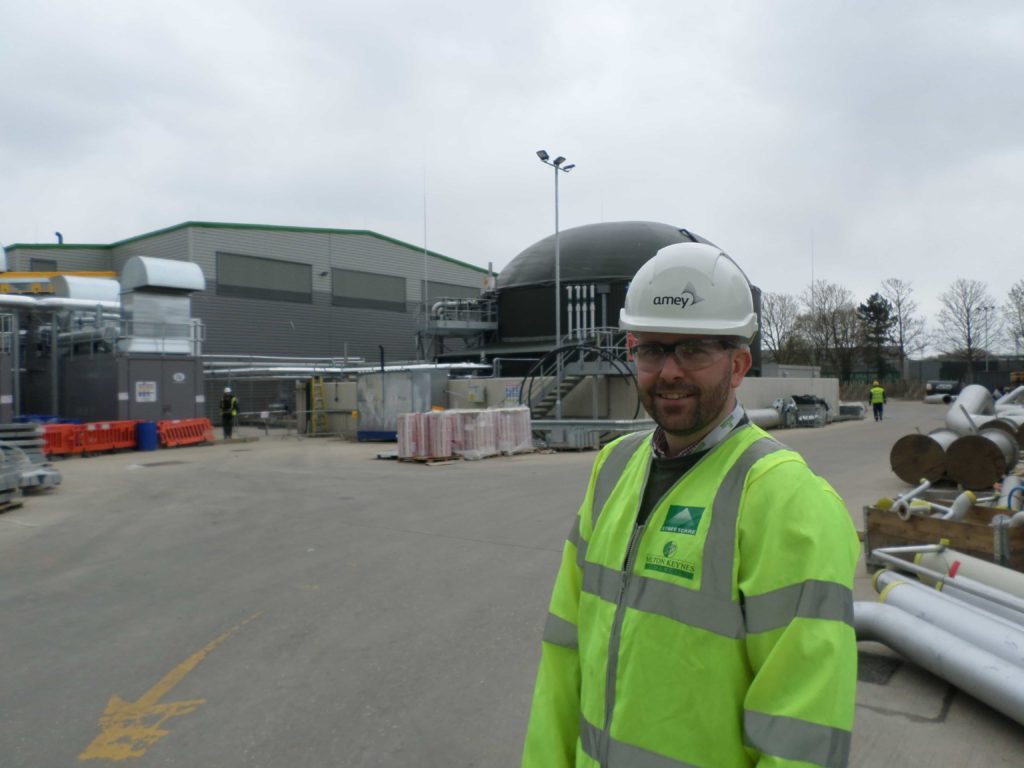
It is this latter capability that is driving interest from some of the UK’s most recognisable waste businesses as they look to maximise efficiency at their latest facilities. In Wolverton near Milton Keynes, Amey is building a Waste Recovery Park capable of processing up to 130,000 tonnes of residual waste per year from the region. The plant, which the company this summer will begin operating under a 15-year contract, utilises mechanical treatment plant, dry AD and thermal gasification processes.
Around 30% of Milton Keynes’ black bag content is made up of food and organic waste despite the availability of a separate weekly food waste collection service, meaning that Amey’s decision to install a 1MW dry AD system at the Recovery Park will go some way towards capturing the material.
The AD process at Milton Keynes will use nine separate sealed fermenters, which will be loaded and unloaded in a sequence to allow a turnaround time of 28 days for each bath. The fermenters are to be continually irrigated with percolate, ensuring that optimal moisture conditions promote formation of biogas.
Contamination
With traditional, or ‘wet’ technologies, 10-20% of the incoming organic fraction of the black bag waste may be lost as a result of contaminant removal, which is achieved through the transfer of material between several tanks via pumps. This means that the technology is usually only suited to feedstocks that can be readily converted to liquid, such as pre-separated food waste streams. However, the dry digestion is better suited to breaking down stackable biowaste with lower moisture levels and high levels of physical contamination, such as glass or plastics.
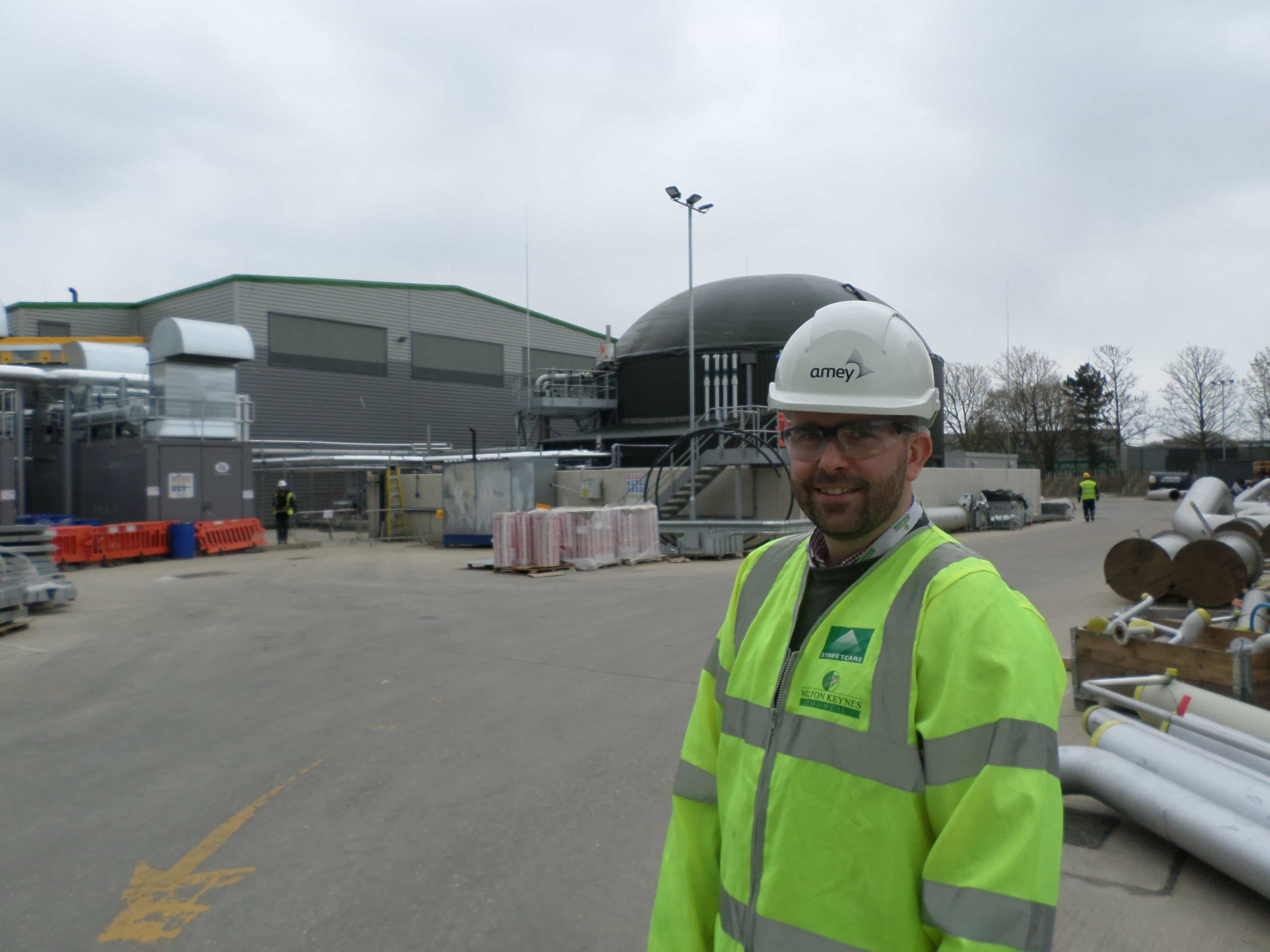
“If you have only got food waste it is much more macerated and so there’s more gas coming off it,” says David Proctor, waste contracts manager for Milton Keynes council. “At this facility we take out the oversize and pasteurize it. Because it’s black bag waste we can’t get PAS100 accreditation on it. It’s a compost-like output, so we can’t use it on crops.”
Developed by Jones Celtic BioEnergy, up to 32,000 tonnes of organic waste derived from refuse will pass through the dry AD system each year. The remaining unrecyclable waste which is unsuitable for AD – around 93,000 tonnes – will pass through the facility’s thermal gasification plant. Like thermal gasification, dry AD is a relatively untested investment for a plant of this scale, so why have Amey and Milton Keynes council chosen it? Mr Proctor states that the technology will offer the necessary flexibility, but only time will tell.
Compost
Despite some businesses calling for organics extracted from the MBT process to be classified as compost for use as fertiliser rather than a CLO, realistically even the advancement that dry AD affords new and upcoming facilities is unlikely to sway the Environment Agency. But outside of the residual waste sector, the technology offers an exciting prospect for investors and cash-strapped local authorities who until now may have been dissuaded by comparably high gate fees for in-vessel composting and regulatory restrictions on mixed biowaste disposal.
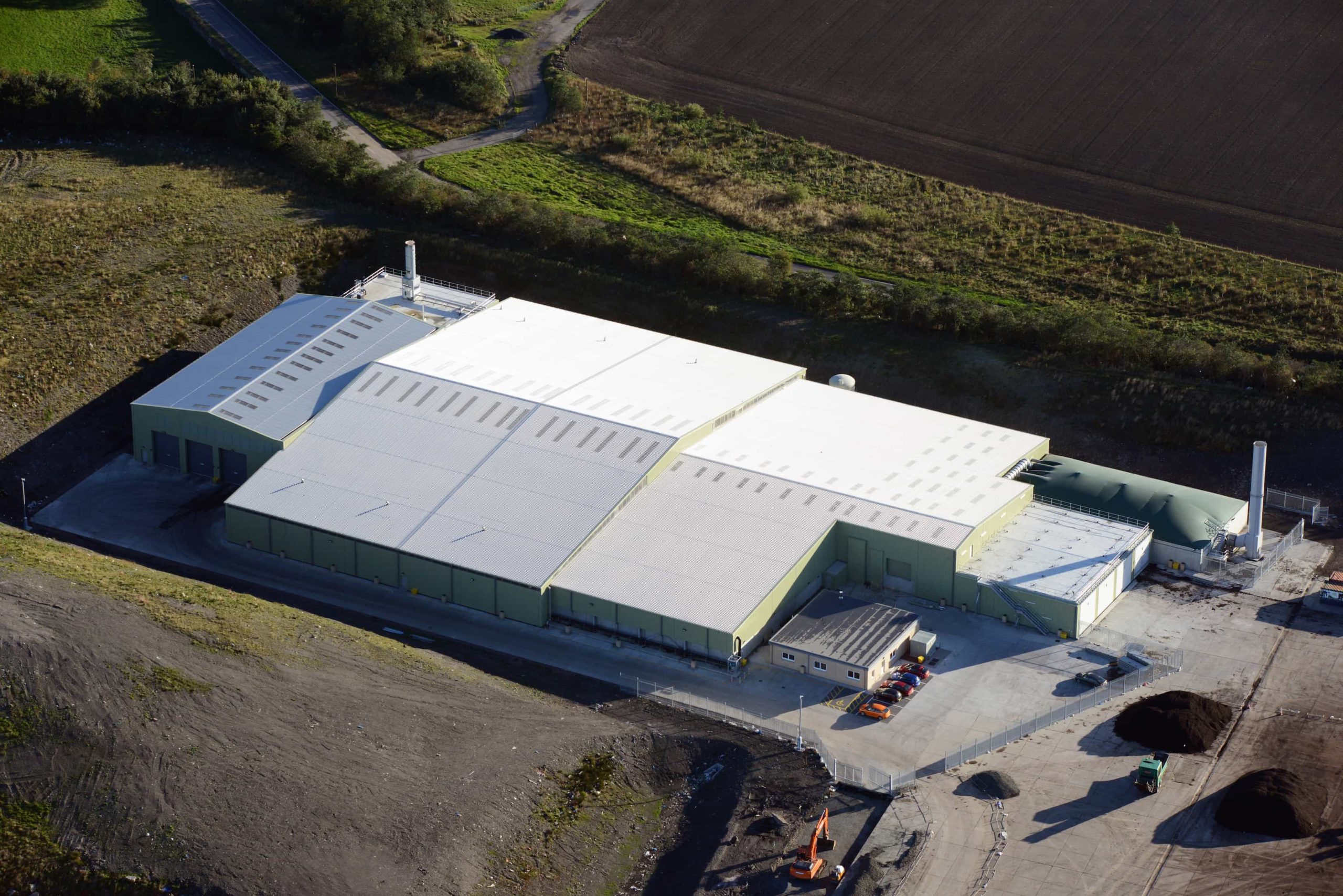
In Scotland, the revolution is already underway. In March 2014, operations formally began at Fife council’s dry AD plant in Dunfermline, where household materials recycling, composting and landfill operations are carried out. By combining dry fermentation with in-vessel composting, the local authority has been able to maximise energy production from treating both food and green waste at the site without compromising the end compost quality. This is because in order to meet the criteria for ‘wet’ digestion, Fife would have been forced to deploy energy-hungry pulping and decontamination equipment to exclude material.
Investment
Jeremy Jacobs, technical director of the Renewable Energy Association (REA), argues that while digesters are often more expensive due to the fact they are engineered at a higher specification, investment in dry AD is worthwhile. With the ability to treat lignin based materials such as green waste, dry AD tolerates a much higher tolerance of inert inputs, this means that the technology is more versatile in it application,” he explains. “This technology is well established so we should be using this as another tool in our armoury to promote the collection of additional bio resources which are currently either being landfilled or incinerated.”
“There has been a call from some local authorities specifically for this technology and I await with interest the outcome of these tenders in due course.”
A version of this article first appeared in Issue 29 of the Organics Recycling Magazine. To access the original version, please click here.

Subscribe for free