


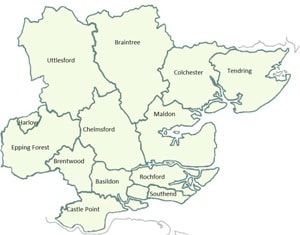
Castle Point borough council in Essex has assessed the potential impacts of collecting paper, glass, metals and plastics separately, concluding that doing so would not be technically, environmentally and economically practicable (TEEP).
And, as a result of this independent TEEP assessment, a council report states that it will continue with its current methodology of collecting comingled recyclable material alongside the separate collection of glass.
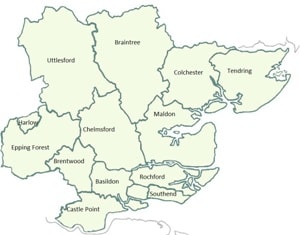
Castle Point which comprises the Essex areas of Benfleet, Canvey Island, Hadleigh and Thundersley operates a fortnightly collection of mixed recycling in pink sacks alongside a yellow box for mixed glass bottles and jars and a separate sack for textiles. Refuse is also collected fortnightly, while food waste is collected every week.
Currently, this system operates under a contract originally awarded to recycling firm Newport Paper in 2008 (see letsrecycle.com story), but the council is now procuring for a new recycling services contract and recently commissioned a TEEP assessment over whether to change its current system.
The revised EU Waste Framework Directive comes into force in January 2015 and states that separate collections of at least the four aforementioned waste streams are required where they are TEEP and appropriate to meet the necessary quality standards for the relevant recycling sectors.
While Defra has scrapped plans to provide guidance to councils on the issue, WRAP is helping to draw up a route map to help councils ascertain if they are compliant (see letsrecycle.com story) and the Resource Association has designed an online TEEP information tool to assist reprocessors (see letsrecycle.com story).
Assessment
Castle Point council commissioned consultancy Plan B Management Solutions to provide independent, technical advice in respect of the councils current collection regime ahead of the letting of the councils new recycling services contract.
While the council report states that it is unclear at this stage how the WFD requirements will be enforced, it adds that any legal challenge to the councils collections arrangement is probably more likely to come from a local resident than from the Environment Agency.
‘The recommendation is that the council continues, at this stage, with its current household waste collection methodology by separately collecting the glass from all other waste types, and collecting plastics, paper and metal comingled, and separate from other waste types.’
Castle Point council report
Therefore, the report recommends that to minimise the risk of legal challenge, in future it would be prudent to perform TEEP assessments where any significant changes to the councils waste management services are planned or have occurred.
With regards to financial implications, the report claims that if the council had been forced to modify its collection arrangements as a result of the TEEP assessment, or it faces legal challenges next year, the costs to the council are likely to be significant.
The report adds: The TEEP assessment undertaken by the councils independent technical advisor has demonstrated that it is not technically, economically or environmentally practicable to collect the four affected waste streams separately from one another and from other waste types.
The recommendation is that the council continues, at this stage, with its current household waste collection methodology by separately collecting the glass from all other waste types, and collecting plastics, paper and metal comingled, and separate from other waste types.
Contract
Shropshire-based Newport Papers contract with Castle Point had seen the councils recyclables processed at the companys MRF near Thetford, Norfolk, but this facility closed last year and the company has been outsourcing material processing to other facilities on a ‘case-by-case’ basis.
However, the council’s contract with Newport Paper comes to an end in October, and the council today (June 23) put out an invitation to tender for a new recycling services contract, which would be for an initial period of four years with the option of a two year extension.
The contract includes the provision of a recycling facility to primarily sort paper, card, metals and plastics from Castle Point households, as well as the onward processing and recycling of these materials.
