



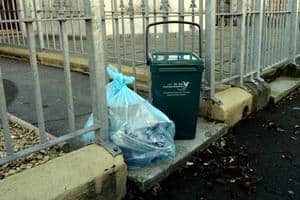
The Welsh council has started rolling out blue bags for single stream plastic, aluminium, cans, paper and card to 70,000 households, in place of blue boxes for materials which are currently sorted at the kerbside.
It also reflects increasing pressure on the council to divert waste from landfill and to meet Welsh Assembly targets to recycle and compost 40% of its waste by 2010.
Richard Workman, Carmarthenshire's director of technical services, said: “By 2010, a total of 70,000 households in Carmarthenshire will receive a kerbside recycling/composting collection in order for the country to achieve its recycling and landfill targets.”
Performance
At present, Carmarthenshire's recycling service sees material collected in blue boxes being sorted on-board stillage trucks.
However, it was believed that with the inclusion of food waste, that would become too time-consuming.
By introducing bags as well as a commingled service, the council hopes to speed up collection times because the bags are lighter and all material can be easily tipped for compaction into its new split level vehicles, which have been financed by a £2.5 million grant from the Welsh Assembly Government.
Materials are then sent for sorting at a materials recovery facility (MRF) in Johnstown, Carmarthen.
Richard Workman, director of technical services, stressed that the move to commingled collections had been made to meet recycling targets set by the Government but there was also a practical reason behind it.
He said: “Quite simply the blue bags have been introduced to meet Welsh Assembly Government Directives, while the bag is also considerably safer due to the fact that the box has to be carefully manoeuvred onto the trucks to be sorted.”
Grant
In addition to purchasing new specialist collection vehicles, the grant, which is shared with Swansea council, allows Carmarthenshire to acquire new containers for residents to dispose of their food waste.
The application of food waste collection will further boost Carmarthenshire's attempt to meet Welsh Assembly Government projections for waste.
Mr Workman said: “This funding will allow food waste to be collected for the first time and help expand the blue bag scheme to an additional 10,000 homes and a further 20,000 homes over the next three years. These changes must be made in order to achieve the targets set by the Welsh Assembly Government.”
Food waste
In February, householders in the west of the county were issued with 25 litre green bins and kitchen caddies for their food waste in the first roll out, with more scheduled for September and December this year and a further roll-out in April 2009.
The food waste is currently being dealt with in Swansea while an in-vessel composting facility at NantyCaws, Carmarthenshire, is due to be opened in the next couple of months to accommodate the later roll-outs.
Councillor Pam Palmer, council executive board member for the environment, said: “It is important that we reduce the amount of rubbish that is put out for collection by thinking how we shop and composting more of our waste at home.”
“We can all make a difference by changing the way we do things, so that we reduce, reuse, repair and recycle rather than just throwing away. By recycling and composting more, we could all reduce the amounts of household waste sent to landfill by around two-thirds,” she added.
