

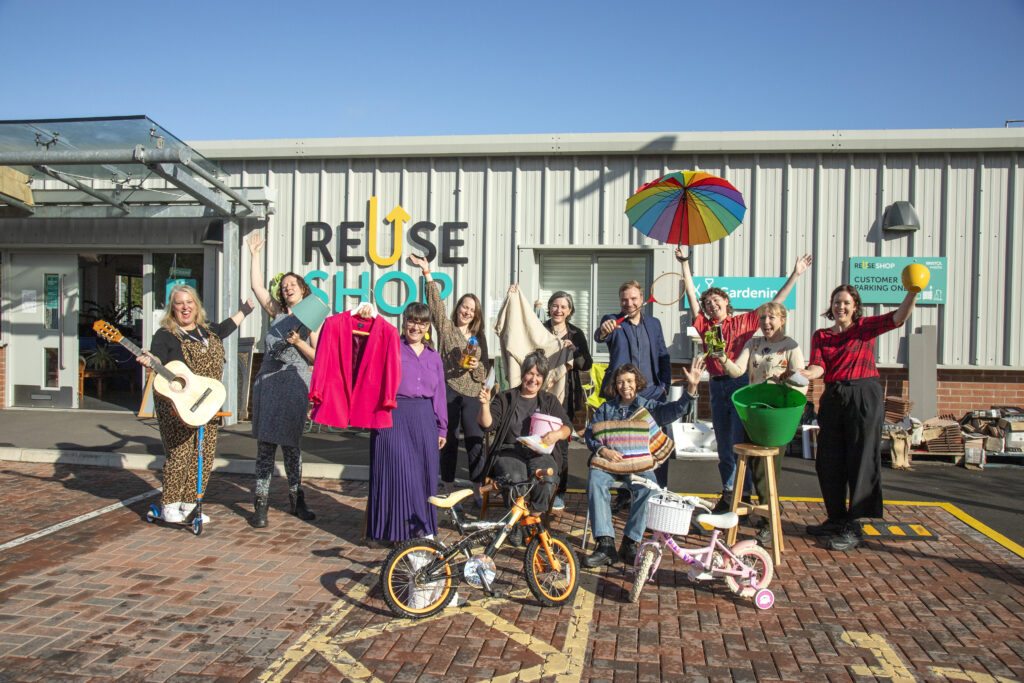
The company state that the initiative has been gaining popularity across the city, with daily challenges designed to help participants minimise their waste.
Kathy Tate, from Bristol Waste’s innovation and sustainability team, said: “It’s easy to assume that making eco-friendly choices comes with a hefty price tag. But the Waste Nothing Challenge is here to debunk that myth. Our challenge can save residents money while reducing waste. The in-person challenges we ran in 2019 and 2020 showed that small daily changes were key to lasting habits, so the new city-wide digital Waste Nothing Challenge is all about easy activities to help your wallet and the environment, one small step at a time.”
Challenge
According to Bristol Waste over half of the subscribers to the email challenge have admitted that their general waste bins are frequently overflowing on collection day. Bristol Waste is optimistic that this situation will soon change as a result of the challenge.
Participants are learning practical tips and tricks, from creative ways to store fruits to giving old bed sheets a new lease on life. The challenge encourages individuals to reconsider their concept of “waste.” One early completer of the challenge described it as “a really interesting and inspiring experience, full of useful and thought-provoking ideas that made us reflect on our everyday actions.”
After just one week of the challenge Bristol Waste recorded:
- 91% of participants were eager to experiment with freezing different types of food.
- 74% expressed a willingness to change the way they store fruits.
- 55% were planning to put together a refillable shopping kit to alter their shopping habits.
The campaign is supported by insights from Bristol Waste’s sustainability experts and contributions from various experts such as City to Sea, stylist Becky Barnes, and chef Shane Jordan.
Recycling rate
Bristol has a recycling rate of 46%, and according to WRAP local authority report it recycles 167.2 kilograms of core materials, such as paper (15 kg), cardboard (55.8 kg), cans (9.3 kg), glass (61.5 kg), plastic bottles (13.8 kg), plastic tubs and trays (11.7 kg), textiles (0.5 kg), and food (74.4 kg).
To find out more please visit the Collection Conference, taking place on 15 November, to book your ticket please click here.

Subscribe for free