

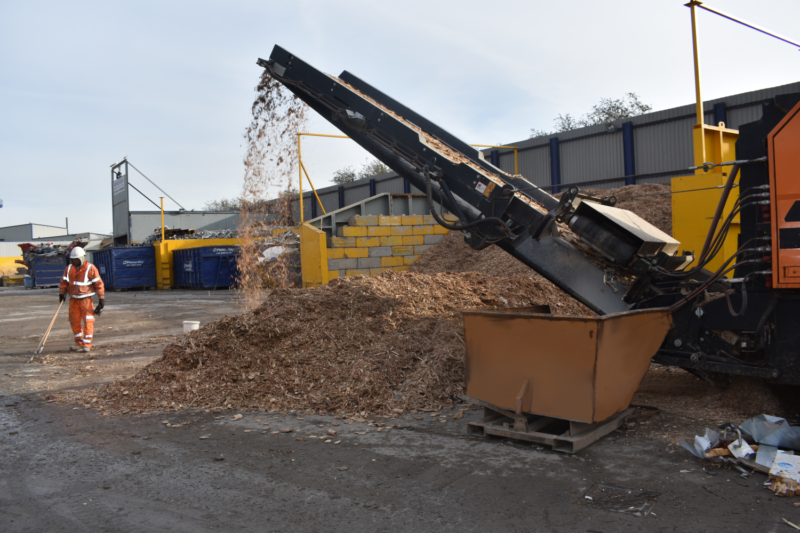
While so far the impact on gate fees from this has been small, several wood recyclers have expressed concern that a tough summer, and prolonged maintenance, could mean increases in the level of gate fees imposed on businesses bringing in waste wood or even restrictions on taking any more material.
In the south, a number of biomass plants have been down for periods recently, including Ridham Dock, Tilbury Green and Slough Heat and Power. Together these have an annual demand of waste wood of around 500,000 tonnes.

Some of the larger wood recyclers, and biomass plants too, have space to store large amounts of material over the summer, which helps keep material flowing and also enables the wood to be used in the winter months when demand is higher.
Other recyclers have had to either increase gate fees or stop taking in un-contracted wood to avoid having too much material, and potentially falling foul of fire prevention regulations.
However, much of the current pressures in the market are seen as being fairly typical of the summer period, a view reflected by Andy Hill, chair of the Wood Recyclers Association. Mr Hill said: “We’re not aware of anything particularly out of the ordinary with any shutdowns and the wood markets are still flowing well.
“Biomass plants are very forward thinking and have storage capacity which can help during maintenance periods, sometimes this is as high as 30,000 tonnes. This often means the pressure on the market is limited, but there may be pressure later in the year when the biomass demand increases again.”
Regions
At the moment, wood recyclers in the south have said that they have been able to deal with excess tonnage – with many even transporting it to other areas of the country for other plants or even for use in the export sector – while some have also said that a difficult summer could lead to further complications later in the year.

In the Midlands, where demand for wood is notoriously competitive, most wood recyclers have said that while they haven’t yet increased gate fees, “there is plenty of material around” due to plants taking downtime. As a result, it is possible that gate fees may increase by more than usual over the summer.
Others have said that they still have outlets for material and have been taking in some wood from elsewhere.
Wood recyclers in the North of England have also been suggesting some market pressures, with plants in Hull, Blackburn and Sheffield all reporting downtime.
One industry expert said that non-contractual tonnage for wood has been “all but stopped”, and those who are taking it in are charging a lot more than they would do normally. However, some plants have come back online which has eased this slightly.
While there are no official government statistics for waste wood markets in the UK, the Wood Recyclers Association compiles an annual survey of its members, which account for more than 90% of the industry.
In the report for 2018, released last month, it was shown that biomass now accounts for more than 56% (2 million tonnes) of the processed waste wood market usage, up from 46% in 2017, meaning unscheduled downtime can have an impact on supply.

Subscribe for free