





Old habits die hard. While one section of our industry is preparing for a future when landfilling of waste will be progressively restricted, other sections remain wedded to the practice, and are defending it to the hilt. The current battleground is the lower rate of landfill tax of 2.50/tonne for inert/inactive waste, as it applies to material such as trommel fines.
As the attached chart shows, the UK will arguably have one of the highest differential landfill tax rates of the twenty EU Member States that apply a tax 2.50/tonne against 80/tonne at the higher rate in 2014/15. The Netherlands has a comparable differential (16.79/tonne for inert waste against 107.49/tonne for active waste) but with only 5% of the countrys waste being landfilled and with landfill bans in place, the tax is in the process of being withdrawn.
To pretend that such a huge differential does not offer a temptation to play the system for bottom-line gain is to admit to wilful blindness. HMRCs attempt to clarify the issue in 2011 and 2012, and their subsequent vacillation in the wake of the skip blockage of Parliament Square has only muddied the issue.
Why should our industry be concerned when some operators landfill standard rate material at the lower rate of tax? Firstly, the practice reduces HMRC revenues by up to 100-200 million a year in landfill tax receipts. Secondly, the landfill market is being severely distorted, because it allows the landfill operator to offer a far reduced tax-inclusive gate fee, retaining significantly increased margins in the process while depriving legitimate landfill operators of business. Thirdly, lenders alive to this practice have expressed concern as to whether their investments in new non-landfill facilities can be secure, given the threat to input tonnages by a practice that severely undercuts treatment gate fees. Waste management operators are in turn increasingly reluctant to commit to new builds and to the creation of new skilled jobs.
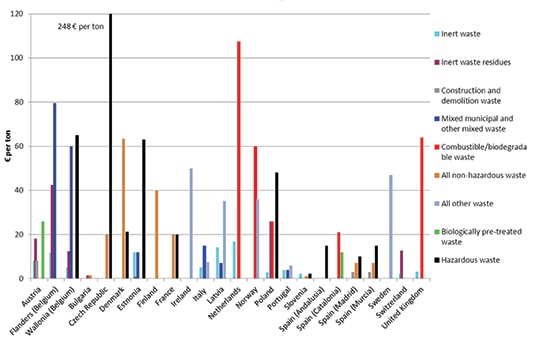
Playing for short-term advantage is an understandable behaviour. But we ignore at our peril the right policies that will land us the bigger prize building a secure future for our industry as resource managers. Attempting to justify the status quo for the lower rate of landfill tax is not one of these policies.

Subscribe for free