

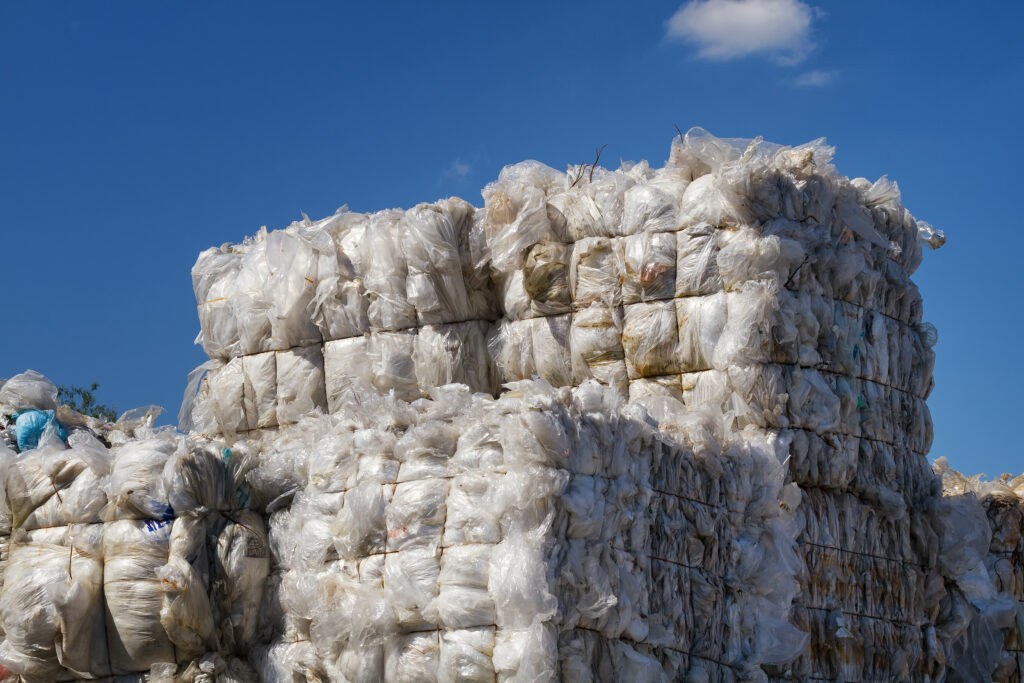
The Alliance stated that despite its dominance, flexible plastic waste remains one of the least circular parts of the packaging system in Europe and North America.
The Challenges and Solutions for Flexible Plastic Packaging Waste report sets out why films and flexibles – including wraps, pouches, sachets and labels – are so difficult to recycle, and what needs to change to make the system economically viable.
Jacob Duer, President and CEO at the Alliance, commented: “Delivering materials circularity for flexible plastics is complex but achievable.
“Solutions to improve the end-of-life management of plastic products already exist.”
Capacity for recycling flexibles
Flexible packaging has become “indispensable” in modern supply chains, the report stated, citing its role in extending shelf life, reducing food waste and lowering transport emissions through lightweight design.
However, while OECD countries generally have well-established waste collection systems, recycling outcomes for flexible plastics remain limited.
Simpler Recycling reforms will require English local authorities to collect flexible plastic films and bags from household by March 2027 as part of the newly updated recycling standards.
According to the recent FlexCollect report, the current shortfall in domestic reprocessing capacity to meet anticipated demand once mandatory collections begin.
While more than 150,000 tonnes of flexible plastic waste could be collected annually, the UK’s infrastructure for turning that material into recyclate remains underdeveloped.
Challenges of plastic waste
The report also identified a number of other challenges to handling flexible plastic waste.
Flexible packaging is often made from multiple polymers – including polyethylene (PE), polypropylene (PP), PET and others – combined with inks, adhesives and barrier layers such as aluminium.
These multi-material structures deliver performance benefits but complicate both mechanical and chemical recycling.
At the same time, recycled flexible plastics struggle to compete with virgin polymer produced in large-scale, highly optimised facilities. Recycling plants typically operate at far smaller scale, with higher costs and less mature technology.
Most material that is recycled is then downcycled into products such as plastic lumber, construction materials or bin liners, rather than returning to high-performance film applications.
‘Coordinated action across the system’
Despite the scale of the challenge, the Alliance said that the pathway to circularity is clear, identifing five enablers:
- Improved collection and sorting to generate homogeneous, high-quality feedstock.
- Strong end-market demand for recyclates, supported by PCR targets and EPR mechanisms.
- De-risking investment through stable policy frameworks, tax relief and financial incentives.
- Harmonised design-for-recyclability guidelines to reduce material complexity.
- Eco-modulated EPR fees to reward simpler, more recyclable packaging formats.
Duer added: “The Alliance to End Plastic Waste will focus on demonstrating solutions that deliver systems change.
“Driving this will require coordinated action across the system, including identifying clear end-market opportunities for recyclates.
“In turn, this will make a viable business case for the investment necessary to evolve infrastructure for collection, sorting, and recycling.”

Register for free to comment