

Figures released by Defra last week show that in 2014/15, Derby’s overall recycling rate fell from 42% to 32% – the largest drop recorded among collection authorities in England.
And, while the amount of waste landfilled fell from 43% to 36%, the amount of residual waste generated per household rose from an average of 552.13kg to 631.8kg.
The result indicates a year-on-year slide in the city’s recycling rate, with Derby achieving 48% in 2010/11, 46% in 2011/12 and 45% in 2012/13.
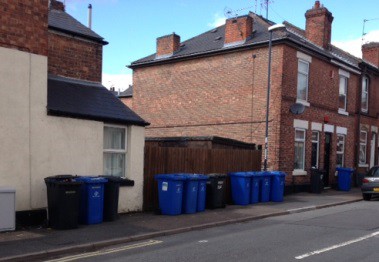
It follows Derby city council’s decision to replace kerbside recycling collections in some areas with communal bring bank sites to reduce the large number of bins on pavements.
The recycling bins were listed in a council report as “unattractive” and a potential serious fire risk to householders due to their location and flammability (see letsrecycle.com story).
It also claimed high levels of contamination in the recycling boxes put it at risk of fines from waste contractor Biffa. However, a Freedom of Information request put to the council by anti-incineration campaigner Simon Bacon revealed that no loads had been rejected at the Victory Road sorting facility in 2013/14.
Gardens
Commenting on the decline, Derby council told letsrecycle.com it remained ‘committed’ to helping householders recycle. It added that its performance is the result of introducing a £40 charge for garden waste collections in 2014.
It is understood the increase in residual waste has also been exacerbated by the council, which initially told residents to place their garden waste in their residual bins.
A council spokeswoman said: “Recycling rates are calculated on the total weight of recycling and therefore puts a greater value on wet grass rather than aluminium cans, for example. As such we recalculated our recycling target to take these changes into account, alongside future developments such as the Derby and Derbyshire Waste Treatment Centre which is projected to extract an extra 7.4% of material from the city’s waste for recycling.”
The council added that it’s overall recycling and composting target for 2014/15 was always 32% – despite achieving 42% in the previous year.
Future targets include a 34% target for 2015/16, 36% for 2016/17, 43% for 2017/18 and 50% by 2020.
Sliding rates
Elsewhere in the Midlands and the North of England, other urban councils saw their recycling rates slide.
Wigan metropolitan borough council and Kingston-upon-Hull city council both witnessed a drop from 50% recycling to 45%, while Peterborough city council saw its recycling rate fall from 50% to 46%.
Wigan council claimed recycling had dropped off in the wake of rising waste tonnages, while Peterborough council added that its rate had been affected by a lack of residents taking up its £39-per-year garden waste collections.
Leicester city council’s recycling was also hit hard, recording a 9% drop in recycling from 43% to 34%.
Wanlip
Speaking to letsrecycle.com, Adam Clark, energy and sustainability member for Leicester city council, said the recycling rate had been dented by a large fire at Biffa’s AD and MBT facility in Wanlip.
He said: “In 2014/15 there was a large fire at the Biffa AD plant in Wanlip. This means between December 2014 and April this year it was not operational. All the organic waste had to go to RDF or landfill. That’s the sole reason, so we are quite confident we are back up to the recycling rates we were getting previously.”
Mr Clark added that Leicester was reviewing options to extend its chargeable green waste collection beyond October when the service currently shuts down, due to demand from residents.

Register for free to comment