

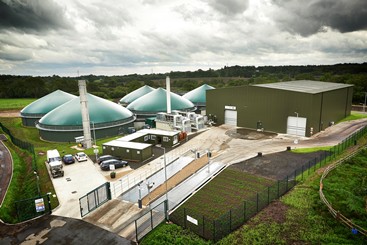
Calls for a landfill ban on food waste amid the tough climate for financing large scale anaerobic digestion (AD) projects were raised at the official opening of Agriverts 11 million West London AD facility today (June 3).
Situated at Trumps Farm near Chertsey in Surrey, the plant will process around 45,000 tonnes of food and liquid waste each year from households and businesses across Surrey and Hertfordshire.
 cropped.jpg)
The development is a joint venture with Oxfordshire-based Grundon Waste Management, which has invested 5 million pounds for a 15% stake in the facility.
It marks the first time Grundon has invested in an AD facility, and the firm will supply the Agrivert plant with household and business food waste, with the facilitys capacity enabling Grundon to expand its food waste collection service to a wider customer base.
In addition, Agriverts contracts to provide food waste from household collections for the plant are thought to include waste management firm Viridor.
Unveiling the plant today, Agrivert chief executive, Alexander Maddan, commented: In the world of renewable energy, anaerobic digestion is probably the most renewable form of energy. AD plants do not depend on sun shining or the wind blowing.
Thanking Grundon and Agriverts contracts team, Mr Maddan said: To build one of these in the middle of a global banking crisis makes it incredibly difficult to raise the money.
He added: When we are building we have got to think very carefully about how we are going to supply it, but what we have here is the most guaranteed tonnage of food waste in this industry. And they have built this plant for the cheapest amount possible.
.JPG)
Operating 24 hours a day, the Chertsey facility will produce enough electricity to power 4,500 homes while also producing a biofertiliser for around 2,500 acres of farmland. According to Agrivert, the plant is working at 96% efficiency and operates an 85-day digestion process.
RDF
Meanwhile, waste contaminants separated from the food waste during depackaging prior to the AD process are also processed into a refuse derived fuel (RDF), which is exported for energy-from-waste (EfW) use in Belgium via an arrangement with waste management firm SITA UK.
Mr Maddan said it was important for energy to be produced 24 hours a day as two thirds of the income from the plant comes from energy generation, with the final third coming from food waste intake.
He added that that plant was completed ahead of schedule in under nine months and reached zero to 2.4MW during commissioning in just 35 days and have sustained it there ever since.
‘When we are building we have got to think very carefully about how we are going to supply it, but what we have here is the most guaranteed tonnage of food waste in this industry.’
Alexander Maddan, Agrivert chief executive
The 2.4MW facility is Agriverts third AD plant, following the opening of the firms 9 million Cassington facility in 2010 (see letsrecycle.com story) and its 10 million Wallingford plant last year (see letsrecycle.com story). In addition, Agrivert is currently building a new AD facility for water firm Severn Trent in Warwickshire, which is expected to be delivered before the end of 2014.
Grundon
Also speaking at the launch of the plant, Norman Grundon, chairman of Grundon Waste Management said: Grundon is really excited to have invested in this AD plant. The team at Agrivert totally understand anaerobic digestion as they are from a farming background. We at Grundon can now add food waste to our one-stop shop on dealing with waste for our customers.”
Mr Grundon also called for a landfill ban on food waste: We need to ban food waste from landfill as most of Europe and Scotland have already done.
Speaking to letsrecycle.com, Normans son and deputy chairman, Neil Grundon, said the company was dipping its toes into the AD market and had chosen to work with Agrivert for its first major AD investment because the firm is an expert in the field.
Asked about the future for AD in the UK with more plants coming online, Neil Grundon said: I think the market is well catered for now I dont think we are going to see too many more built. We want to see how the market develops.

Subscribe for free