

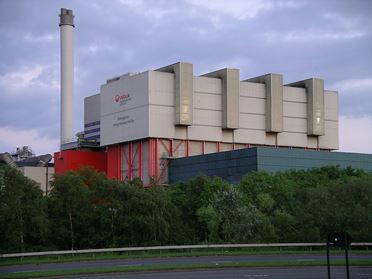
Birmingham city council is considering setting up its own energy services company which could take over the running of the Tyseley energy-from-waste (EfW) plant when the authoritys current contract with Veolia ends in 2019.
The city council the largest local authority in the UK signed a 25-year waste management contract with Veolia in 1993, under which the firm built the Tyseley EfW plant, which has the capacity to take 350,000 tonnes of the citys waste each year.
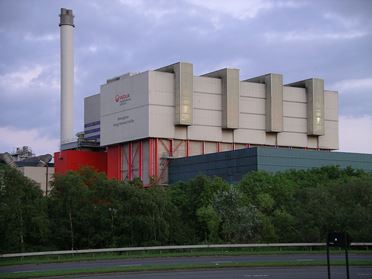
The Tyseley plant generates enough electricity to power 41,000 homes, although studies to explore the feasibility of increasing the facilitys capacity by 175,000 tonnes of waste per year are currently being undertaken, which could enable the facility to take waste from other councils in the region as well as commercial and industrial waste.
Veolias contract also sees the firm operate all five of Birminghams household waste and recycling centres (HWRCs), two transfer stations, and handling the majority of material collected by the councils in-house kerbside recycling crews.
However, this deal comes to an end in 2019, and as Birmingham council owns the two-stream Tyseley EfW facility, it is considering setting up an energy services company to utilise the assets of the council to generate energy through the likes of solar, bioenergy, energy from waste and ground source from its land and buildings.
And, the council document circulated as part of the authoritys 2014/15 budget consultation earlier this year adds that the mooted company could utilise the potential of generating waste from energy when the current Veolia contract at Tyseley ends (2019).
The document also estimates that establishing an energy services company this year could save the council 750,000 as early as 2017/18, which would be two years before such a company could take over the running of the Tyseley plant.
‘[An energy services company would] utilise the potential of generating waste from energy when the current Veolia contract at Tyseley ends (2019).’
Birmingham city council document
It states: An energy services company would have the ability to make money, eventually generating a profit. It would use the council’s ability to buy energy at wholesale prices and then sell energy on. This proposal is reliant on creating new income and there are initial costs to implementation which are not yet fully modelled.
Elsewhere, the document suggests that the council undertake a thorough analysis of the legal and financial implications, benefits and risks of setting up such a company, adding that the council will need to hire consultants and assess options to do things quickly to secure income as soon as possible.
When contacted by letsrecycle.com, a Birmingham city council spokesman said: Were currently looking at various options regarding the Tyseley contract, and as yet no decisions have been made on what will happen after Veolias contract ends in 2019.
Veolia
Last month, a WRAP guidance document for local councils on recycling material sales published last week (July 1), which highlighted the potential advantages of offering in-house materials trading services (see letsrecycle.com story).
And, another Birmingham council document from last year said it would continue to look for opportunities through ongoing negotiation with Veolia for better reflection of the value of recyclables and incinerator waste. At present all recyclables and waste belong to Veolia except for paper.
Asked by letsrecycle.com to comment on the councils considerations for the Tyseley plant after 2019, a spokeswoman for Veolia said: Veolia has worked in partnership with Birmingham city council in a relationship that spans over two decades. In that time we have worked hand in hand to deliver the highest levels of environmental performance and value for money both in terms of avoiding landfill and energy generation through the energy recovery facility at Tyseley.
Veolia are constantly striving to review and assess industry best practice and innovation to ensure that we deliver value for money across all our services and continue to work with the council to investigate continuous improvement.
Coventry and London
Other waste facilities owned by local authorities in the UK include the 250,000 tonnes per year capacity EfW plant in Coventry. The facility is operated by the Coventry and Solihull Waste Disposal Company (CSWDC), an independent firm which is jointly owned by Coventry city council and Solihull council.
Elsewhere, the North London Waste Authority (NLWA) owns LondonWaste Ltd, the company which runs the 550,000 tonnes per year capacity Edmonton EfW. The non-profit company also operates recycling and composting facilities on the site and, last December, LondonWastes revenues enabled it to pay the NLWA a 4 million dividend.
NLWA is also currently seeking an in-house service to treat residual waste through the development of a new EfW facility alongside the existing Edmonton incinerator (see letsrecycle.com story).

Register for free to comment