


The Protocol is part of a joint project between WRAP and the Environment Agency and sets out the end of waste criteria, clarifying the point at which waste-derived non-packaging plastic has been fully recovered and can be used without having to comply with waste management controls.
Non-packaging plastics currently account for around 30% of the plastics waste stream and WRAP claim that the Quality Protocol could increase recycling rates and the use of the material in creation of new products.
Marcus Gover, director of market development at WRAP, said: “At present, around 160,000 tonnes of this material is recycled annually – so there is significant scope for increasing the recovery rates. It is now significantly easier for the recycling and manufacturing sectors to turn waste non-packaging plastics into valuable and useful products.”
Martin Brocklehurst, head of environment and business partnership at the Environment Agency, said: “The Quality Protocols – End of Waste Project has an ongoing commitment to minimise regulations for businesses whose activities pose a low-risk to the environment. The project continues to simplify processes and procedures across the recycling and reprocessing supply chain.”
“In the case of non-packaging plastics, the industry can now work to recover a greater proportion of this significant waste stream. It will be good for business and for the environment. By encouraging the recovery and re-use of the millions of tonnes of discarded raw materials currently lost in our waste, the project is now making a major contribution to resource efficiency in England and Wales,” he added.
Development of the non-plastic packaging Quality Protocol comes as part of the Waste Protocols Project, which is intended to define when a wide range of recovered materials are no longer classed as waste and can be used as a secondary material.
Good Practice
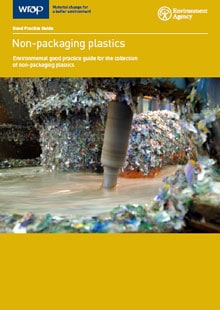
Alongside the Quality Protocol, a good practice guide has been published by WRAP and the EA to help collectors of waste non-packaging plastics ensure their processes are aligned with the Protocol.
The 14-page good practice guide outlines sectors generating non-packaging plastics waste, such as WEEE recycling, agriculture, construction and demolition and end-of-life vehicle recyclers. The document also highlights the main markets for recycled non-packaging plastics as: construction and landscaping; packaging; automotive; and, closed loop recycling.
The good practice guide also explains that the issues facing collectors of non-packaging plastic and urges the separation of different polymer types to “ensure that the market for the material is not reduced and to maximise its value” and the assurance of “legitimate end use markets” before beginning collections.


Subscribe for free