



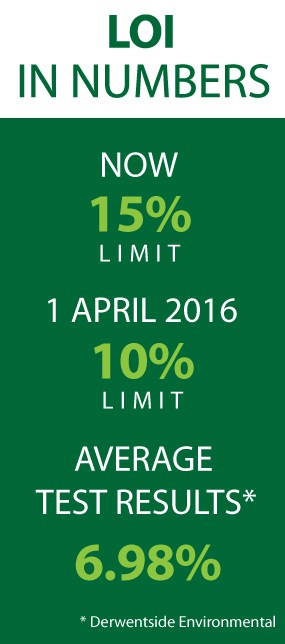
Operators who want their material to be charged at the lower rate of landfill tax of £2.65 per tonne will have to produce loss on ignition (LOI) test results of 10% or less from next month – following a 12-month ‘grace period’ set at 15%.
In order to ensure a waste load is eligible, a master and composite waste sample is currently submitted for LOI testing. The sample is then heated to determine how much inert material is lost (see letsrecycle.com story).
Any waste processors which fail the test will be expected to pay the £82.60 per tonne standard rate of tax for the material. This rate is due to rise to £84.40 per tonne from April 2016.
However, there is increasing anxiety among skip hire operators that LOI tests conducted at different laboratory centres will yield varying results – with a 1% discrepancy almost meaning boom or bust for smaller businesses, because of the difference in the two landfill tax rates.
Scotland
And, with the lowering of the LOI threshold not due to be rolled out in Scotland until at least October 2016, this has fuelled speculation that there will be increases in ‘waste tourism’ – with waste processors in England choosing to send their loads to landfill sites north of the border.
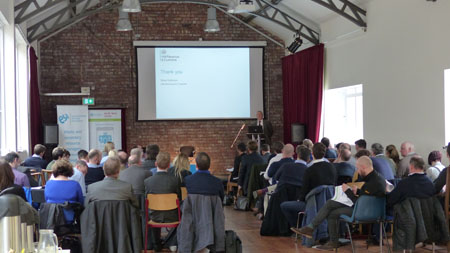
The debate came to a head at the ‘Fines Talk’ conference in Liverpool on Friday (4 March), where skip hire operators clashed with representatives of HMRC’s trommel fines working group on whether the LOI threshold is realistic.
URoc
Jenny Watts, director of the United Resources Operators Consortium (URoc), which represents skip hire firms and waste transfer station operators, branded the 10% as “restrictive but achievable”.
She said: “The 10% is here to stay, we can’t do anything about that. It’s about how we can move forward with the regulator. We are looking for HMRC to give us a position statement that gives us a level of comfort that says we are not going to be penalised for inconsistent results.”
Genuine
Sam Corp, head of regulation at the Environmental Services Association, which represents landfill operators and waste management firms, claimed that some “teething issues” were to be expected and reminded delegates that LOI tests were not a “silver bullet”.
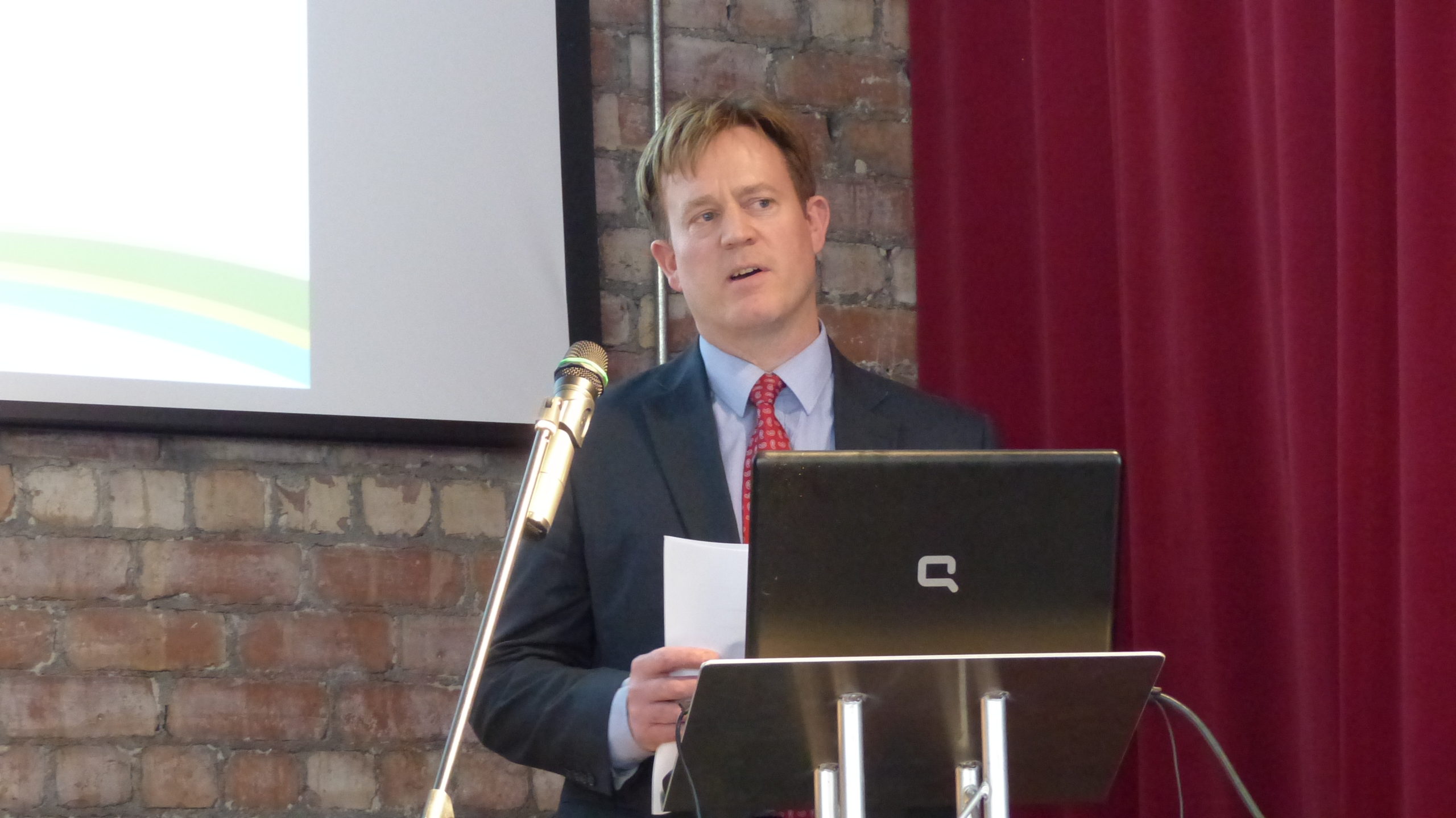
He said: “The vast majority of test results are already under 10% and there’s a feeling that this is a generous upper limit. There is evidence that genuine low tax rate material regularly achieves 0.5% LOI.”
Mr Corp later added that he did not want to come across as “inflammatory” after delegates took to the floor to dispute his 0.5% claim.
Testing
Offering some clarification on the average LOI results achieved by operators, Kirk Bridgewood, technical director of Derwentside Environmental Testing Services (DETS), said that of 1,567 samples taken in the last six months – the mean result had been 6.98% LOI.
Altogether, 95% of samples complied with the 15% threshold. He added that were the tests to be conducted after April 1, 85% of samples would have been eligible for the lower rate of landfill tax.
Significantly, Mr Bridgewood found that results generated by the HMRC-approved LOI tests – where fines are heated to higher temperatures of 180 ºC for “at least 45 minutes” – were more likely to underestimate the amount of organic material in a waste load than the standard method.
This means that on average, where a sample would have achieved 8.9% LOI under the HMRC guidelines, the standard test would have produced a result of 10%.
Mr Bridgewood said: “There’s scope for accredited sampling to give assurance by stating tolerances for equipment. If they [environmental laboratories] are going to be doing the tests they need to be doing it more robustly.”
HMRC
Taking to the podium last, Steve Robinson of HMRC said he was looking forward to working with the waste industry. Asked how he proposed to prevent operators sending waste loads to Scotland for testing “at under £20 per 1,000 tonne sample”, Mr Robinson added he was “aware” of the issue and would raise it with the devolved administration.
———————————————————————————————————————————
*What qualifies as fines?
(source: HMRC Excise Notice LFT1)
For Landfill Tax purposes, fines are particles produced by a waste treatment process that involves an element of mechanical treatment. For example, trommelling, screening or soil washing are all mechanical processes.
Qualifying fines are a mixture that consist of:
• fines that consist of materials listed in the Schedule to the Landfill Tax (Qualifying Material) Order 2011 – see Section 19 for further information on qualifying material
• no more than an incidental amount of fines that consist of any other (ie non-qualifying) material
Where the qualifying fines must not result from any deliberate or artificial blending or mixing of any material prior to disposal at a landfill site, be hazardous waste, you should always consult relevant guidance from your environmental regulator when assessing hazardous properties of waste.
Qualifying fines must also meet the conditions set out in this guidance otherwise they are liable to the standard rate of Landfill Tax.
Note: fines comprised wholly of materials listed in the Schedule to the Landfill Tax (Qualifying Materials) Order 2011 do not require LOI testing. Please see Section 4.

Subscribe for free