

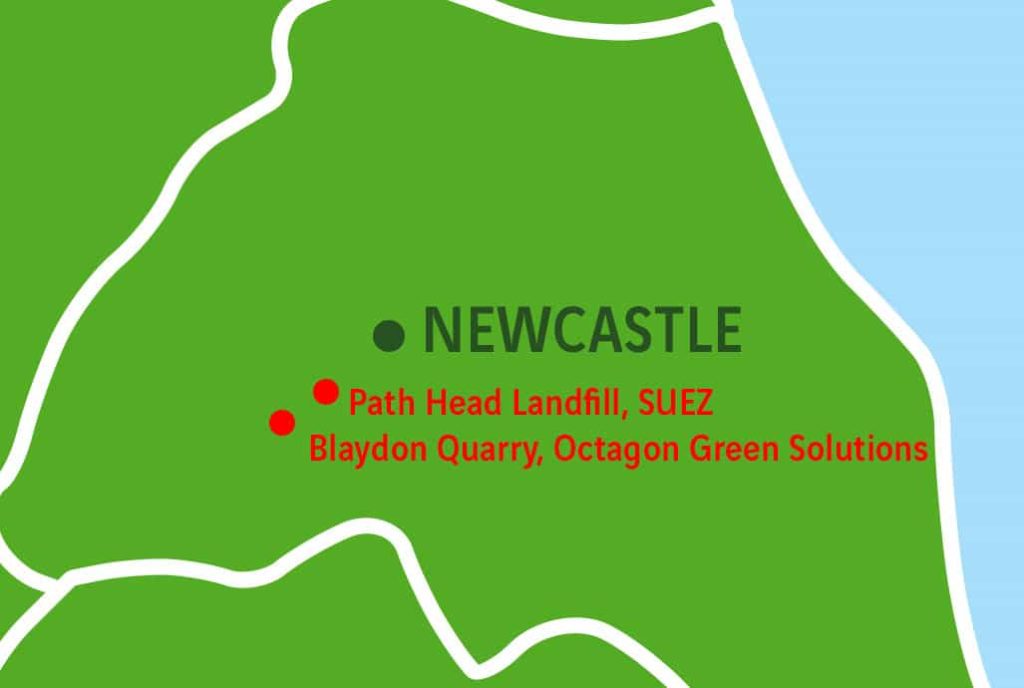
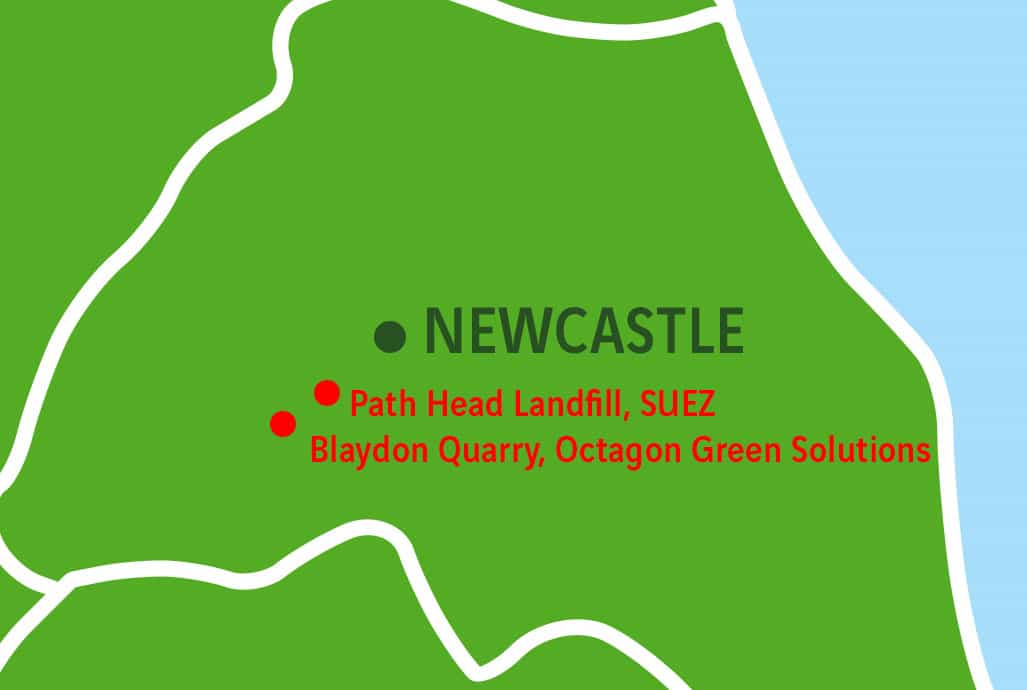
Complaints from local residents about odour have led to the Agency issuing notices against both Suez’s Path Head landfill site near Gateshead and Octagon Green Solutions’ Blaydon Quarry landfill site near Newcastle-upon-Tyne in 2016.
According to the Agency, Octagon has now complied with a February 19 enforcement notice and is due to commence capping work to the east of the site later this month (April 25) ‘subject to favourable weather conditions’.
Suez, on the other hand, has complied with one notice at Path Head but is still working on gas system improvements required by a second enforcement notice, while an investigation into appropriate enforcement sanctions against the firm “is still ongoing” according to the Agency.
Blaydon Quarry
Capping the waste cells at the east of the Blaydon Quarry site will allow these areas to be restored back to grassland this summer in accordance with planning requirements, the Agency said, and preparatory placement of soils for this work has already started.
The Agency said it is also expecting additional gas extraction wells to be drilled in these completed areas by Octagon to maintain full extraction across the site.
The electricity-generating plant at the site continues to run at full capacity, meanwhile, with any additional gas burnt in the standby flare.
Previously operating as a sand gravel quarry for more than 20 years, the Blaydon Quarry site was acquired by Octagon in 2013 and planning permission from Gateshead council allows extraction and landfilling with household waste until 2026.
Path Head
After heavy rainfall led to an accumulation of surface water and resulting odour problems for local residen, Suez’s Path Head site was closed to incoming waste on January 4 (see letsrecycle.com story).
A Suez spokesman said the company was doing “everything we can” towards tackling the problem and that a newsletter would be sent out in the next fortnight to local residents informing them of progress at the site.
The waste management firm has apologised to affected local residents and has installed additional gas extraction wells and capping works, as specified in an enforcement notice issued by the Environment Agency on February 19.
Wells have been installed within Cell 3 and are now drawing approximately 300m3 per hour of gas to the onsite treatment plant, which an Agency statement said on Friday (April 8) “indicates these wells are performing well”.
A further three gas extraction wells will also be installed in this area “once waste tipped reaches sufficient depth”.
“This work is progressing well. The operator remains under an enforcement notice and we will continue to check progress against the required actions.”
Environment Agency on Path Head landfill site

However, while Suez has now complied with the February enforcement notice, the Agency has since served another in March requiring further engineering work to improve the gas management system at the Path Head site.
The Agency added that its investigation into appropriate enforcement sanctions against Suez “is still ongoing” and that it would continue its targeted dour monitoring off-site “until we are satisfied that the improvements on site have reduced the odour”.
An Agency statement read: “Clay materials are continuing to be imported and deployed on site in order to form the required capping layers on the affected areas. This work is progressing well. The operator remains under an enforcement notice and we will continue to check progress against the required actions.”
Previously a working sand and gravel quarry, the Path Head landfill site has been in operation since March 2007 and is permitted to accept 600,000 tonnes per year of non-hazardous waste. However, it is expected to close next March once its 10-year planning life comes to an end.
Air monitoring
Plans to install some permanent, fixed air monitoring equipment at Path Head have also been examined with the Agency’s national air quality team.
However, EA monitoring to date in the vicinity of the Path Head landfill site has reportedly shown concentrations of methane and hydrogen sulphide “very far below the level necessary to cause acute health effects”.
Nevertheless, the Gateshead council’s public health team said it understood the incident was “extremely distressing” for locals, noting that some residents had been experiencing symptoms such as sore throats, nausea, headaches and dizziness.
“Such symptoms can be caused by frequent or prolonged exposure to strong unpleasant odours even when the substances that cause the smells are not themselves harmful to health,” Gateshead’s public health team said, adding though that it does “not expect residents to develop long term health problems as a result of exposure to gases released from the Path Head site”.


Register for free to comment